 Catamaran
Sail Thailand.
Live fleet
Catamaran Motor Yacht
 Catamaran
Electric E-Motion
Island Spirit 525E · 2026Phuket, Thailand
12 guests5 cabins16 m
€9,490 / week
+ Compare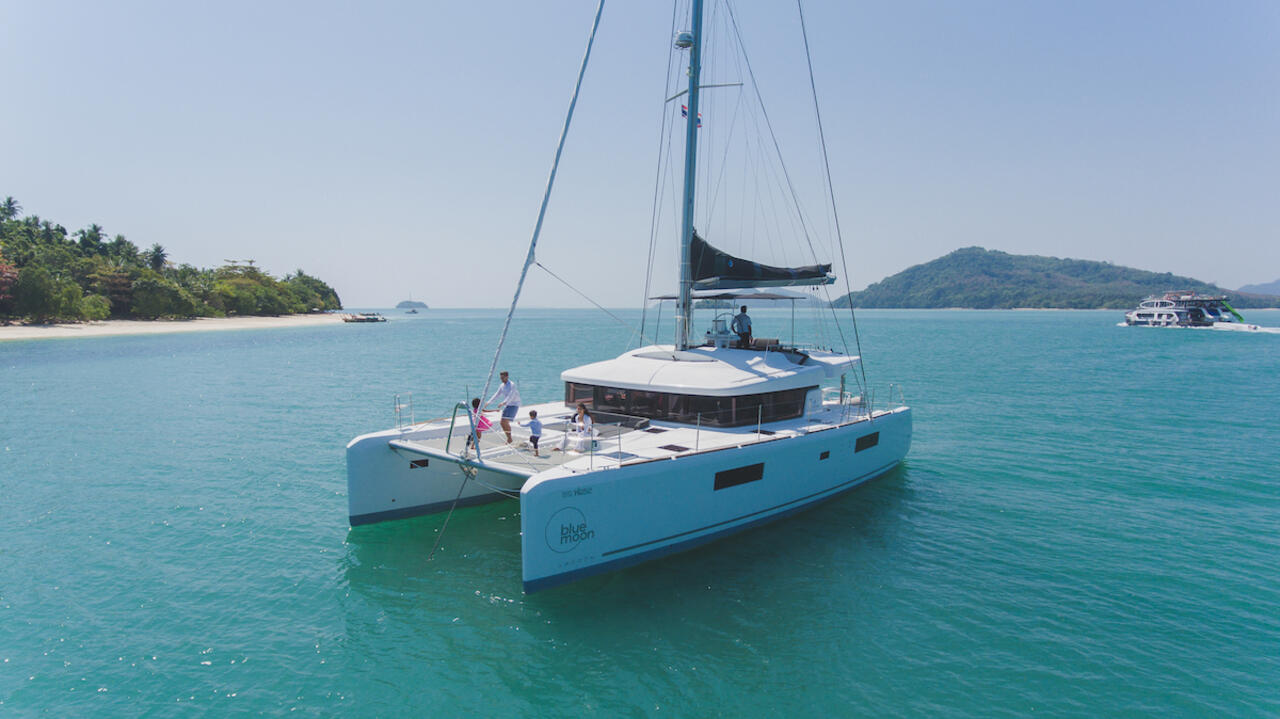 Catamaran
 Catamaran
 Catamaran
 Catamaran
 Catamaran
 Monohull
 Monohull
 Monohull
 MonohullMonohull
 Catamaran
 Catamaran
 Monohull
 Catamaran
 Monohull
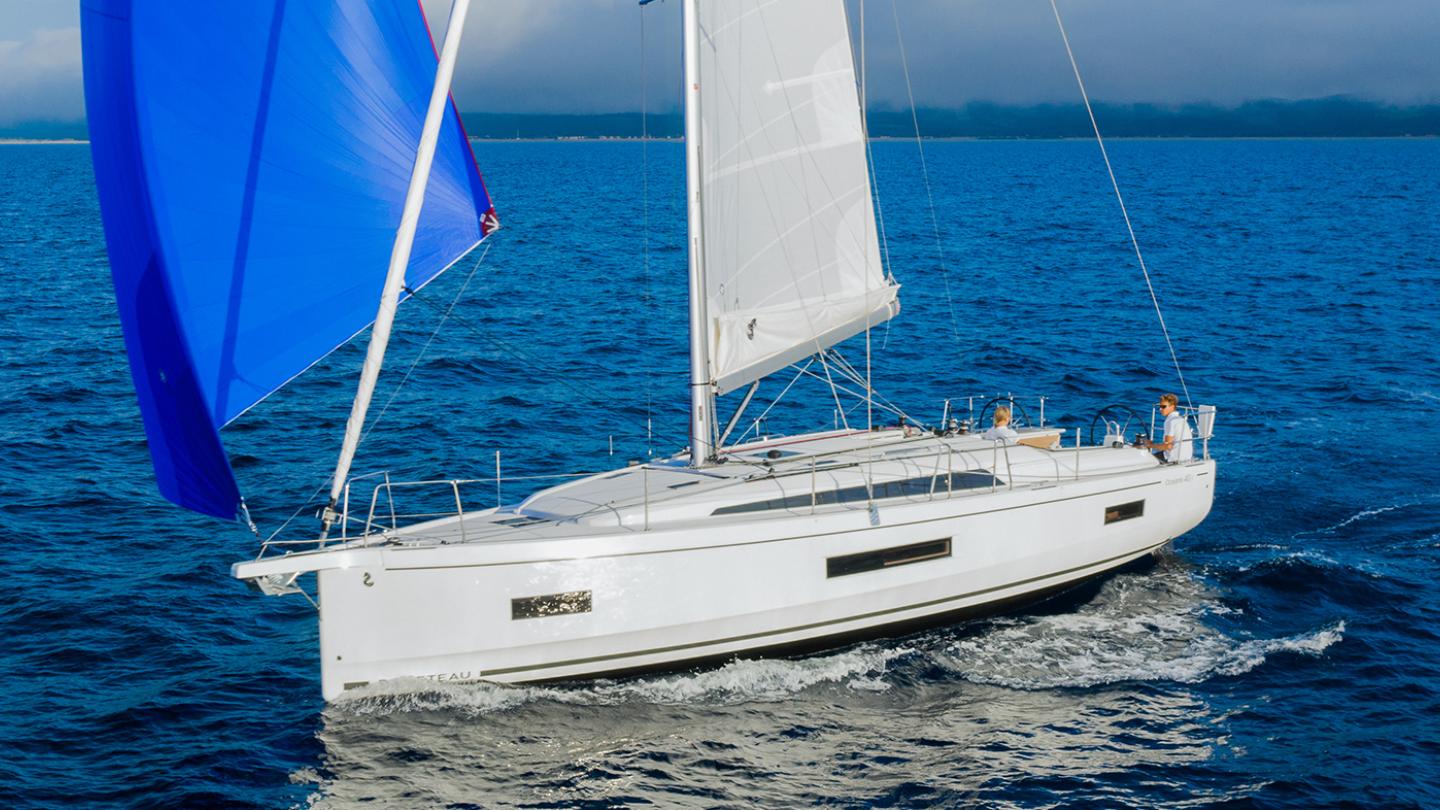
Northern Star
Bavaria C45 - 4 cab. · 2018Thailand, Thailand
8 guests4 cabins14 m
€2,835 / week
+ Compare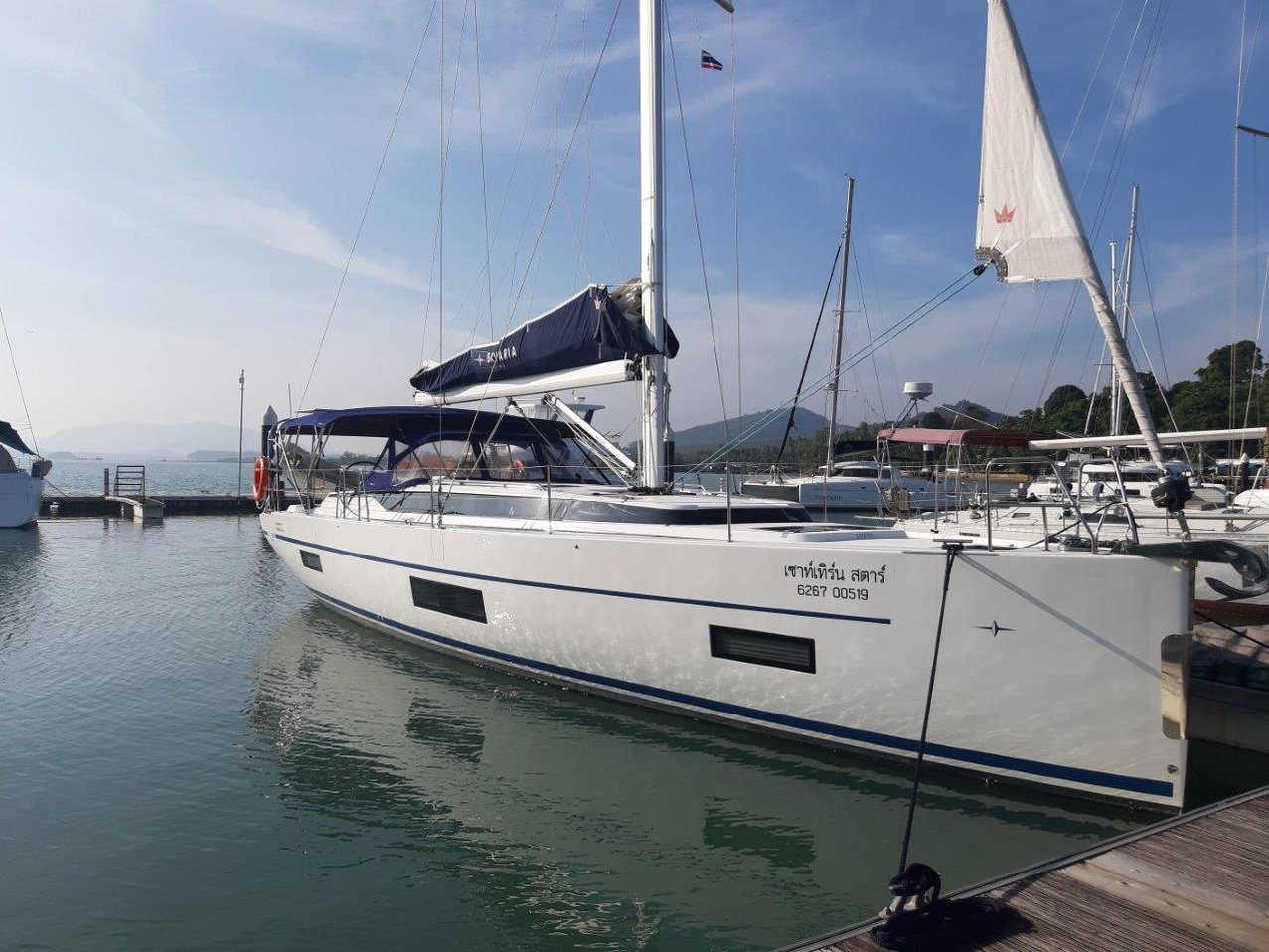 Monohull
 Monohull
 Catamaran
 Catamaran
 Catamaran
 Catamaran
Cloud Dancer 2
Lagoon 43 - 4 + 1 cab. · 2025Phuket, Thailand
11 guests4 cabins14 m
€900 / week
+ Compare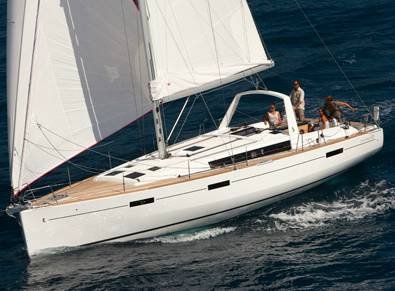 Monohull
 Catamaran
 Catamaran
 Catamaran
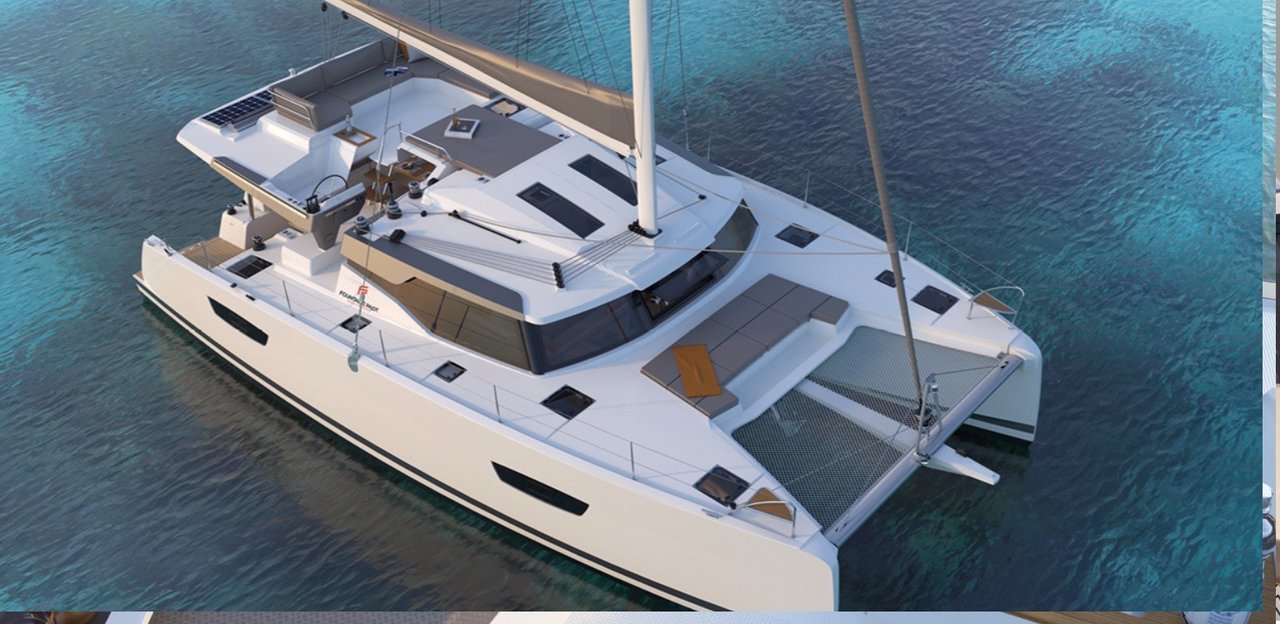
Chammak Challo
Fountaine Pajot Elba 45 - 3 + 2 cab. · 2024Phuket, Thailand
8 guests3 cabins13 m
€5,801 / week
+ Compare Catamaran
 Catamaran
 Monohull
 Catamaran
 Catamaran
Thai Thunder
Lagoon 42 - 4 + 2 cab. · 2021Phuket, Thailand
11 guests4 cabins13 m
€4,556 / week
+ Compare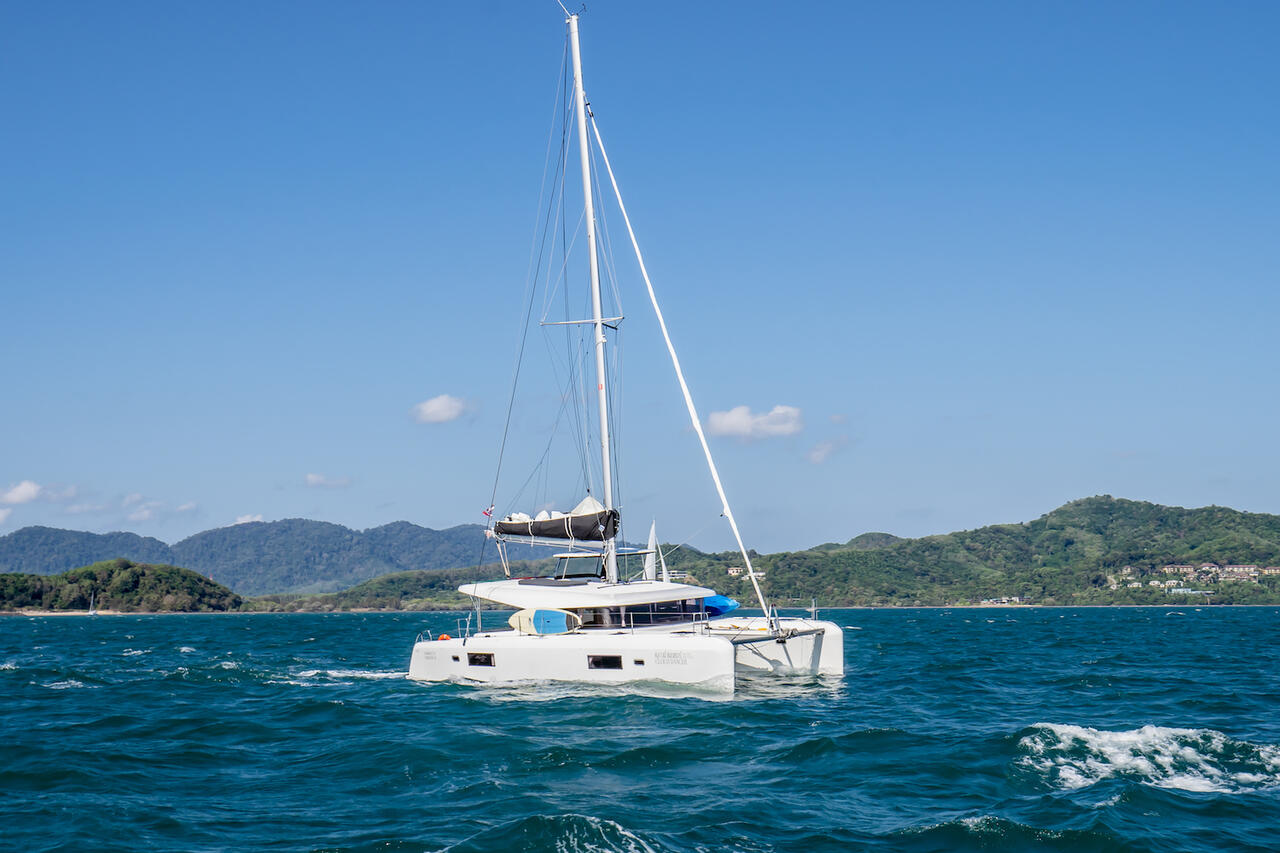 Catamaran
 Catamaran
 Catamaran
 Catamaran
 Catamaran
 Catamaran
 Catamaran
 Catamaran
 Monohull
 Monohull
 Monohull
 Catamaran
 Catamaran
 Catamaran
 Catamaran
Talk to an expert
Get three options.
Thailand
01Why sail Thailand
The water goes a shade of green you don't quite believe until you're anchored in it. Limestone karsts rise straight out of the sea, hollowed into caves and hongs — tidal lagoons you paddle into at low water. Between them, longtail boats putter past with their engines tilted up, and the smell off the shore is diesel, salt and grilled fish in roughly that order.
Thailand suits sailors who want short hops between anchorages, warm water every day, and dinner ashore for the price of a coffee back home. It's forgiving ground. Distances are modest, the holding is generally good in sand, and there's always somewhere to tuck in. What it isn't: a place for serious upwind distance sailing or anyone chasing solitude in Phang Nga Bay at midday, when the tour boats arrive.
02The sailing areas
Two grounds, both worth knowing.
Phuket and the Andaman is the busy one for a reason. From the marinas on the east coast you're a few hours off Phang Nga Bay with its karst islands and hongs, or south to the Racha islands for clear water and snorkelling. Further out lie Ko Phi Phi — beautiful, crowded — and the Ko Lanta group. Ao Chalong and the marinas near Ao Po are the usual departure points; both handle provisioning and clearance without fuss.
Ko Chang sits on the Gulf side, near the Cambodian border, and feels a decade behind Phuket in the best way. Fewer boats, quieter anchorages, and the islands of the Ko Chang archipelago — Ko Wai, Ko Mak, Ko Kood — strung out for easy day-sailing. The Gulf water is warmer and calmer than the Andaman; the trade-off is a longer transfer from Bangkok to reach it.
03Season and winds
The sailing season runs roughly November to April, and that window matters. Those months bring the north-east monsoon: steady, dry, and settled, with light-to-moderate breezes and flat anchorages. Mornings are often calm; the wind fills in through the day and rarely gives you more than a comfortable sail.
May to October is the south-west monsoon — the wet season. The Andaman west coast takes the weather full on, with swell into the anchorages and days of rain. Most Phuket charters pause or run reduced through this period. The Gulf side around Ko Chang stays more sheltered but still gets its share of squalls. If you want reliable conditions, book inside the November-to-April window and aim for the shoulders — November and April — for fewer boats.
Water is warm all year, 28-30°C. You'll sail in shorts. Bring more sunscreen than you think.
04Charter types
Most of what we run here is bareboat and skippered monohull and catamaran charter. Catamarans dominate for good reason: shallow draught for the hongs, deck space for the heat, and stability at anchor. Monohulls are available and cheaper, and sail better in a breeze.
Bareboat needs a recognised sailing qualification and a completed sailing CV — see the FAQ. If you'd rather not skipper, a professional skipper comes aboard as crew; you sail, they navigate and handle clearance and local knowledge. A hostess or cook can be added for longer trips. Crew details on request.
05Costs
Pricing moves with boat size, age and season, so we quote per boat rather than pretend there's a single number. As a guide, a week's bareboat catamaran charter in high season typically runs from the low thousands to well over ten thousand EUR depending on size and specification. A skipper adds a daily rate; provisioning, fuel, marina fees and the national-park entry fees are usually on top. For anything specific, Price on request over WhatsApp and we'll send real figures for real dates.
Budget separately for the park fees in Phang Nga and around Ko Chang — they're modest per person but add up over a week.
06A sample week from Phuket
Day 1 — Board at the marina, provision, and short-hop to a first-night anchorage near Ao Po or the Naka islands. Swim, settle in.
Day 2 — North into Phang Nga Bay. Anchor among the karsts; take the dinghy or kayak into a hong at low water. Aim to be inside the bay before the day boats and out again after they leave.
Day 3 — Ko Hong and the eastern karst islands. Quiet anchorages, good snorkelling on the reef edges.
Day 4 — South towards the Racha islands. Clearer water here, better visibility for snorkelling and a proper sail if the breeze fills in.
Day 5 — Ko Phi Phi if you want the famous scenery; anchor early to beat the crowds, or skip it for the Ko Lanta group if you'd rather stay quiet.
Day 6 — Work back north, stopping at a beach anchorage for a lazy day — swimming, a shore lunch, an early evening at anchor.
Day 7 — Return leg to the marina, clear up, last night aboard or ashore.
Route it either direction depending on wind and how many boats are about. Nothing here is a long day's sail.
07Getting there
Phuket International (HKT) is the arrival point for the Andaman fleet, with direct and one-stop flights from most of Europe and Asia. From the airport it's 30-60 minutes by road to the marinas depending on which one and the traffic. For Ko Chang, fly into Bangkok, then it's a road transfer of around five hours plus a short car-ferry to the island — plan a night in Bangkok either side rather than doing it all in one go.
Bring your sailing CV and qualifications for bareboat check-in. Provisioning is easy at both bases — supermarkets near the marinas, or we can arrange a provisioning list in advance. Message us on WhatsApp with your dates and crew and we'll sort the details.
Practical information
01Entry & getting thereVisa & entry requirements
Thailand is not in Schengen — time here never touches your 90/180 European allowance, and the rules are its own. As of mid-2026, nationals of more than 90 countries — the UK, US, EU states and Australia among them — enter visa-free for up to 60 days, extendable once by 30 days at an immigration office. A change is queued: in May 2026 the cabinet approved cutting the exemption to 30 days for most nationalities, to take effect only once published in the Royal Gazette. Until that happens the 60-day stamp stands — confirm close to departure.
Your passport needs six months' validity on arrival and a blank page. Every foreign national also completes the free Thailand Digital Arrival Card (TDAC) online within three days before arrival — it replaced the paper TM6 form and applies whether you enter by air, land or sea, so crews joining by yacht file it too. Check your own government's travel advice before you fly — this is the section that moves.
02Entry & getting thereGetting there
Phuket (HKT) is the Andaman gateway — Thailand's third-busiest airport, past 17 million passengers in 2025, with direct flights from the Gulf hubs, Singapore, Kuala Lumpur and Hong Kong plus seasonal European charters. It sits at the island's north end, conveniently placed for the east-coast marinas where Andaman charters begin — Ao Po Grand Marina among them. Krabi (KBV), seven kilometres from Krabi Town, covers the eastern side of the bay with dense Bangkok shuttles and direct service from Kuala Lumpur, Singapore and seasonal Scandinavian routes.
For the Gulf, Koh Samui's private open-air airport (USM) is the pretty way in — Bangkok Airways runs it, with frequent Bangkok connections plus Singapore, and its near-monopoly shows in the fares. Most long-haul itineraries funnel through Bangkok; the capital's schedules hold year-round, while some direct European service to the coast is high-season only. Book domestic legs early for the December-January peak.
03Entry & getting thereTime zone & daylight saving
Thailand keeps one clock: Indochina Time, UTC+7, IANA zone Asia/Bangkok. There is no daylight saving — there never has been — so the offset never moves and no clock change can catch your charter week.
What changes is the difference to home, because everyone else's clocks move. The UK is 6 hours behind Thailand in British summer and 7 in winter; central Europe 5 behind in summer, 6 in winter; New York 11 behind in summer, 12 in winter. One steady offset and no mid-charter changes — jet lag, not clock arithmetic, is the only adjustment to plan for.
04MoneyCurrency & exchange
Thailand runs on the baht (THB). Change money at licensed exchange counters in town — SuperRich and its peers in Bangkok and the tourist centres consistently beat the airport booths, which run 5–10% below market — and clean, large-denomination euro, sterling and dollar notes get the best rates.
ATMs are everywhere, but Thai machines add a flat access fee to every foreign-card withdrawal on top of your own bank's charges — 220 THB has been the standard for years, and some machines now show 250–350 THB depending on the card network. The fee appears on screen before you confirm, so check it, and dilute it by withdrawing close to the 20,000–30,000 THB per-transaction cap. If a machine offers to convert to your home currency, decline and take baht — that conversion rate is never in your favour.
05MoneyPayment methods
Visa and Mastercard work in hotels, shopping malls, dive shops and proper restaurants in the charter towns, and some smaller merchants pass on a 2–3% card surcharge when they take cards at all. Beyond that, Thailand is still a cash country: street food, markets, taxis, longtail boats and the beach restaurants you dinghy to are cash businesses.
Carry a fold of small notes — 20s, 50s and 100s — because a 1,000-baht note meets resistance at a noodle stall. When a terminal offers to charge your card in your home currency, decline and pay in baht; the conversion is always worse than your bank's rate. Keep a cash float aboard for harbour-side dinners and island stops — there are no cash machines in an anchorage.
06MoneyTipping culture
Tipping in Thailand is appreciated, never demanded — and the first move is always to check the bill, because hotels and smarter restaurants often add a service charge already. Where nothing is added, 10–15% for good table service is generous; elsewhere rounding up or leaving the coins is entirely normal. Street food needs no tip. Round taxi fares up, give a massage therapist 10–15%, and budget about 10% for day-tour guides and drivers. Tip in baht, in cash.
On skippered and crewed charters the yachting convention applies: a discretionary tip for the crew at the end of a good week, handed to the skipper on the last day. There is no fixed rate — operators here leave the amount entirely at your discretion — so let the week itself set the number.
07MoneyCost of living
Thailand is one of the best-value cruising grounds anywhere. Country-wide averages run about 100 baht for a meal in an inexpensive local restaurant, around 900 baht for a three-course dinner for two mid-range, roughly 75 baht for a half-litre of local draft beer, and just under 70 for a cappuccino. Street food is cheaper still, and excellent.
The premium sits exactly where charters go. Beachfront restaurants on Phuket's west coast, Phi Phi and the small islands price for tourists, and the Andaman high season — roughly December to March — lifts everything: peak-season charter rates run close to double the green-season price, and restaurants follow the crowds. Provision at Phuket's big supermarkets before you sail; small-island minimarts charge island prices, and some anchorages have no shop at all.
08Rules & permitsSailing regulations & permits
Thai law does not run a bareboat licence scheme for visiting skippers — what governs your charter is the operator's own vetting, and it is real. Expect to show a recognised certificate (RYA Day Skipper, ICC or equivalent), a sailing CV proving recent time in charge of a similar-sized yacht, and a VHF operator's certificate. Skippered charters need none of that — you bring the crew, we bring the skipper.
Paperwork sits with the boat. Charter yachts clear crew lists and movements through the harbour authorities, and Phuket concentrates the formalities in one place: the Yacht Control Centre on Chalong Pier houses the harbour master, immigration and customs, backed by an online pre-registration system, with clearance fees of a few hundred baht per movement. Every foreign national aboard also files a Thailand Digital Arrival Card before entering the country. We prepare that paperwork with you at check-in.
09Rules & permitsSubstances & laws
The drinking age is 20, and it is checked. Shops sell alcohol from 11:00 to midnight — the old afternoon sales gap was scrapped in 2026 — but on the major Buddhist holy days sales stop almost everywhere, with only hotels and certain licensed venues exempt. Drug law is among the world's harshest: possession of hard drugs brings long sentences and, in the worst cases, the death penalty. Cannabis's brief open era is over — since June 2025 it is medical-only, requiring a Thai-issued prescription limited to a 30-day supply, and buying it as a tourist without one is an offence. Vapes and e-cigarettes are illegal to possess at all, with fines that reach 30,000 baht.
Customs allows 200 cigarettes and one litre of alcohol per adult — keep to it, the airport checks. Prescription medicine travels in its original packaging with the prescription; anything containing narcotic or psychotropic substances needs advance permission, applied for about two weeks before you fly.
10Rules & permitsFishing regulations
Ask us before you pack tackle. Sport-fishing day boats out of Phuket, Krabi and Samui operate under their own commercial licences, so joining one is the simple route; a line trolled on passage is common holiday practice, but the rules are operator-led rather than posted on a wall, so check the current position with us at check-in. The freshwater fishing parks ashore run strict catch-and-release on their stocked fish.
The hard line is geography. Waters inside marine national parks are regulated separately, and taking anything from them — fish, shells, coral — invites fines under the National Parks Act that reach 100,000 baht. Treat the Similans, Surin, and the Phi Phi park waters as no-take zones and enjoy them with a mask instead. Under way between islands, give working longlines, nets and fish traps a wide berth — local livelihoods hang on them.
11Rules & permitsWildlife protection laws
Marine national parks are Thailand's serious answer to mass tourism, and their rules bite. The Similan and Surin islands close entirely every year from mid-May to mid-October, then reopen on e-tickets with daily visitor caps — entry runs 500 baht a day for a foreign adult at the Similans, 400 at the Phi Phi park. Maya Bay shows the direction of travel: boats may no longer enter the bay at all (you come alongside a floating pier at Loh Samah on the back of the island), wading stops at knee depth to protect a blacktip reef shark nursery and replanted coral, and the whole bay shuts each August and September to recover.
Everywhere in park waters the same discipline applies: no touching or standing on coral, no collecting shells or anything living, no drones without a permit. Rangers enforce the National Parks Act, with fines up to 100,000 baht — treat every reef, turtle and seagrass meadow as off-limits to touch, and watch wildlife from a boat length away.
12Rules & permitsInsurance requirements
For a bareboat charter the boat's insurers see your paperwork before you sail: operators here ask for your skipper's licence, VHF certificate and sailing experience for insurance approval when the booking is made. Your own exposure for damage is the refundable security deposit lodged at check-in — the amount is set per yacht and written into your contract — and most operators offer a damage waiver or deposit insurance that shrinks that risk for a fee. Read the exclusions before you rely on it.
The bigger financial risk is medical. Thai private hospitals are excellent and priced accordingly — room rates start in the thousands of baht per night before specialist fees or evacuation — and every hospital wants a guarantee of payment before treating you. Carry travel insurance with strong medical and evacuation cover, check the wording covers sailing, and add cancellation cover when you book if you are prepaying the charter and flights. We do not insure charters or holidays — cancellation cover is what protects your payment.
13Health & safetyEmergency contacts
Police (national emergency): 191
Ambulance / medical emergency: 1669
Fire: 199
Tourist police (English-speaking): 1155
Save 1155 first. The tourist police exist for exactly the situations visitors meet — lost passports, disputes, accidents — and their operators speak English. At sea, hail on VHF channel 16 and call 1155 or 1669 with your position; we brief every crew on the base's own 24-hour emergency line at check-in. All of these numbers are free to call from any Thai phone.
14Health & safetyHealthcare & hospitals
Private healthcare in Thailand's cities is genuinely world-class; public hospitals outside Bangkok are more basic. In the charter areas that means Bangkok Hospital Phuket (part of the BDMS private group) and the public Vachira Phuket Hospital on Phuket, Bangkok Hospital Samui on Koh Samui, and — for anything complex — Bangkok's flagships, led by the JCI-accredited Bumrungrad International with 24-hour emergency lines. The UK government publishes a list of facilities with English-speaking staff covering all these regions.
Two practical realities. Every hospital, private or public, asks for a guarantee of payment before treatment, so carry your insurance details ashore. And pharmacies are everywhere in the sailing towns, usually accepting foreign prescriptions — buy from a proper pharmacy, not a street stall, where medication may not be genuine. In an emergency dial 1669 for an ambulance, or 191, the general emergency number.
15Health & safetyVaccinations
Book a travel-health consult about eight weeks before you fly; for Thailand the standard list is short. Hepatitis A is recommended for essentially all travellers, typhoid if you will eat street food or visit smaller towns, and routine boosters — tetanus above all — should be current.
Malaria tablets are not needed for the charter areas: Phuket, the Krabi islands, Koh Samui and Koh Phangan are classed as no- or minimal-risk, with prophylaxis reserved for the forested land borders with Myanmar, Cambodia and Laos. Dengue is the mosquito illness that does circulate on the coast — there is no traveller vaccine in general use (current vaccines suit only the previously infected), so repellent is the real defence: the Aedes mosquito bites in daylight, peaking at dawn and dusk. Rabies exists in Thai dogs, cats and monkeys — keep your distance from strays, and treat any bite or scratch as a hospital visit, not a plaster.
16Health & safetyWater drinkability
Do not drink the tap water — that is the rule everywhere in Thailand, and locals follow it too. The problem is less the treatment plants (Bangkok's supply meets WHO standards at source) than the ageing pipes and storage tanks between plant and tap; on the islands, which run on limited groundwater and desalination, quality drops again. Everyone drinks bottled or filtered water — Thai households boil, buy bottles or use refill stations.
In practice this is easy. Bottled water costs 10–20 baht in any 7-Eleven, the yacht is stocked with drinking water, and the tank water aboard is for washing and rinsing, not the kettle. Ice in proper restaurants and bars is factory-made and fine — the cylindrical kind with the hole through it — but skip crushed ice of unknown origin at street stalls. Brushing your teeth with tap water in the towns is generally considered safe.
17Health & safetyEnvironmental hazards
The system to respect is the southwest monsoon. From roughly May to October it brings squalls, rain and swell to the Andaman side — Phuket, Phang Nga, Krabi — so the main season there runs November to April; the Gulf coast around Koh Samui keeps its own calendar, wettest later in the year. Monsoon squalls build fast: sail to the current forecast and reef early — boats have sunk here in monsoon seas, so pick honest weather windows for crossings. The same season drives rip currents on Phuket's swimming beaches; people have drowned in the riptides, so treat the red flags as law.
In the water, box jellyfish are the one genuine danger — stings can be fatal, they come closer inshore in the rainy months, and Thailand's recorded Chironex cases cluster in the Gulf. Stonefish lie camouflaged on the bottom, so wear water shoes when wading; hot-water immersion is the first aid while you get to help. Calibrated honestly, flags, footwear and the forecast deal with nearly all of it.
18Weather & seaWeather & best seasons
Thailand's two charter coasts run on opposite clocks. On the Andaman side — Phuket, Phang Nga Bay, Krabi — the season is the northeast monsoon, November to April: dry air, sunny days and a steady 10–20 knot northeasterly, with December to March the sweet spot. The southwest monsoon takes over from May to October, bringing rain squalls, west swell and closed outer islands; sheltered Phang Nga Bay still sails, but this is the low season.
The Gulf side flips. Koh Samui is at its best from around late December to August — February and March are the driest months — and takes its heaviest rain October to December, with November the wettest month of the year. Sea temperature barely moves on either coast: roughly 26–30°C in every month, so you swim year-round. Past patterns are a guide, not a promise — always sail to the current forecast.
19Weather & seaSunrise & sunset by season
Phuket sits eight degrees north of the equator, so the sailing day hardly changes size: about 12 hours 20 minutes of daylight at midsummer against roughly 11 hours 50 minutes in December. Sunrise drifts between about 06:10 and 06:35 across the year, sunset between roughly 18:10 and 18:50. What surprises northern sailors is the twilight — it lasts barely 25 minutes, and darkness drops fast once the sun is down.
Plan passages to be anchored, moored or stern-to by about 18:00 with the swim done — there is no long golden hour to finish a leg in. For exact times at your harbour and week, check a per-city table such as gaisma.com or timeanddate.com; they cover Phuket, Krabi and Koh Samui.
20Weather & seaConservation tips
Anchoring discipline is the big one. Thai marine parks restrict anchoring to protect coral — pick up the mooring buoys where they are laid, otherwise anchor only over clean sand well clear of reef, and remember that at Maya Bay boats no longer enter at all. Sunscreen is regulated too: formulas containing oxybenzone, octinoxate, 4-MBC or butylparaben are banned in marine national parks, with fines up to 100,000 baht — buy reef-safe before you fly.
The rest is habit. Rubbish goes ashore to marina and pier bins, never overboard, and the parks ban single-use plastics, so decant provisions into reusables before a park day. Hold black water for open sea rather than crowded anchorages, and take nothing from the water, living or dead — shells and coral included. These bays are recovering assets; leave them exactly as you found them.
21Culture & practicalitiesLanguage & cultural tips
Thai is the official language — tonal, written in its own script, and spoken by over 70 million people. English carries you comfortably through the charter south: marinas, restaurants, dive shops and tour desks in Phuket, Krabi and Samui all work in it, and the tourist police answer in it too. In small island villages, patience and a smile do the translating.
Two words repay learning: sawatdee (hello) and khop khun (thank you). Greet with a wai — palms together, a slight bow — rather than a handshake, take your shoes off entering homes and temples, and dress modestly at religious sites. One rule outranks all the others: never disrespect the monarchy, in words, gestures or online posts. Lese-majeste is a criminal offence carrying up to 15 years, and it is enforced.
22Culture & practicalitiesHistory & culture
This coast has been a waypoint on the monsoon trade route between India and China for centuries — old charts mark Phuket as Junk Ceylon, a port of call the Portuguese were writing about in the 1500s. Tin made it rich: European powers competed for the mines from the 16th century, and the Chinese merchants and miners of the 1800s left Old Phuket Town its Sino-Portuguese shophouses, still standing along Thalang and Dibuk roads a short hop from any marina.
The sea peoples were here first and remain: chao le (sea gypsy) communities still live at Koh Sirey and along Phuket's shores, and their boat-floating festival survives. Out in Phang Nga Bay, the stilt village of Ko Panyi — settled in the late 1700s by Malay Muslim fishing families — floats a mosque, a market and a famous football pitch built on rafts, and makes an easy lunch stop under way.
23Culture & practicalitiesNational holidays & closures
Thailand keeps around 19 national public holidays, plus substitute days when one lands on a weekend. In the Andaman charter season the 2026 dates that matter are New Year (1–2 January), Makha Bucha (3 March), Chakri Day (6 April) and Songkran, the Thai New Year water festival, on 13–15 April — three days when the whole country celebrates by soaking everyone in range, offices shut and transport fills. Labour Day (1 May), Coronation Day (4 May) and Visakha Bucha (31 May) see the season out.
Government offices and banks close on public holidays; tourist restaurants, convenience stores and supermarkets mostly carry on. The one that catches crews out is alcohol: on the major Buddhist holy days — Makha Bucha and Visakha Bucha in season — sales stop almost everywhere and many bars close, with hotels and a few licensed venues exempt. If a holy day falls in your charter week, provision the day before.
24Culture & practicalitiesDress code & what to pack
Aboard, it is swimwear and sun protection by day and casual cotton or linen for dinner ashore — nowhere on the charter coast expects more. Thai modesty rules start the moment you leave the sand: swimwear stays on the boat and the beach, topless sunbathing is disrespectful anywhere, and temples require shoulders and knees covered with shoes off at the door. The strictest sites, like Bangkok's Grand Palace, also refuse sleeveless, short, see-through, torn or skin-tight clothing — one light shoulder-and-knee-covering outfit in the day bag solves all of it.
Pack in a soft bag that folds into a locker. Think sun first: several swimwear sets, polarised sunglasses, a real hat, reef-safe sunscreen. Deck shoes or grippy sandals cover the boat, easy-off footwear suits temples and beaches, and a compact rain shell earns its place if you sail near the monsoon months.
25Culture & practicalitiesMobile & internet coverage
Coverage on the charter coast is better than you might expect. AIS runs Thailand's largest network, with True (which also owns the dtac brand) alongside, and both cover the Phuket, Phang Nga Bay, Krabi and Koh Samui towns with fast 4G and growing 5G. Buy a tourist SIM at an airport counter on arrival — you leave with data already working — and note that physical SIMs are registered to your passport and tourist SIMs are capped at 60 days. A travel eSIM installed before you fly is the zero-friction alternative: data from landing, usually without a Thai number.
Afloat, signal follows the shore. Anchorages off inhabited islands usually have usable data; it fades on open-water crossings and at the remoter islands. Download charts, forecasts and entertainment before a day in the outer islands, and treat a working connection at anchor as a bonus, not a promise.
26Culture & practicalitiesElectricity & plug types
Thailand runs on 220–230V at 50Hz. Sockets are usually hybrid outlets that take flat-pin American plugs (types A and B) and the round European two-pin (type C); the national standard type O socket accepts European plugs too. Continental Europeans generally plug straight in, UK and Irish visitors need an adapter for their type-G plugs, and Americans need an adapter plus — for anything not dual-voltage — a step-down converter, because an adapter changes the pins, not the voltage, and US 110V appliances will not survive Thai mains. Phone and laptop chargers are dual-voltage and just work.
Aboard, the yacht charges phones from 12V USB outlets under way and runs its 230V sockets on shore power or generator. Top up laptops, drones and camera batteries on marina nights, and bring a power bank for evenings at anchor.
27Thailand questionsWhat does it cost to charter a yacht in Thailand?
It depends on the boat and the season. A week's bareboat catamaran in high season typically runs from the low thousands to well over ten thousand EUR, with size and age driving the difference. A skipper adds a daily rate, and fuel, provisioning, marina and national-park fees sit on top. We quote real figures for real dates — send yours over WhatsApp.
28Thailand questionsWhen is the best time to sail Thailand?
November to April, during the north-east monsoon: dry, settled, and steady with comfortable breezes and flat anchorages. May to October is the wet south-west monsoon, when the Andaman west coast takes swell and rain, and most Phuket charters pause. For fewer boats and good conditions, aim for the shoulders — November and April.
29Thailand questionsDo I need a licence to charter a bareboat in Thailand?
Yes. Bareboat charter requires a recognised sailing qualification — RYA, ICC, ASA or equivalent — plus a completed sailing CV showing relevant recent experience, ideally on a similar boat. If you don't hold a qualification or would rather not skipper, we put a professional skipper aboard and you crew. Send us your certificates and CV and we'll confirm.
30Thailand questionsWhere should I start my charter — Phuket or Ko Chang?
Phuket for the classic Andaman scenery: limestone karsts, hongs and Phang Nga Bay, with easy flights and provisioning. Ko Chang for quieter Gulf-side sailing, fewer boats and calmer water, though it's a longer transfer from Bangkok. First-timers usually start Phuket; those who've sailed here and want space head to Ko Chang.
31Thailand questionsIs Thailand suitable for a family sailing holiday?
It's well suited. Distances between anchorages are short, the water is warm all year, and the north-east monsoon season gives settled conditions. Catamarans give deck space and shade, and there's swimming, snorkelling and beach stops daily. Choose a skippered charter if you'd rather not manage the boat, and the shoulder months for fewer crowds.
32Thailand questionsDo I need to pay national-park fees?
Yes, budget for them. Phang Nga Bay and the Ko Chang archipelago sit within national parks with per-person entry fees, collected as you visit. They're modest individually but add up across a week for a full crew. They're separate from the charter price — we'll flag which areas on your route carry fees when we plan it.
33Thailand questionsMonohull or catamaran for Thailand?
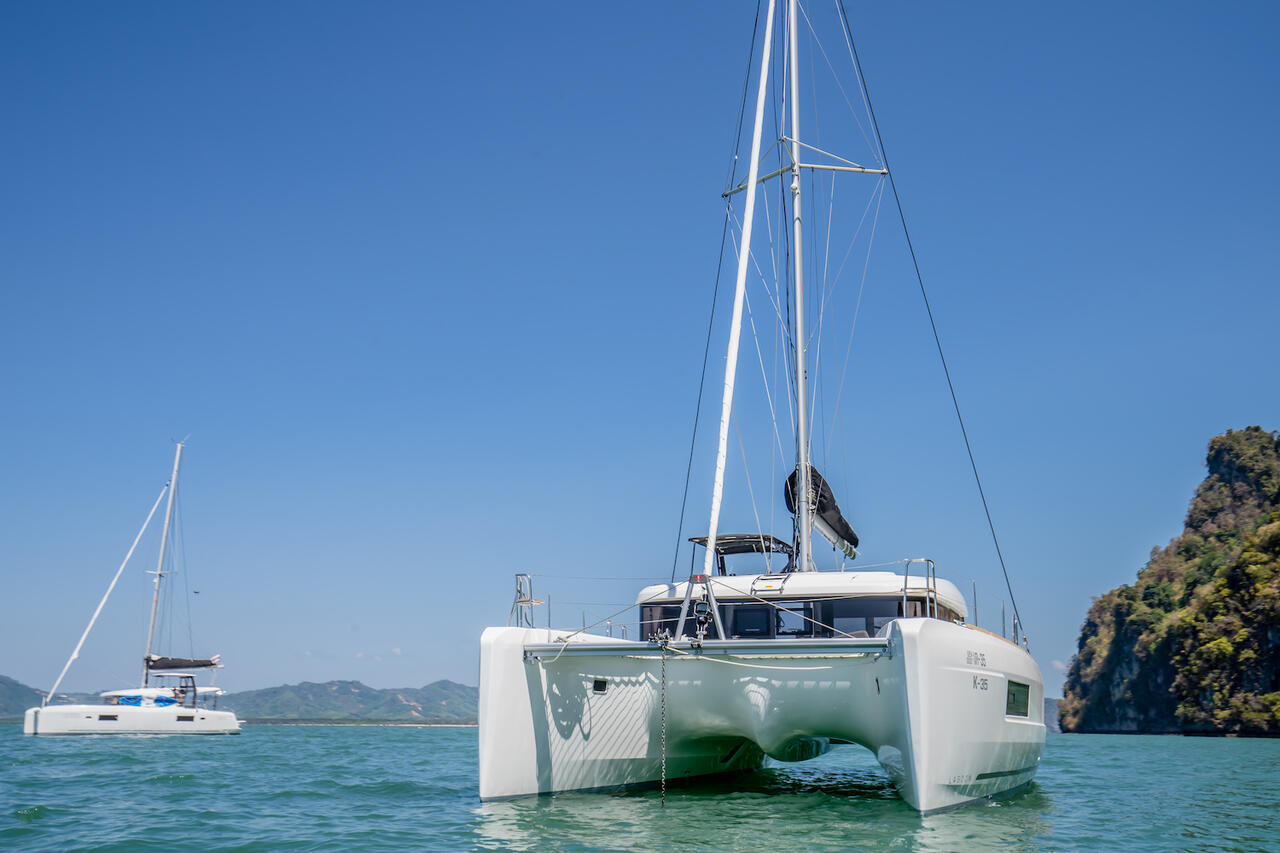
Catamarans are the usual choice here: shallow draught for the hongs and shallow anchorages, deck space and shade for the heat, and steadiness at anchor. Monohulls cost less and sail better when the breeze fills in, but you give up space and stability. For families and warm-water cruising, most people take the cat.
34Thailand questionsWhere can I sail in Thailand?
We charter across Phuket, Ko Chang and Ko Samui. Each area has its own page with the live fleet for your dates.
35Thailand questionsWhat kind of yachts are available in Thailand?
Bareboat if someone on your crew holds a licence, crewed if you would rather a skipper did the work. The grid above is live from our operator system and always shows what is actually free.
36Thailand questionsHow do I get a quote?
Tell us your dates, your group and the area you fancy. Same day, we send three real options with honest trade-offs.