 Catamaran
Sail Guadeloupe.
Live fleet
Catamaran Catamaran
 Catamaran
 Catamaran
 Catamaran
 Catamaran
 Catamaran
 Catamaran
 Catamaran
 Catamaran
 Catamaran
Petit Terre
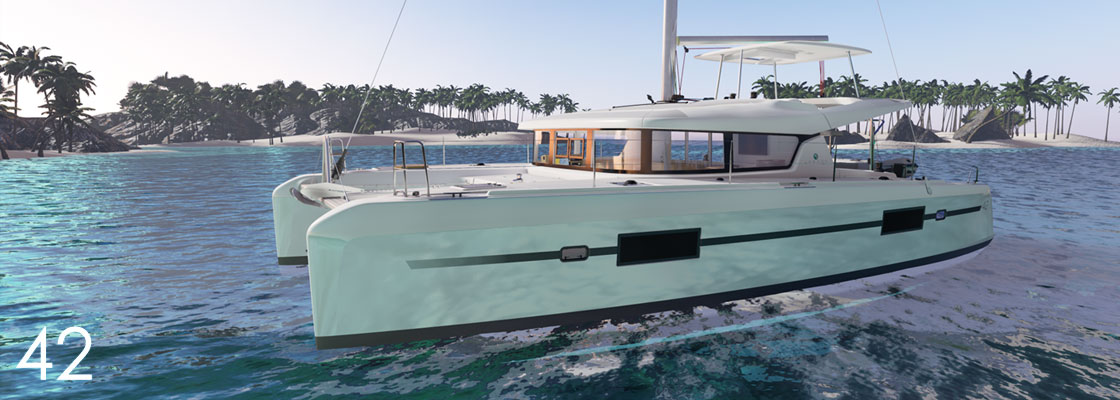
Lagoon 42 - 4 + 2 cab. · 2025Guadeloupe, Caribbean
10 guests4 cabins13 m
€3,900 / week
+ Compare Catamaran
 Catamaran
Providence
Lagoon 400 S2 - 4 + 2 cab. · 2016Guadeloupe, Caribbean
10 guests4 cabins12 m
€3,100 / week
+ Compare Catamaran
Guadeloupe questions
Asked and answered.
How much does a yacht charter in Guadeloupe cost?
As a guide, a 40–45ft bareboat monohull is roughly EUR 3,000–5,500 a week outside the peak and EUR 4,500–8,000 from mid-December to April. A 42–46ft catamaran runs roughly EUR 5,500–12,000. A skipper adds about EUR 200–250 a day. Crewed charters are price on request. Cleaning, fuel, deposit, tourist tax and reserve fees sit on top. Send us dates on WhatsApp for a real quote.
Do I need a sailing licence to charter bareboat in Guadeloupe?
French law does not require a licence to skipper a sailing yacht, so there is no permit to sit. The charter operator still decides whether to hand you the boat: expect to submit a sailing CV, and an ICC, RYA Day Skipper or equivalent makes that straightforward. Reef entrances at Saint-François and the Canal des Saintes crossing are the parts that need real experience, not paperwork.
When is the best time to sail Guadeloupe?
December to May. The north-east trades are steady at 15–20kt, rain is short and the anchorages are reliable. January and February bring the strongest wind, often 25kt and above, which suits confident crews and punishes over-canvassed ones. March to May is the sweet spot: warm, a little softer, fewer boats. June to November is hurricane season, quieter and cheaper but weather-dependent.
Where do charters start, and which marina?
La Marina Bas du Fort at Pointe-à-Pitre, on the south coast where the two halves of the island meet. It is a large basin with fuel, chandlery, supermarkets and restaurants on site, and the airport is 10–15 minutes away by taxi. From there Les Saintes is about 20nm south and Marie-Galante about 22nm south-east, so day one never has to be a long one.
Is Guadeloupe good for families and first-time charterers?
The south coast of Grande-Terre is, yes: reef-protected water between Gosier, Sainte-Anne and Saint-François, short hops, swimming everywhere and shops ashore. The open channel crossings to Les Saintes and Marie-Galante are a different matter, with swell and 20kt-plus. Families new to this often take a skipper for the week, or stay inside the reef and treat the crossings as optional.
Can we sail on to Dominica, Antigua or Martinique?
Physically yes — Dominica is around 25nm south of Les Saintes and Antigua around 40nm north — but a one-week charter rarely has room for it, and you will be clearing customs both ways with fees to match. Ten days or two weeks makes Dominica worthwhile: Prince Rupert Bay, the Indian River and a genuinely different island. Check your contract for cruising limits first.
What about the Rivière Salée shortcut between the two islands?
It saves a long detour around the south, but it is not a casual option. The bridges open early in the morning on a restricted schedule, the channel is shallow and mast height matters. Confirm the current openings locally before you plan a day around it. Most charter crews route around the southern coast instead and lose little except an hour or two.
Where do the yachts in Guadeloupe sail from?
Boats sailing Guadeloupe all year — boats operate from Guadeloupe. The fleet list above is live from our operator system, so it always shows what is actually available for your dates.
Bareboat or crewed in Guadeloupe?
Both. Bareboat if someone on your crew holds a licence, crewed if you would rather a skipper did the work. Tell us your experience level and we will match you.
How do I get a quote?
Send us your dates, your group and roughly the boat you want. Same day, we reply with real options, real prices and the honest trade-offs.
Talk to an expert
Get three options.
Charter types
Charter types in Guadeloupe.
Bareboat charter
You skipper it yourself — licence required.
Crewed charter
Skipper and crew do the work — you live aboard.
Cabin charter
Book a cabin, not the whole boat.
Guadeloupe · Caribbean — Yacht Charter
Getting there and practicalities
Fly into Pointe-à-Pitre Guadeloupe Pôle Caraïbes (PTP), 10–15 minutes by taxi from Bas du Fort. Direct from Paris Orly takes about 8h30; from the UK and the rest of Europe you connect through Paris. From North America, route via Miami, San Juan or Fort-de-France. It is French territory, so EU crews clear nothing on arrival and use euros and normal EU roaming.
Handover is usually late Saturday afternoon with return Friday evening or Saturday morning. French is the working language ashore; English is fine at the base and patchy on Marie-Galante. Ferries link Pointe-à-Pitre with Les Saintes, Marie-Galante and Dominica if crew arrive late or leave early.
Guadeloupe
01Why sail here
Guadeloupe is two islands joined at the middle, and they sail nothing alike. Basse-Terre is volcanic: rainforest to the ridge line, grey-sand bays, and a lee that goes glassy for an hour then throws 30kt down off the slopes. Grande-Terre is flat limestone, dry, reef-fringed and steadily windier. Between them the Rivière Salée splits the butterfly. Hang Les Saintes, Marie-Galante, La Désirade and Petite Terre off the south-east corner and you have a week of 20nm hops without ever leaving one archipelago. It is also France — euros, EU roaming, a chandlery that stocks what it says it stocks, and bread at 06:00.
02The sailing grounds and harbours
Almost everything starts at La Marina Bas du Fort in Pointe-à-Pitre, a large, well-served basin with fuel, sailmakers and supermarkets within walking distance. East of it, the south coast of Grande-Terre runs behind reef: Îlet du Gosier, the shallow lagoon at Sainte-Anne, then Saint-François, where the entrance is buoyed, narrow and best taken in good light. Ten miles further east lie Petite Terre — a nature reserve with a handful of moorings, iguanas on the beach and a bar across the entrance — and La Désirade beyond it.
South, across the Canal des Saintes, Terre-de-Haut is the anchorage most crews remember: moorings under Pain de Sucre, Fort Napoléon on the hill, ferries stirring the harbour until dusk. Marie-Galante is a flat pancake of cane fields and rum distilleries with anchorages at Saint-Louis and Grand-Bourg. On the west coast of Basse-Terre, Deshaies is the classic northern stop, with the Cousteau reserve off Pigeon Island for the diving.
The Rivière Salée cuts through the middle, but its bridges open early morning on a limited schedule and the channel is shallow. Confirm openings locally; most crews route around the south instead.
03Season and wind
The working season is December to May. North-east trades blow 15–20kt, with the late-December to February "Christmas winds" often 25kt and more. It is close-hauled going east along Grande-Terre and a fast reach coming back. Channel crossings — Canal des Saintes, and the passage to Marie-Galante — see accelerated wind and a swell that has come a long way; the lee of Basse-Terre does the opposite, and you will motor parts of that coast.
June to November is hurricane season, peaking August to October. Boats do sail through it, the anchorages are empty and the water is 29°C, but winds are lighter and squallier and you plan around the forecast. Check what your insurance and charter terms say about tracking storms. Tides are under 0.5m all year, so depth is about reef and swell, not timing.
04Bareboat, skippered or crewed
Both bareboat and crewed boats sail from Bas du Fort through the year, monohulls and catamarans. Bareboat is the bulk of it, typically 40–46ft. If your crew is short on Caribbean miles, take a skipper for the week or just for the first two days to get the reef entrances and the Saintes moorings sorted — it costs less than one grounding. Crewed charters, with skipper and cook aboard, work well for families and mixed-experience groups who would rather not run the boat themselves.
05What it costs
Ranges, not quotes. A 40–45ft bareboat monohull runs roughly EUR 3,000–5,500 a week outside the peak and EUR 4,500–8,000 from mid-December to April. A 42–46ft catamaran is roughly EUR 5,500–12,000 depending on age and week. A skipper is around EUR 200–250 a day plus their food. Fully crewed: price on request.
Budget separately for end cleaning, the security deposit or damage waiver, fuel, outboard hire, tourist tax, reserve and mooring fees at Les Saintes and Petite Terre, and clearance charges if you sail on to Dominica. Provisioning in supermarkets near the marina is French-priced: allow EUR 30–40 per person per day if you eat mostly aboard. Message us on WhatsApp with your dates and crew and we will price the actual boat.
06A week from Bas du Fort
Day 1 — Board in the afternoon, brief, shop. Stay in the marina, or drop the lines and anchor two miles east off Îlet du Gosier.
Day 2 — Gosier to Terre-de-Haut, about 20nm across the Canal des Saintes. Reef down before you leave the shelter. Mooring under Pain de Sucre.
Day 3 — Les Saintes. Walk up to Fort Napoléon early, swim at Pompierre, eat ashore in Bourg.
Day 4 — Terre-de-Haut to Saint-Louis, Marie-Galante, about 22nm on a beam reach. Hire scooters for the distilleries and the north-coast cliffs.
Day 5 — Marie-Galante to Saint-François, about 22nm and the windward leg of the week. Enter with the sun high.
Day 6 — Saint-François to Petite Terre and back, roughly 10nm each way, or on to Sainte-Anne. Moorings at Petite Terre are few and go early.
Day 7 — Sainte-Anne or Gosier back to Bas du Fort, 8–14nm, fuel, hand back.
Prefer flat water and rainforest to open crossings? Run the other way instead — Deshaies, Pigeon Island and the Basse-Terre coast — and accept more engine hours.
07Who it suits
Right for crews with a bit of sea time who want short passages, real landfalls and a different island most days. Right for families in the reef-protected water between Gosier and Saint-François. Less right for anyone who wants a marina berth every night — outside Bas du Fort and Saint-François this is an anchoring and mooring cruise — or for crews who dislike a windward leg.