 Motor Yacht
Sail Italy.
Live fleet
Motor Yacht Motor Yacht
 Motor Yacht
 Gulet
Gulet Gulet
GuletHande - Capo Galera
Hande - Capo Galera · 2003Capo D'orlando Marina, Italy
12 guests6 cabins28 m
€16,104 / week
+ Compare Motor Yacht
 Motor Yacht
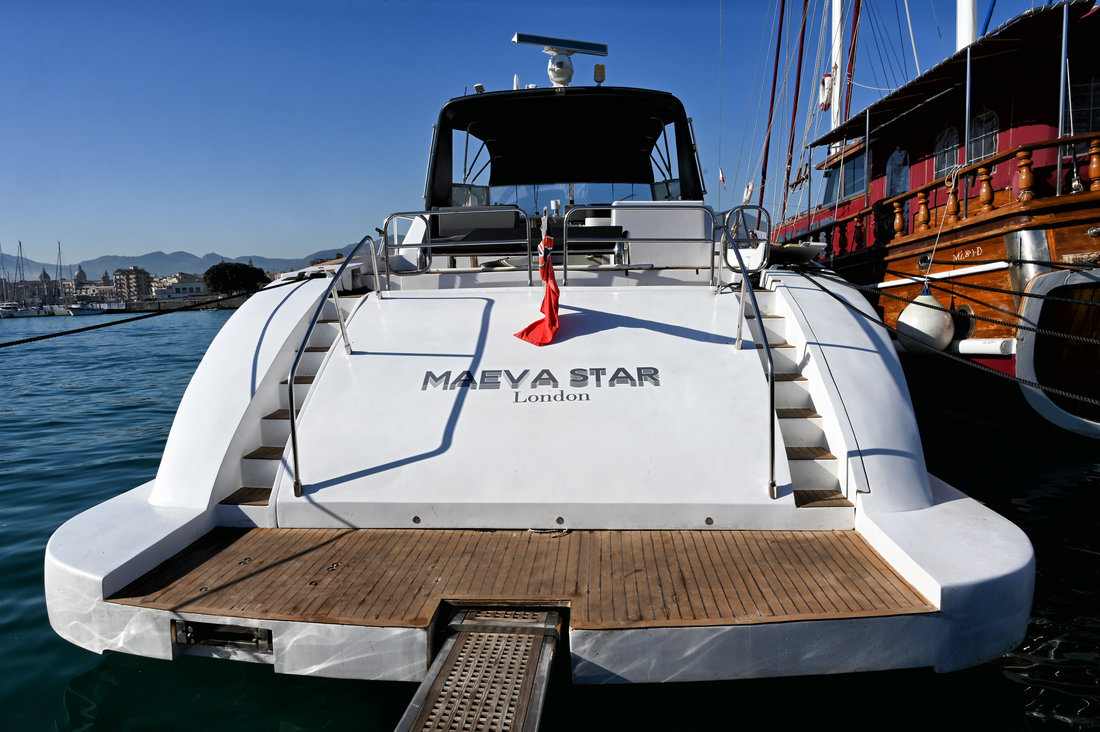
Maeva Star
Leopard 23 - 3 + 1 cab. · 1997Marina Poseidon, Italy
8 guests3 cabins23 m
€20,000 / week
+ Compare Motor Yacht
 Catamaran
 Catamaran
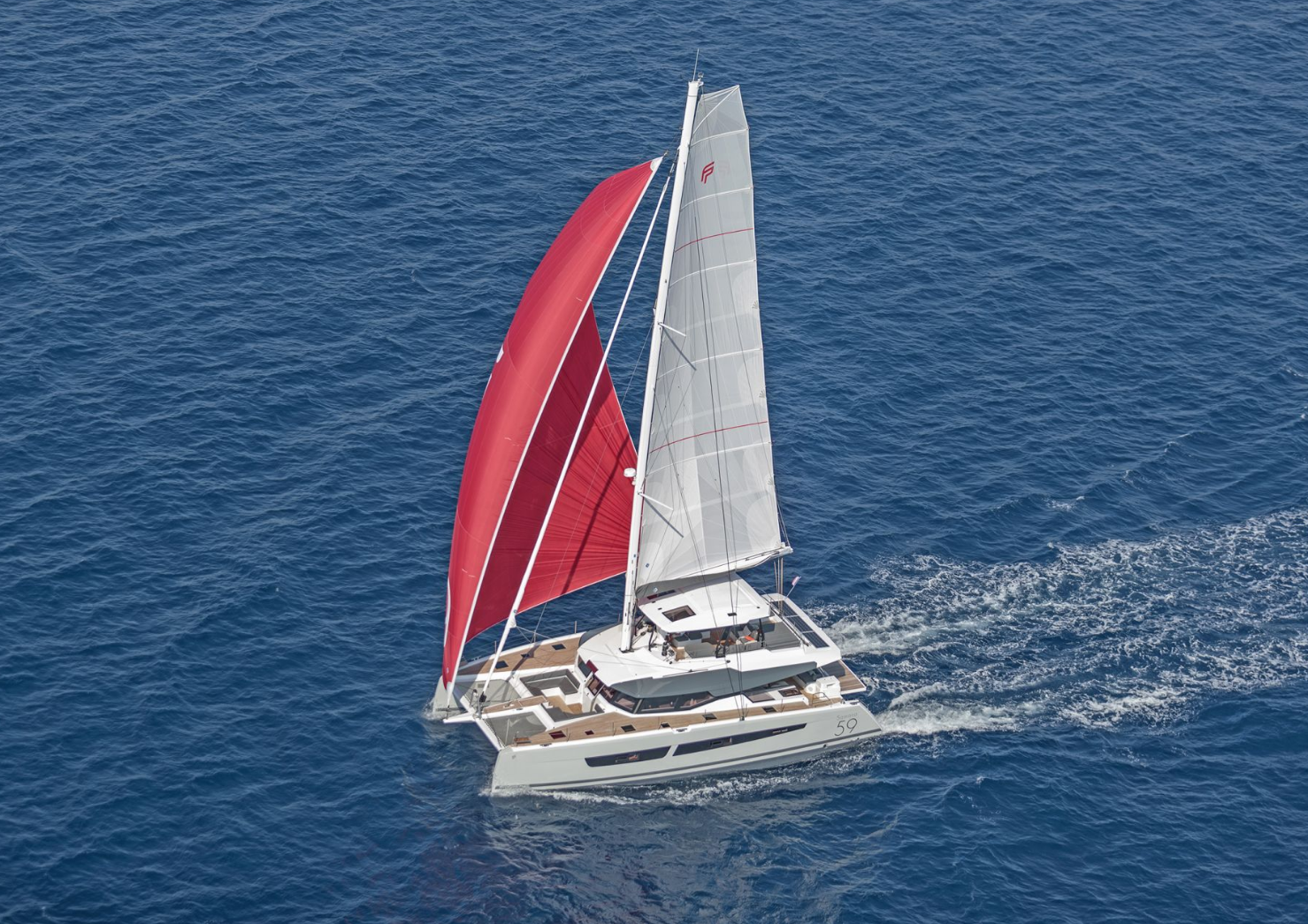
Caffè di Sicilia
Fountaine Pajot Samana 59 - 5 + 2 cab. · 2026Palermo, Italy
13 guests5 cabins19 m
€14,000 / week
+ Compare Catamaran
 Catamaran
 Catamaran
 Monohull
 Catamaran
 CatamaranCatamaran
 Monohull
 Monohull
Miss Marie
First 53 - 3 + 1 cab. · 2025Cala dei Sardi, Italy
7 guests3 cabins17 m
€5,590 / week
+ Compare Monohull
 Monohull
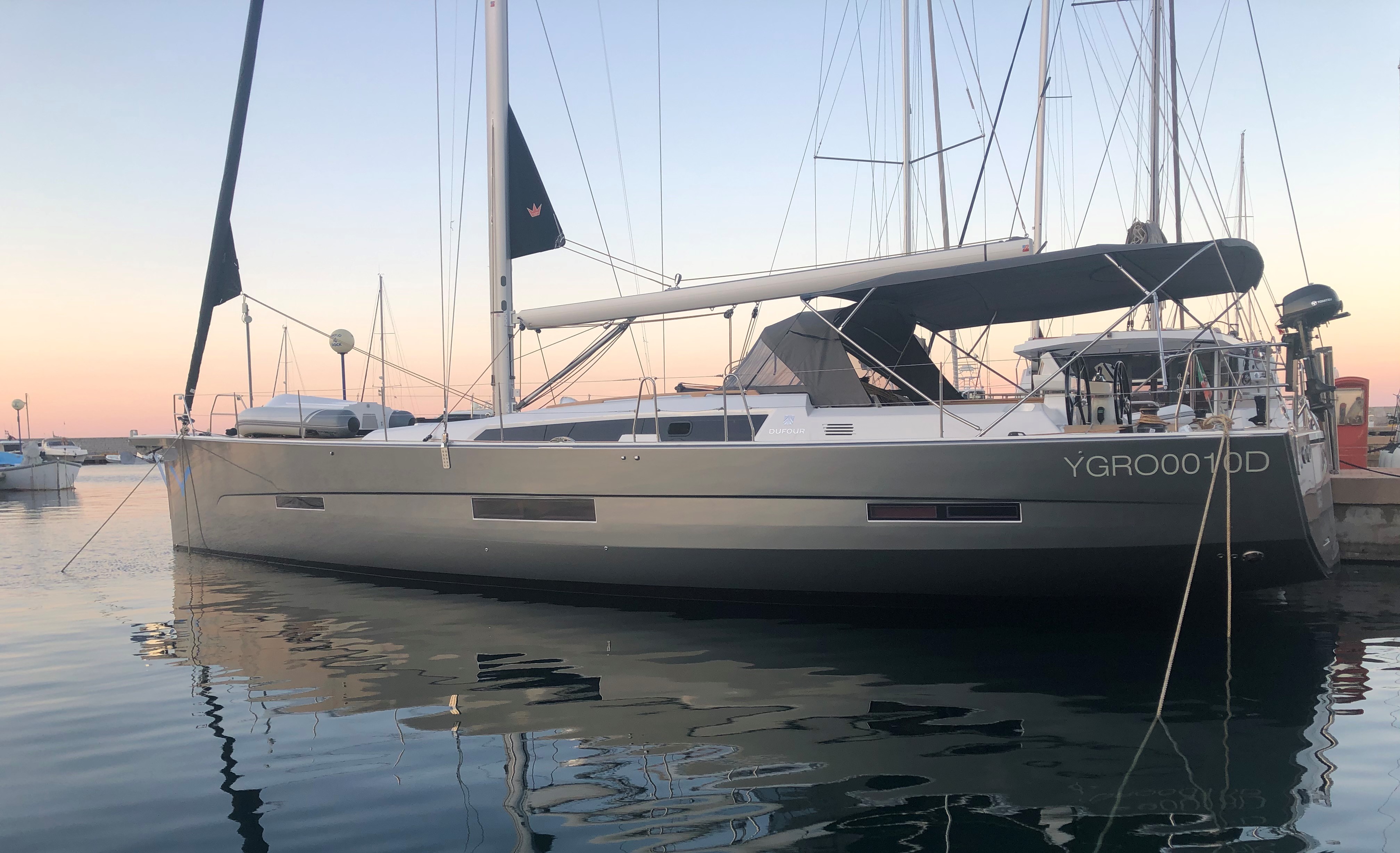
Razzmatazz
Dufour 56 Exclusive - 4 + 1 cab. · 2023Capo D'orlando Marina, Italy
12 guests4 cabins17 m
€5,500 / week
+ Compare Monohull
Euphoria Planet
Dufour 56 Exclusive - 4 + 1 cab. · 2022Sicily, Italy
11 guests4 cabins17 m
€3,950 / week
+ Compare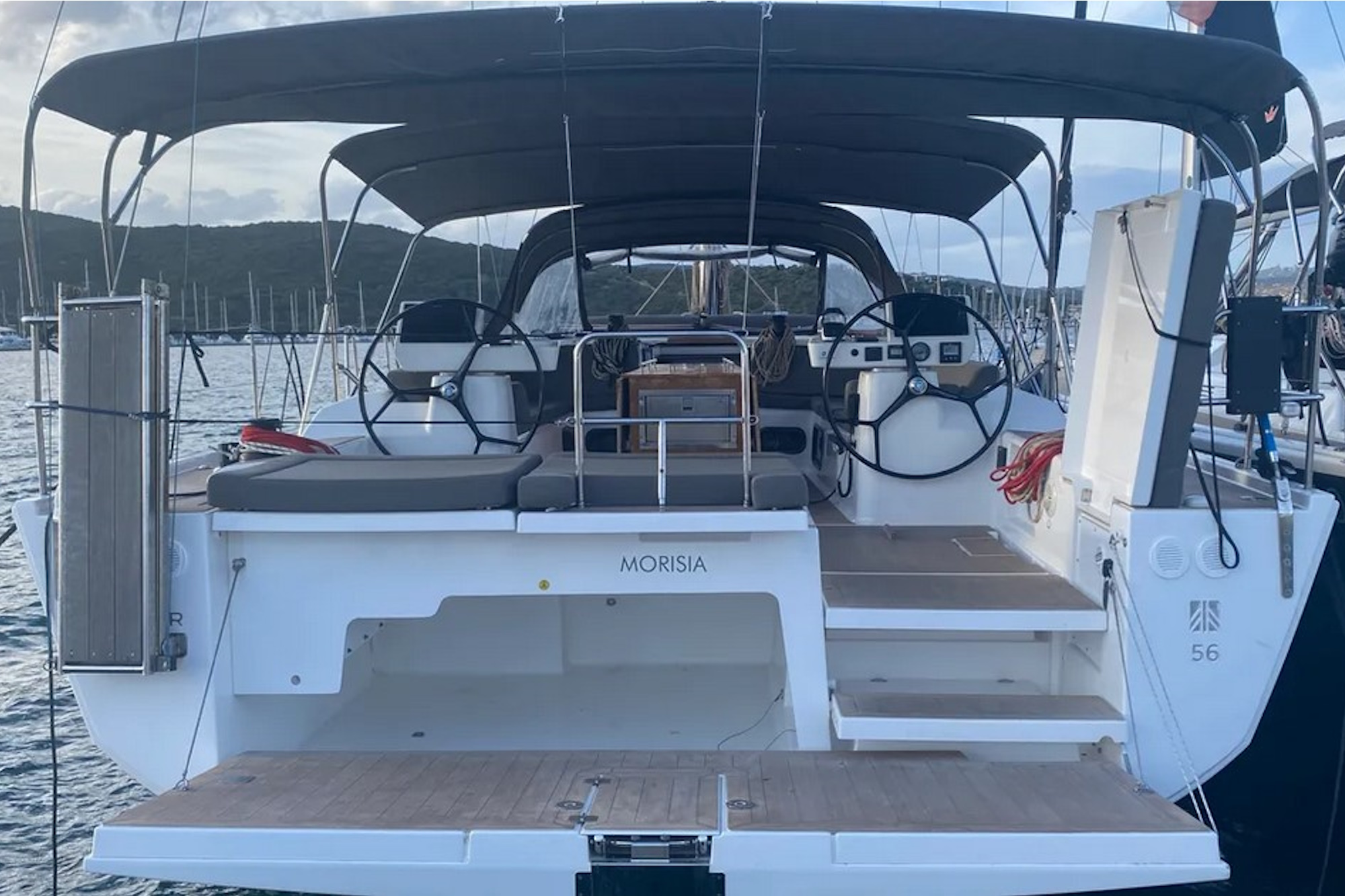 Monohull
 Monohull
 Monohull
Carmen Federica
Dufour Exclusive 56 - 3 + 1 cab. · 2020Capo D'orlando Marina, Italy
8 guests3 cabins17 m
€5,250 / week
+ Compare Monohull
Magic Planet
Dufour Exclusive 56 - 4 + 1 cab. · 2019Marsala, Italy
11 guests4 cabins17 m
€3,830 / week
+ Compare Monohull
 Catamaran
 Monohull
 Monohull
 Catamaran
 Catamaran
 Monohull
 Catamaran
 Catamaran
 Catamaran
 Motor Yacht
 Monohull
 Monohull
 Monohull
 Monohull
 MonohullMonohull
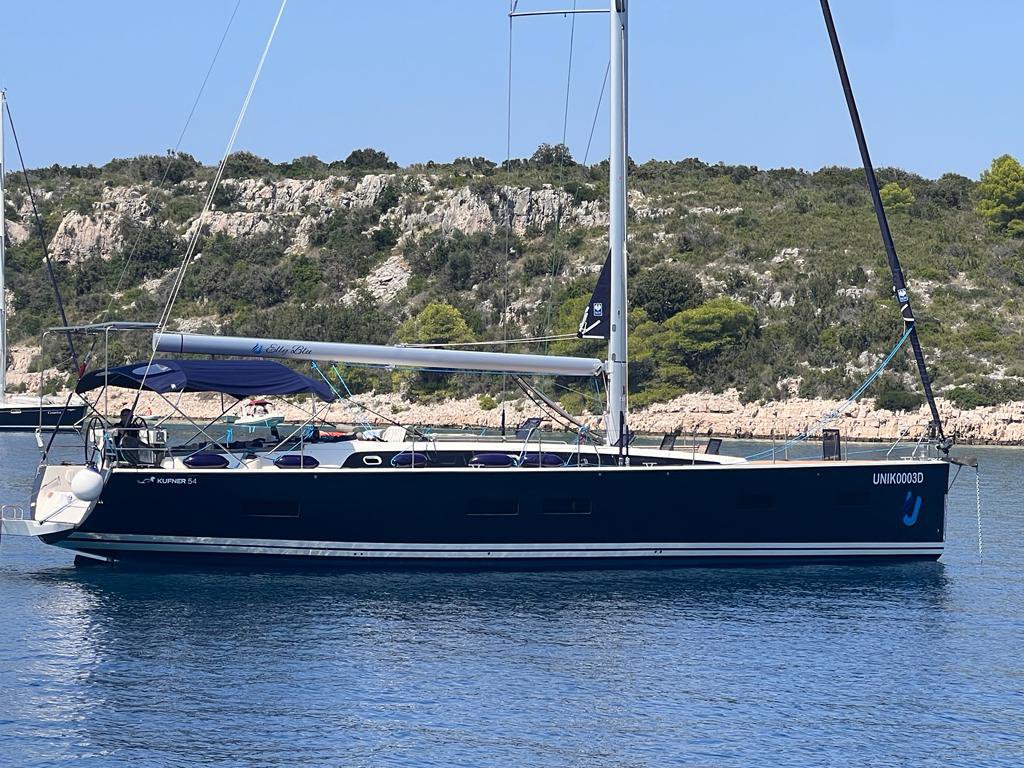 Monohull
 Monohull
 Monohull
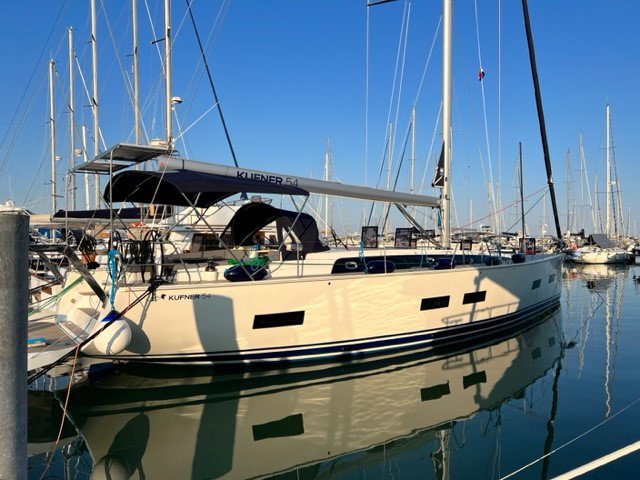 Monohull
By the cabin
Cabin cruises in Italy
Scheduled crewed cruises — book by the cabin and share the yacht with a small group.
Italy

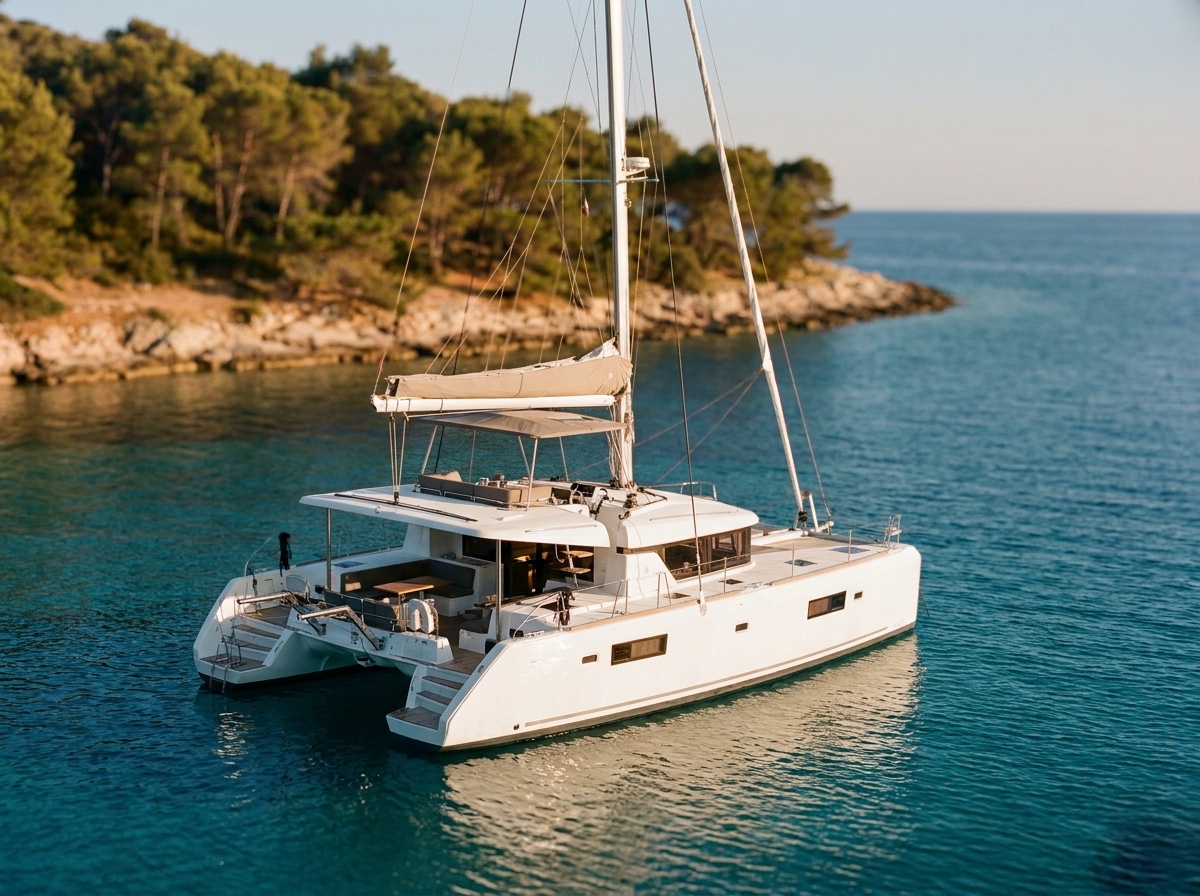
More cabin cruises
Other departures you can join, wherever you fancy sailing.
 €3,500per person
Croatia and Montenegro Cruise
Naya · crewed
Dubrovnik region, Croatia
7 days · Departs 26 Sept 2026View cabins
 €1,090per person
Modul B - Dufour 460 GL - Athi
Athi · crewed
Šibenik region, Croatia
7 days · Departs 26 Sept 2026 · 21 more datesView cabins
 €1,090per person
Modul B - Dufour 460 GL - Vellamo
Vellamo · crewed
Šibenik region, Croatia
7 days · Departs 26 Sept 2026 · 21 more datesView cabins
 €5,000per person
More Package Greece
Zephyre · crewed
Ionian Islands, Greece
7 days · Departs 28 Sept 2026View cabins
 €3,000per person
Pearl of the Adriatic Cruise
Kaptan Sevket · crewed
Montenegro, Montenegro
7 days · Departs 28 Sept 2026View cabins
 €1,090per person
Modul A - Aventura 37 - Ankolina
Ankolina · crewed
Šibenik region, Croatia
7 days · Departs 3 Oct 2026 · 2 more datesView cabins
Talk to an expert
Get three options.
Italy
01Why sail Italy
Italy is not one sailing ground. It's a dozen, strung down 1,500km of coast and split between two seas. Sardinia gives you granite headlands and water the colour of gin. Sicily gives you smoking volcanoes and Greek temples above the anchorage. Campania puts you under the Amalfi cliffs with Capri on the horizon. The wind is real here — most afternoons fill in from the north-west — and the harbours still smell of diesel, coffee and grilled fish at six in the morning. You can sail hard passages between islands or drop the hook and not move for three days. Both are Italy.
What ties it together is the shore. A konoba equivalent here is a family trattoria on the quay where the menu is whatever came in that morning. You anchor, you row in, you eat sardines and drink the local white, and the bill is a fraction of what the same view costs on land in July.
02The sailing areas
Sardinia is the biggest ground and the one experienced sailors ask for. The Maddalena archipelago in the north-east is a cluster of granite islands with short hops and clear anchorages; Costa Smeralda has the polish and the prices to match. The west coast is wilder and less charted with boats.
Sicily and its satellites are the volcanic option. The Aeolians — Lipari, Vulcano, Stromboli — are a week's cruise on their own, with overnight passages rewarded by an active volcano throwing sparks after dark. The Egadi islands off the west and the Ionian coast near Syracuse round it out.
Campania is the postcard: Capri, Ischia, Procida, the Amalfi coast. It's busy and moorings are tight in season, but few places pack this much into a short sail. Tuscany and the Tuscan archipelago (Elba, Giglio) suit gentler cruising and easy road access. Veneto means the Venetian lagoon and the northern Adriatic. Apulia and Calabria are the quieter heel and toe, better for those who want distance and empty anchorages.
03Season and winds
The season runs roughly May to October. June and September are the sweet spot: warm water, reliable breeze, fewer boats, lower rates than peak. July and August are hot, crowded and dear — expect full anchorages and booked-out mooring buoys, especially around Capri and the Maddalena.
The dominant wind is the maestrale (mistral), the north-westerly that funnels down the Tyrrhenian and can blow hard for days, particularly around Sardinia's Bocche di Bonifacio between there and Corsica — that strait deserves respect. The scirocco brings hot, hazy air from the south. Most summer days follow a thermal pattern: light mornings, an afternoon sea breeze of 10-18 knots, calm evenings. Autumn can bring the first proper lows, so watch the forecast from mid-September.
04Charter types
You can charter Italy bareboat if you and your co-skipper hold the paperwork, or take a skipper who knows the local anchorages, the port authorities and where the good trattorias hide. Crewed and catamaran options exist across the main grounds; catamarans are popular in Campania and the Maddalena for stability and shallow-draught anchoring. Flotillas run in the calmer areas for those new to the region who want company and a lead boat. If you're unsure which suits you, tell us your experience and group size on WhatsApp and we'll point you at the right ground and boat.
05Realistic costs
Italy is not the cheapest Mediterranean charter — expect to pay more than Greece or Croatia for the equivalent boat, and considerably more in Campania and Costa Smeralda in August. As a rough guide, a mid-size monohull runs from lower-thousands EUR per week in shoulder season to a large multiple of that for a peak-week catamaran on the Amalfi coast.
Budget separately for: fuel (modest under sail, more if you motor between islands), an end-of-charter clean, and mooring fees — these matter in Italy, where marina and buoy charges in the fashionable spots are among the highest in the Med and can add hundreds per night. Anchoring is free where permitted, and in many bays it's the better experience anyway. For a firm quote on specific dates and a specific boat, Price on request via WhatsApp.
06A sample week: the Aeolians
Day 1 — Board at Milazzo, Sicily. Provision, brief, short sail to Vulcano; anchor off the black-sand beach and walk up to the sulphur fumaroles.
Day 2 — Hop to Lipari, the archipelago's main town. Berth or anchor, walk the old citadel, eat ashore.
Day 3 — Salina, greener and quieter. Anchor off Pollara, the caper terraces above you.
Day 4 — Longer leg out to Filicudi or Alicudi, the far western islands — few boats, deep water, silence.
Day 5 — Sail back east toward Panarea, the smallest and smartest of the group; anchor off the Basiluzzo stacks.
Day 6 — Evening passage to Stromboli. Time it so you're offshore after dark to watch the volcano fire against the sky. Anchor at Ginostra or lie off.
Day 7 — Return leg to Milazzo, wind behind you if the maestrale is kind. Adjust for weather — the Aeolians are exposed, and a skipper earns their keep here.
07Getting there
Arrival depends on the ground. For Sardinia, fly into Olbia (north-east, closest to the Maddalena) or Cagliari. For Sicily and the Aeolians, Catania or Palermo, then transfer to Milazzo. For Campania, Naples airport puts you an hour from the marinas at Salerno or Castellammare. Tuscany works from Pisa or Florence. Transfers from airport to marina are straightforward but factor an hour or two, and confirm your embarkation port carefully — Italy's grounds are far apart and you can't easily swap regions mid-week.
Bring passports or ID cards, your sailing certificates if going bareboat, and a card that handles high mooring pre-authorisations. Message us on WhatsApp with your dates and preferred ground and we'll sort the boat, the base and the paperwork.
Practical information
01Entry & getting thereVisa & entry requirements
Italy is a founding member of the EU and the Schengen Area. EU/EEA citizens enter with a valid ID card or passport. Citizens of many other countries — including the UK, US, Canada and Australia — get up to 90 visa-free days in any 180-day period under the Schengen rules; other nationalities need a Schengen visa in advance, and the Foreign Ministry's online "Visa for Italy" checker settles which you are in a minute.
Non-EU passports must have been issued within the last ten years and stay valid for at least three months beyond your planned departure. Passport stamps are history: since April 2026 the EU's Entry/Exit System records non-EU arrivals digitally, with fingerprints and a photo taken on first entry. The ETIAS travel authorisation is expected to follow from late 2026 — not needed yet — so check your government's travel advice shortly before you fly.
02Entry & getting thereGetting there
Every Italian charter area has an international airport near its bases. Olbia (OLB) serves the Costa Smeralda and La Maddalena, with Cagliari (CAG) and Alghero (AHO) covering southern and north-western Sardinia; Naples (NAP) is the gateway for the Amalfi coast, Capri and Procida; Palermo (PMO) and Catania (CTA) open Sicily and the Aeolians, with Trapani (TPS) handy for the Egadi; Genoa (GOA) and Pisa (PSA) serve Liguria, Tuscany and Elba. Pick the airport nearest your marina — on the islands especially, transfer times differ more than flight prices.
In season, direct flights reach these coastal airports from most of Europe. Outside roughly November to March many island routes thin out or pause — Olbia keeps little beyond domestic links — while Rome (FCO), Milan and Naples run full schedules year-round; long-haul arrivals usually connect through one of those three.
03Entry & getting thereTime zone & daylight saving
Italy runs on Central European Time (CET, UTC+1) and switches to Central European Summer Time (CEST, UTC+2) with the rest of the EU — clocks go forward on the last Sunday of March and back on the last Sunday of October (in 2026: 29 March and 25 October). The IANA zone is Europe/Rome, and the whole country keeps one time zone.
Practically: Italy keeps the same time as Croatia, France and Germany, sits one hour ahead of the UK and Ireland, one hour behind Greece, and six ahead of US Eastern. A charter week normally sits inside one time regime — only late-October charters catch the clock change.
04MoneyCurrency & exchange
Italy uses the euro and was in the first wave of euro countries — lire became euros at a fixed 1,936.27 lire to the euro, with euro cash in circulation since 2002. Every price you'll see is in euros, and ATMs (bancomat) are everywhere along the coast, so there's little reason to arrive carrying much cash.
Withdraw from machines attached to real banks — Intesa Sanpaolo, UniCredit, BNL, Poste Italiane — which are typically fee-free at the Italian end. The standalone blue Euronet machines parked in tourist hotspots charge roughly €2–5 per withdrawal on top of a poor exchange rate. And whenever a machine or terminal offers to charge you in your home currency, decline and pay in euros — that "dynamic currency conversion" rate is never in your favour.
05MoneyPayment methods
Cards are accepted essentially everywhere: Italian law has required shops, restaurants, professionals and even taxis to accept card payments since mid-2022, with fines for refusing (€30 plus 4% of the transaction), and contactless is the norm from supermarkets to marina offices. Bills of €5,000 or more can't legally be settled in cash at all — big payments go by card or transfer.
Still, carry some cash. Small coffee bars, market stalls, beach clubs and mooring attendants in little harbours prefer it, and a card terminal on an island quay can simply be offline. Tips are handed over in cash even when the bill goes on a card, and as everywhere: if a terminal offers to charge your home currency, choose euros instead.
06MoneyTipping culture
Tipping in Italy is genuinely optional — staff are salaried, and Italians themselves rarely leave more than loose change. What you will meet instead is the coperto, a €1–3 per-head cover charge printed on the menu, and in the big tourist towns sometimes a servizio of 10–15%; where service is already on the bill there's no need to add more. For good service the local gesture is rounding up — a euro or two, or to the nearest ten on a bigger dinner — always in cash, even when the bill goes on a card. Round up taxi fares too.
On skippered and crewed charters, a discretionary tip for the crew at the end of a good week is a well-established courtesy — in the Mediterranean around 5–15% of the charter fee, handed to the skipper to share out.
07MoneyCost of living
Italy spans a wide price range. As a national average, a meal in an inexpensive restaurant runs about €17, a three-course dinner for two mid-range around €70, half a litre of draft beer €5 and a cappuccino under €2 — espresso drunk standing at the bar is famously cheaper still. Supermarkets and street markets are good value for provisioning the boat.
The premium is in the postcode. The marquee coasts — Amalfi, Capri, Venice, the Costa Smeralda — can run two to three times normal Italian prices in high season, yet the effect is local: a town or bay away from the headline harbour, the same dinner drops back to everyday Italian money. Eat where the locals do and the coast stays affordable.
08Rules & permitsSailing regulations & permits
Italy expects a certified skipper on every bareboat charter. Bring a recognised national certificate or an ICC plus a VHF radio certificate (yours or a crew member's) — the law formally requires a licence beyond 6 nautical miles from the coast or with an engine over 40.8 hp, and charter companies require one regardless. Licence copies go to the base in advance, with a crew list, and you bring the originals to check-in.
Third-party liability insurance is compulsory for motorised craft in Italian waters and comes included with the charter. The Guardia Costiera patrols busily in high season — notably around Sardinia — so keep the boat's papers, your licence and radio certificate to hand. Licence specifics for skippering yourself live on our bareboat pages.
09Rules & permitsSubstances & laws
The legal age to buy alcohol in Italy is 18 — selling to minors draws fines, and serving under-16s is a criminal offence. Recreational drugs are illegal and treated severely: expect long jail sentences and heavy fines for possession, use or smuggling, and even small personal amounts bring administrative sanctions. Don't bring anything aboard.
Arriving from another EU country you can carry generous personal-use amounts (indicative levels: 800 cigarettes, 10L of spirits). From outside the EU the allowance is 200 cigarettes plus 1L of spirits or 2L of fortified wine, 4L of still wine and 16L of beer, age 17+, with other goods to €430 by air or sea. Prescription medication travels in its original packaging with the prescription or a doctor's note. Local by-laws add their own fines — some towns bar drinking around monuments at night — so read the signs.
10Rules & permitsFishing regulations
Recreational sea fishing in Italy is free, but from 2026 it runs through the EU's RecFishing system: anyone aged 16 or over fishing from a boat or underwater must register — at no cost — via the RecFishing app before wetting a line, after a ministerial decree made registration mandatory from May 2026. Catches of four managed species (bluefin tuna, swordfish, dolphinfish and albacore) must be reported in the app before you're back in port, and fishing unregistered risks a fine.
The long-standing limits still apply: up to 5 kg of fish per person per day (or one larger fish), no selling your catch, and spearfishing only while freediving — never with tanks, never within 500 m of frequented beaches, and never inside marine protected areas.
11Rules & permitsWildlife protection laws
The seas off Italy's north-west coast lie inside the Pelagos Sanctuary — a marine-mammal reserve of almost 90,000 km² created by Italy, France and Monaco, home to all eight cetacean species resident in the Mediterranean, fin whales and striped dolphins included. They are strictly protected: keep at least 100 m off, come parallel to their course rather than head-on, hold any encounter to about 30 minutes at slow speed, and give groups with calves extra room.
The same care extends below the surface. Loggerhead turtles nest on southern beaches and are protected under EU law; the noble pen shell — the Mediterranean's giant fan mussel, critically endangered after a mass die-off — must never be touched or taken, and collecting shellfish while diving is banned. Admire, photograph, leave in place.
12Rules & permitsInsurance requirements
The chartered yacht comes fully insured: hull cover plus the third-party liability insurance Italian law makes compulsory for motorised craft. Your exposure for damage is capped at the security deposit — typically a few thousand euros blocked on a credit card at check-in and released after undamaged return. Most operators offer an optional damage waiver that shrinks that risk to a small excess for a non-refundable fee; read the exclusions, as negligence and tender gear often sit outside it.
Two strong recommendations, and we mean them: carry travel insurance with proper medical cover — an EHIC/GHIC gives EU/UK visitors access to Italian state care but is no substitute for insurance, which alone covers repatriation — and take holiday-cancellation insurance when you book. We don't insure charters or holidays; cancellation cover is the only thing that protects your payment if life intervenes.
13Health & safetyEmergency contacts
All emergencies (EU-wide): 112 — Italy's single emergency number, now answering across most regions; the old direct lines below still work everywhere.
Police: 113
Fire: 115
Ambulance: 118
Coast guard (sea rescue): 1530
At sea, call 1530 or hail the coast guard on VHF channel 16 — both watched around the clock. All numbers are free from any Italian landline or mobile.
14Health & safetyHealthcare & hospitals
Italy's national health service (SSN) delivers some of Europe's best care, strongest in the north and centre and more stretched in parts of the south. Every coastal charter hub — from La Spezia and Naples to Olbia, Cagliari and Palermo — has a public hospital, and pharmacies (farmacia, the green cross) are everywhere; the UK FCDO publishes a list of medical providers with English-speaking staff. In summer many resort areas run a guardia medica turistica, a walk-in tourist duty doctor paid per visit against a receipt for your insurer.
EU and UK visitors can use an EHIC/GHIC for medically necessary state care, but it covers neither private clinics nor repatriation — travel insurance with proper medical cover is essential. In an emergency dial 118, or 112.
15Health & safetyVaccinations
No vaccinations are required to enter Italy. Health authorities recommend being current on routine vaccines (MMR, tetanus-diphtheria-polio, flu, COVID-19), with hepatitis A worth considering for most travellers and hepatitis B for some. Tick-borne encephalitis is a question only if you'll hike or camp inland in the north — ticks live in grass and woodland, not on the water. Italian summers bring mosquitoes, and West Nile virus cases are reported most years, so pack repellent for evenings ashore.
Check advice about eight weeks before you travel (CDC, or TravelHealthPro for UK travellers) in case recommendations change.
16Health & safetyWater drinkability
Tap water in Italy is safe to drink nationwide — it meets EU drinking-water standards, the Ministry of Health monitors it continuously, and in Rome the free nasoni street fountains are a civic institution. The only tap to skip is one marked "acqua non potabile" (not drinkable), a sign you'll see on some ornamental and rural fountains.
The sailing caveat is the small islands: the Aeolians and a few other minor islands have no natural sources and run on shipped or desalinated water, so supply tightens in peak summer and locals treat it carefully. There, and in rural corners of the far south, most crews drink bottled and keep the yacht's tank water for washing and cooking — which is exactly what it's for.
17Health & safetyEnvironmental hazards
Italy's marquee hazard is wind, not wildlife. The maestrale (NW) can rise from calm to 40 knots in a matter of hours, and it funnels through the Strait of Bonifacio at 25–30 knots even in summer — a pleasant Force 4 morning can turn into Force 7 by afternoon, so treat northern Sardinia with respect and wait out strong episodes in port. The libeccio (SW) builds short, steep seas on west-facing coasts, and late summer adds thunderstorm risk. All of it is usually well forecast: check every morning and take warnings seriously.
In the water the hazards are small-scale. Mauve stinger jellyfish (Pelagia noctiluca) drift through in swarms some summers, especially in the southern Tyrrhenian and around the Aeolians — the sting is painful but passes. Weever fish bury themselves in sandy shallows (immerse a sting in hot water, about 40–45°C), and sea urchins carpet the rocks — water shoes solve both.
18Weather & seaWeather & best seasons
The Italian charter season runs from May to late October. July and August bring the hottest, busiest weeks — mid-20s to 30°C, lively harbours, peak prices and often light, afternoon-only breezes that mean more motoring. May, June and September are the all-round sweet spots: warm seas, steadier sailing wind, quieter anchorages and better rates, and early October can still be lovely in the south.
Which wind you meet depends on where you sail. The maestrale (NW) dominates Sardinian waters and can build fast; the libeccio (SW) throws short, steep seas at west-facing coasts; the scirocco (SE) arrives warm and hazy off Africa; and on most summer afternoons a local sea breeze fills in, then dies at dusk. Past patterns are a guide, not a promise — always sail to the current forecast.
19Weather & seaSunrise & sunset by season
Italy gives long sailing days in season: daylight stretches to around 15 hours at midsummer against roughly 9 in midwinter. In June, Rome sees first light about 05:35 and sunset near 20:50 — long, warm evenings with time for a swim stop after the day's leg. Daylight shifts a little with latitude and longitude, so Milan's June evenings run later than Bari's, and by October the days shorten quickly — plan passages earlier in the day.
For exact sunrise and sunset times at your harbour and week, check a per-city table such as gaisma.com or timeofsunrise.com (they cover Rome, Naples, Palermo and the coastal towns).
20Weather & seaConservation tips
Italy rings its best cruising grounds with some thirty marine protected areas, most zoned A/B/C: zone A is a no-entry integral reserve, while the outer zones allow regulated navigation, mooring and swimming. Several charge for entry — in the La Maddalena archipelago every boat needs a park permit priced by length and bought online in advance (it costs 40% more inside the park), and Asinara and other Sardinian reserves run similar schemes. Check each park's current rules before you enter; zones, buoys and hours change.
Everywhere, the seabed rule matters most: anchoring on posidonia seagrass is prohibited and fined, so drop only on clear sand and use park buoys where laid. Keep to the near-shore speed limits, take rubbish ashore, use marina pump-outs, and choose reef-safe sunscreen.
21Culture & practicalitiesLanguage & cultural tips
Italian is the official language, and English is genuinely hit and miss: roughly a third of Italians speak some, strongest in the northern cities, the big tourist centres and among the under-40s, thinner in the south and in small harbour towns — exactly where a sailing week takes you. Marina staff, charter bases and waterfront restaurants in the sailing hubs manage fine in English.
A few words of Italian transform the welcome: buongiorno (good day), per favore (please), grazie (thank you). Coastal life runs on Italian rhythms — a proper lunch, a quieter mid-afternoon, dinner rarely before 8pm — and a greeting when you step into a shop or bar is basic good manners.
22Culture & practicalitiesHistory & culture
Sail here and you are in the wake of the four maritime republics — Amalfi, Pisa, Genoa and Venice — which between the 9th and 16th centuries ran Mediterranean trade, spread the compass through Europe, and wrote the first maritime law codes: Amalfi's 11th-century Tavole Amalfitane governed seafaring across the Mediterranean for centuries. Venice built trading galleys at its Arsenal and held its lagoon empire until 1797; Genoa's cartographers drew the charts everyone else sailed by.
The legacy is easy to touch between swims: all four republics fly on the Italian Navy's flag, and the Regata delle Antiche Repubbliche Marinare — a rowing regatta held since 1955 — still rotates between the four old rivals each year.
23Culture & practicalitiesNational holidays & closures
Italy keeps a dozen national public holidays plus, in every town, the local patron saint's day (Rome 29 June, Milan 7 December, Naples 19 September). The ones most likely to touch a charter week are Liberation Day (25 April), 1 May, Republic Day (2 June) and above all Ferragosto (15 August) — mid-August is when the whole country holidays at once, so berths, tables and ferries are at their tightest. From 2026 the Feast of St Francis (4 October) returns as a national holiday after nearly fifty years.
On holidays banks, offices and most small shops close, while restaurants, museums and businesses in the tourist harbours largely keep going and pharmacies run a rota. If a holiday falls in your week, provision the day before.
24Culture & practicalitiesDress code & what to pack
Life aboard is barefoot-casual, but Italian towns dress a notch smarter — smart-casual covers dinner ashore anywhere. Two customs are enforced, not just polite: swimwear stays on the boat and the beach, because resort towns including Sorrento, Tropea and Lipari fine beachwear or bare torsos in town streets (Sorrento up to €500); and churches ask for covered shoulders and knees, checked at the famous ones. A light scarf doubles as a cover-up.
Pack in soft duffels — lockers, not wardrobes — with non-marking deck shoes for on board, sandals for town and layers for the evening breeze, even in July. Add reef-safe high-SPF sunscreen, a hat, polarised sunglasses and a power bank, and leave hard cases and heels at home; they punish teak and ankles alike.
25Culture & practicalitiesMobile & internet coverage
Coverage along the Italian coast and on the islands is good on the big networks. TIM has the widest footprint and is the steady choice when a week strings together cities, small harbour towns and open water; Vodafone runs it close with strong island coverage, and WindTre leads on 5G reach. Sardinia and Sicily are well covered on the majors — expect dead patches on open crossings and in steep-sided bays, with signal returning as you close the harbour.
EU/EEA SIMs roam like at home in Italy under EU rules (fair-use caps on very cheap plans aside). Visitors from elsewhere can buy a tourist SIM or activate an Italian eSIM before flying — all four operators, Iliad included, sell them. Download charts and entertainment before a day in the outer islands.
26Culture & practicalitiesElectricity & plug types
Italy runs 230V at 50Hz with three socket types: the continental C and F plus Italy's own type L — a three-pin in-line socket that has been the national standard since 1990 and is what you will meet in most hotels and newer buildings. A universal adapter covers all three; EU two-pin plugs fit type L sockets too. US 110V-only appliances also need a voltage converter, not just an adapter.
Aboard, the yacht charges phones from 12V USB under way and gives 230V sockets on shore power in a marina. Charge laptops, drones and camera packs on marina nights, and bring a power bank for days at anchor.
27Italy questionsHow much does a yacht charter in Italy cost?
It varies widely by ground, boat and season. Shoulder-season monohulls start in the lower thousands of euros per week; peak-week catamarans on the Amalfi coast or Costa Smeralda cost several times that. Budget separately for fuel, end cleaning and mooring fees — Italian marina and buoy charges in fashionable spots are among the highest in the Med. For a firm figure on your dates, message us on WhatsApp: price on request.
28Italy questionsDo I need a licence to charter a yacht in Italy bareboat?
Yes. To take a boat bareboat you need a recognised sailing qualification (such as an ICC or RYA Day Skipper equivalent) and usually a VHF certificate, plus a competent co-skipper. Requirements can vary by base and boat size, so send us your certificates on WhatsApp and we'll confirm what's accepted. No paperwork? Take a skipper — they also know the local anchorages and port authorities.
29Italy questionsWhen is the best time to sail Italy?
June and September are the sweet spot: warm water, reliable afternoon breeze, fewer boats and lower rates than peak. July and August bring the strongest heat, the busiest anchorages and the highest prices, especially around Capri and the Maddalena. May and October are quieter and cheaper but cooler, with a higher chance of the first autumn weather systems late in the season.
30Italy questionsWhere should I start my Italian charter?
It depends which ground you want. Sardinia's Maddalena archipelago is best reached from Olbia. For the Aeolian volcanoes, base at Milazzo near Catania or Palermo. For the Amalfi coast, Capri and Ischia, start from Naples or Salerno. Tuscany and Elba work from Pisa. The grounds are far apart and hard to combine in one week, so pick the region first.
31Italy questionsIs Italy good for a family sailing holiday?
Yes, with the right ground. The Maddalena archipelago and the Tuscan islands offer short hops, sheltered anchorages and clear swimming water that suit families and less experienced crews. A catamaran gives more space and shallow-draught anchoring. Avoid long exposed passages like the Bocche di Bonifacio or the outer Aeolians with young children. Tell us the ages and experience of your group on WhatsApp and we'll match the ground and boat.
32Italy questionsWhat are the winds like sailing in Italy?
The dominant summer wind is the maestrale, a north-westerly that can blow hard for days, particularly through Sardinia's Bocche di Bonifacio. The scirocco brings hot, hazy southerlies. Most summer days follow a thermal pattern: light mornings, an afternoon sea breeze of 10-18 knots, calm evenings. From mid-September the first proper lows arrive, so watch the forecast closely late in the season.
33Italy questionsWhere can I sail in Italy?
We charter across Sardinia, Sicily, Campania, Tuscany, Veneto, Friuli-Venezia Giulia, Apulia and Calabria. Each area has its own page with the live fleet for your dates.
34Italy questionsWhat kind of yachts are available in Italy?
Bareboat if someone on your crew holds a licence, crewed if you would rather a skipper did the work. The grid above is live from our operator system and always shows what is actually free.
35Italy questionsHow do I get a quote?
Tell us your dates, your group and the area you fancy. Same day, we send three real options with honest trade-offs.