 Catamaran
Sail Martinique.
Live fleet
Catamaran Catamaran
 Catamaran
 CatamaranCatamaran
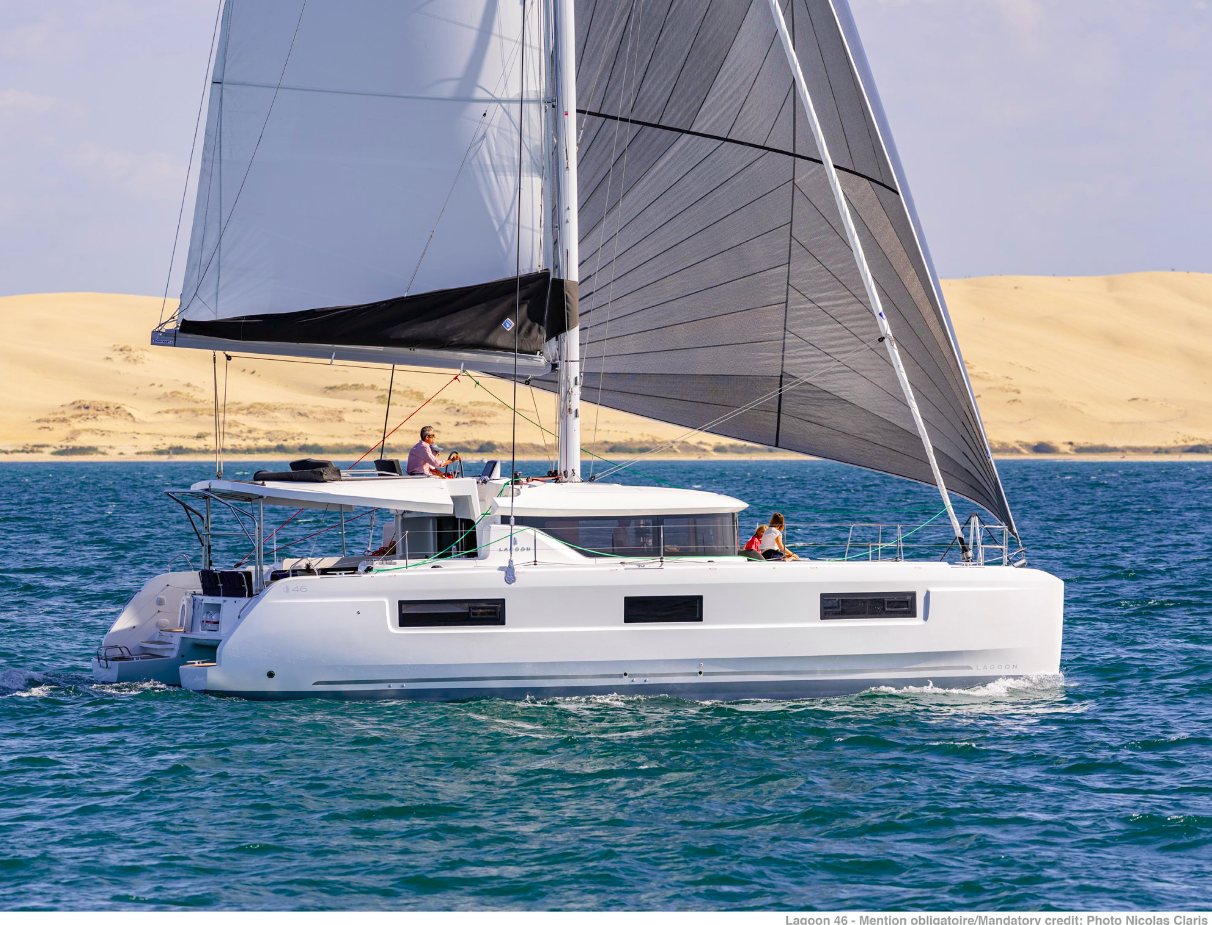
Star of the Seas IV
Lagoon 46 - 4 + 2 cab. · 2024Mallorca, Spain
12 guests4 cabins14 m
€7,990 / week
+ Compare Catamaran
 Catamaran
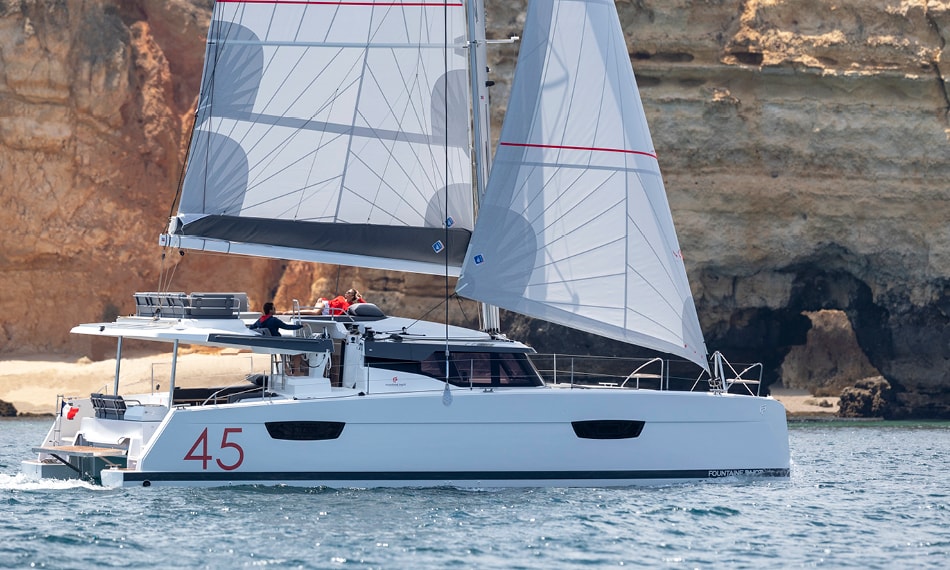
Be Hang Loose
Fountaine Pajot Elba 45 - 4 cab. · 2025Panama, Panama
8 guests3 cabins13 m
€5,900 / week
+ Compare Catamaran
 Catamaran
 Catamaran
 Catamaran
By the cabin
Cabin cruises in Martinique
Scheduled crewed cruises — book by the cabin and share the yacht with a small group.
Martinique

More cabin cruises
Other departures you can join, wherever you fancy sailing.
 €3,500per person
Croatia and Montenegro Cruise
Naya · crewed
Dubrovnik region, Croatia
7 days · Departs 26 Sept 2026View cabins
 €1,090per person
Modul B - Dufour 460 GL - Athi
Athi · crewed
Šibenik region, Croatia
7 days · Departs 26 Sept 2026 · 21 more datesView cabins
 €1,090per person
Modul B - Dufour 460 GL - Vellamo
Vellamo · crewed
Šibenik region, Croatia
7 days · Departs 26 Sept 2026 · 21 more datesView cabins
 €1,200per person
Sail the Aeolian Islands
Maria Louise II · crewed
Sicily, Italy
7 days · Departs 26 Sept 2026View cabins
 €5,000per person
More Package Greece
Zephyre · crewed
Ionian Islands, Greece
7 days · Departs 28 Sept 2026View cabins
 €3,000per person
Pearl of the Adriatic Cruise
Kaptan Sevket · crewed
Montenegro, Montenegro
7 days · Departs 28 Sept 2026View cabins
Martinique questions
Asked and answered.
How much does a yacht charter in Martinique cost?
It depends on the boat and the dates. A 40-45ft monohull in the Windwards typically runs into the low-to-mid thousands of euros a week; catamarans cost considerably more. On top, budget fuel, cleaning, any park or cruising fees, and a refundable deposit. A hired skipper adds a daily rate plus food. We quote firm figures per booking — message us on WhatsApp with your dates.
Do I need a licence to charter a bareboat in Martinique?
For bareboat, at least one person aboard must show sailing competence — usually a recognised certificate such as ICC or ASA, plus a sailing CV showing you've handled a similar boat. There's no single Caribbean licence law, but the base assesses your experience before handing over the keys. If your crew's experience is thin, hire a skipper. Tell us honestly what you hold and we'll advise.
When is the best time to sail Martinique?
January to April is the sweet spot: dry, steady north-east trades at 15-20 knots and warm water. December and May are shoulder months — good sailing, slightly more chance of unsettled days. Avoid June to November, the Atlantic hurricane season, when most bases wind down and weather is unreliable. Book the peak weeks early; the good dates go first.
Where do charters start in Martinique?
In Le Marin, on the south coast — one of the largest charter bases in the eastern Caribbean, with chandlery, provisioning and boat support close by. It's a deep, protected bay full of moorings. From there Sainte-Anne is a ten-minute motor and makes a common first night. The airport near Fort-de-France is about 40 minutes by road.
Is Martinique good for a family sailing holiday?
Yes, if you keep the plan sensible. Stay along the sheltered south and leeward coast — Sainte-Anne, Grande Anse d'Arlet — where the water is calm and there are beaches and villages ashore. The open channel crossings to St Lucia get lumpy in the trades, so skip those with young kids. Provisioning in Le Marin is easy and euro-priced. A skipper takes the pressure off if you want it.
Can I sail from Martinique to the Grenadines?
You can, but be realistic about the week. Martinique to St Lucia is a 20-25nm channel crossing in open trade-wind seas; continuing to St Vincent and the Grenadines adds more open water and several customs clearances. It's a rewarding route for an experienced crew on a longer charter, but a tight one-week bareboat is better spent between Martinique and northern St Lucia. Ask us what's realistic for your dates.
Monohull or catamaran for Martinique?
Both work. A catamaran gives more space, shallower draft for the bays, and a steadier platform for a family — at a notably higher price. A monohull is cheaper, sails better upwind in the trades, and suits crews who want the boat to feel like sailing. For the channel crossings a cat rides flatter; for pure sailing enjoyment a monohull rewards you. Tell us your crew and we'll steer you.
Where do the yachts in Martinique sail from?
Boats sailing Martinique all year — boats operate from Martinique. The fleet list above is live from our operator system, so it always shows what is actually available for your dates.
Bareboat or crewed in Martinique?
Both. Bareboat if someone on your crew holds a licence, crewed if you would rather a skipper did the work. Tell us your experience level and we will match you.
How do I get a quote?
Send us your dates, your group and roughly the boat you want. Same day, we reply with real options, real prices and the honest trade-offs.
Talk to an expert
Get three options.
Charter types
Charter types in Martinique.
Bareboat charter
You skipper it yourself — licence required.
Crewed charter
Skipper and crew do the work — you live aboard.
Cabin charter
Book a cabin, not the whole boat.
Martinique · Caribbean — Yacht Charter
Getting there and practicalities
Fly into Aimé Césaire International Airport near Fort-de-France; it's roughly 40 minutes by road down to Le Marin. Direct flights run from mainland France and connect through other Caribbean hubs; from the UK and North America you'll usually route via Paris or a regional island. Martinique is an overseas region of France, so EU sailors need no separate entry paperwork and the euro is standard. If you plan to sail south into St Lucia or the Grenadines, you clear customs and immigration at each country — carry passports, boat papers and crew list. English gets by in the marina; a little French goes a long way in the villages. Provision in Le Marin before you leave; smaller bays have limited shops.
Martinique
01Why sail Martinique
Martinique sits in the middle of the Windward Islands, which makes it a sensible place to start a Caribbean charter rather than an afterthought. Le Marin, on the south coast, is one of the largest charter bases in the eastern Caribbean, so provisioning, chandlery and boat support are all close to hand. The island is French — euros, baguettes, good coffee — with the trade-wind sailing and warm water you come here for. You can spend a week working Martinique's own coast and bays, or use it as a jumping-off point south towards St Lucia and the Grenadines. It suits sailors who want proper wind without long ocean passages between anchorages.
02The sailing grounds and harbours
Most charters begin in Le Marin, a deep, protected bay full of moorings and marina berths. Ten minutes out you reach Sainte-Anne, a wide anchorage with a village ashore and a swimming beach — a common first night to shake the boat down. West along the south coast the water shallows over sand; Grande Anse d'Arlet and Anse Noire are quiet bays with snorkelling off the rocks. Round the south-west point and the leeward coast opens up: Les Trois-Îlets, the old capital Saint-Pierre under the volcano, and calmer water in the island's wind shadow. The windward east coast is exposed and reef-strewn; most charterers leave it alone. For a longer week, the run south to St Lucia is roughly 20-25 nautical miles across open channel — a proper reach in the trades.
03Season and winds
The charter season runs December to May. This is the dry season, with the north-east trades blowing a steady 15-20 knots and occasionally more through the island channels, where they funnel and accelerate. Seas outside the lee of the land are 1.5-2.5m and the passages between islands can be lumpy — this is real trade-wind sailing, not flat-water pottering. Water sits around 26-28°C. From June onward humidity climbs and the Atlantic hurricane season begins, running officially to November; most bases wind down or reposition, and insurance terms change. If you want the reliable wind and the settled weather, aim for January to April. December and May are shoulder months — a little more chance of unsettled days, generally fewer boats.
04Charter types
We run bareboat charters out of Le Marin. That means you take the boat yourself, with a competent skipper in your party, and sail your own route. Bareboat suits crews who hold sailing experience and want the freedom to change plans with the wind. If nobody aboard is confident handling a yacht in 20 knots of trade wind and picking up moorings under sail or engine, a skippered arrangement is the honest choice — skipper hire can be arranged locally, subject to availability, and is charged on top of the boat. Crew and provisioning details are best confirmed on request rather than assumed. Ask us on WhatsApp and we'll tell you plainly what's realistic for your dates.
05Realistic costs
Caribbean bareboat pricing moves with season, boat size and age, so we quote per booking rather than publish figures that go stale. As a guide, a monohull in the 40-45ft range in the Windwards typically sits in the low-to-mid thousands of euros per week; catamarans of similar length run higher, often well over double a comparable monohull. On top of the base fee, budget for fuel, a cruising tax or park fees where they apply, end-of-charter cleaning, and a security deposit held against the boat. If you hire a skipper, add their daily rate plus their food. Provisioning in Le Marin is straightforward and euro-priced. For firm numbers on specific dates, ask us — Price on request, and we'll come back with a real quote over WhatsApp.
06A sample week
A seven-day loop that keeps passages sensible:
Day 1 — Board in Le Marin, provision, motor out to Sainte-Anne for the first night. Swim, check the systems, sleep on the hook.
Day 2 — Short reach west to Grande Anse d'Arlet. Snorkel the point, lunch ashore, quiet anchorage overnight.
Day 3 — Continue up the leeward coast to Saint-Pierre under Mont Pelée. Walk the old town, dive or dinghy the wreck-strewn bay.
Day 4 — Cross the St Lucia channel, 20-plus miles on a beam reach in the trades. Anchor in the north of St Lucia; clear customs.
Day 5 — Sail down to the Pitons and pick up a mooring under the peaks — one of the better anchorages in the region.
Day 6 — Beat and reach back north across the channel to Sainte-Anne or Grande Anse. Last swim.
Day 7 — Short hop back into Le Marin, refuel, hand the boat back.
Drop the St Lucia leg if the crew wants an easier week entirely within Martinique — there's enough coast to fill seven days without a long channel crossing.