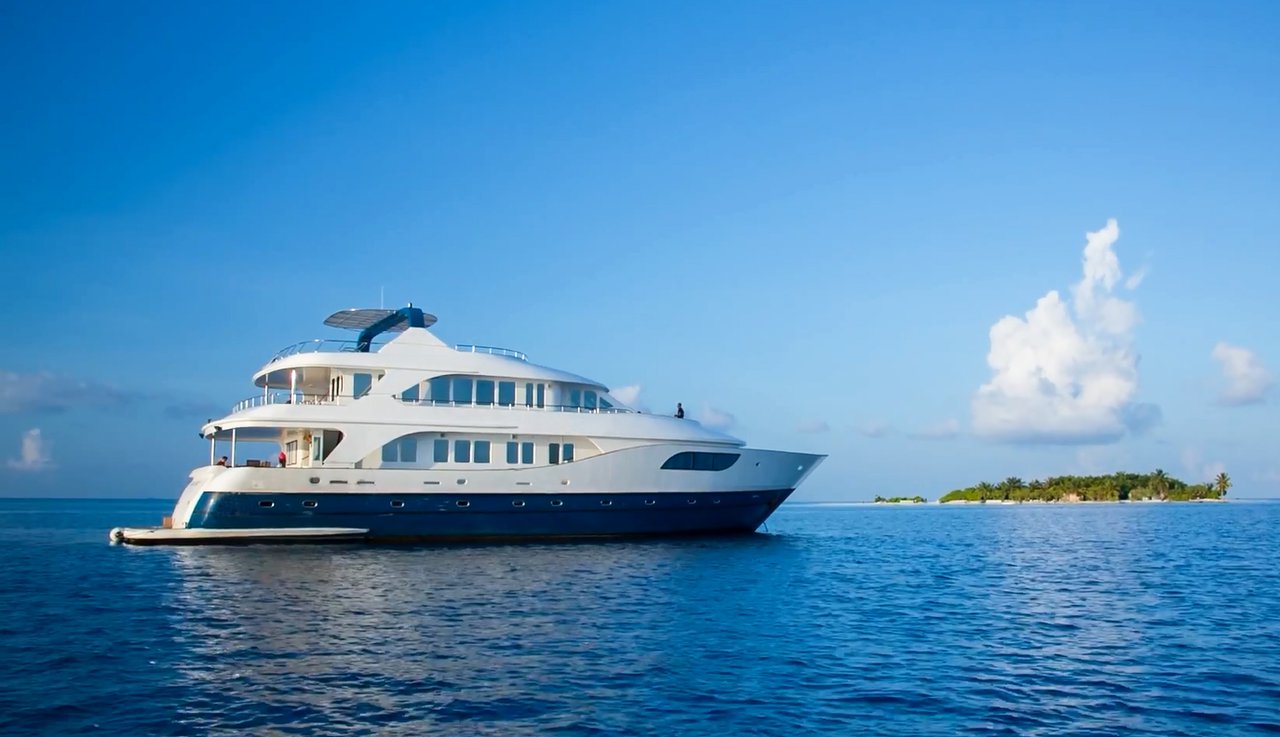
 Motor Yacht
Sail Maldives.
Live fleet
Motor Yacht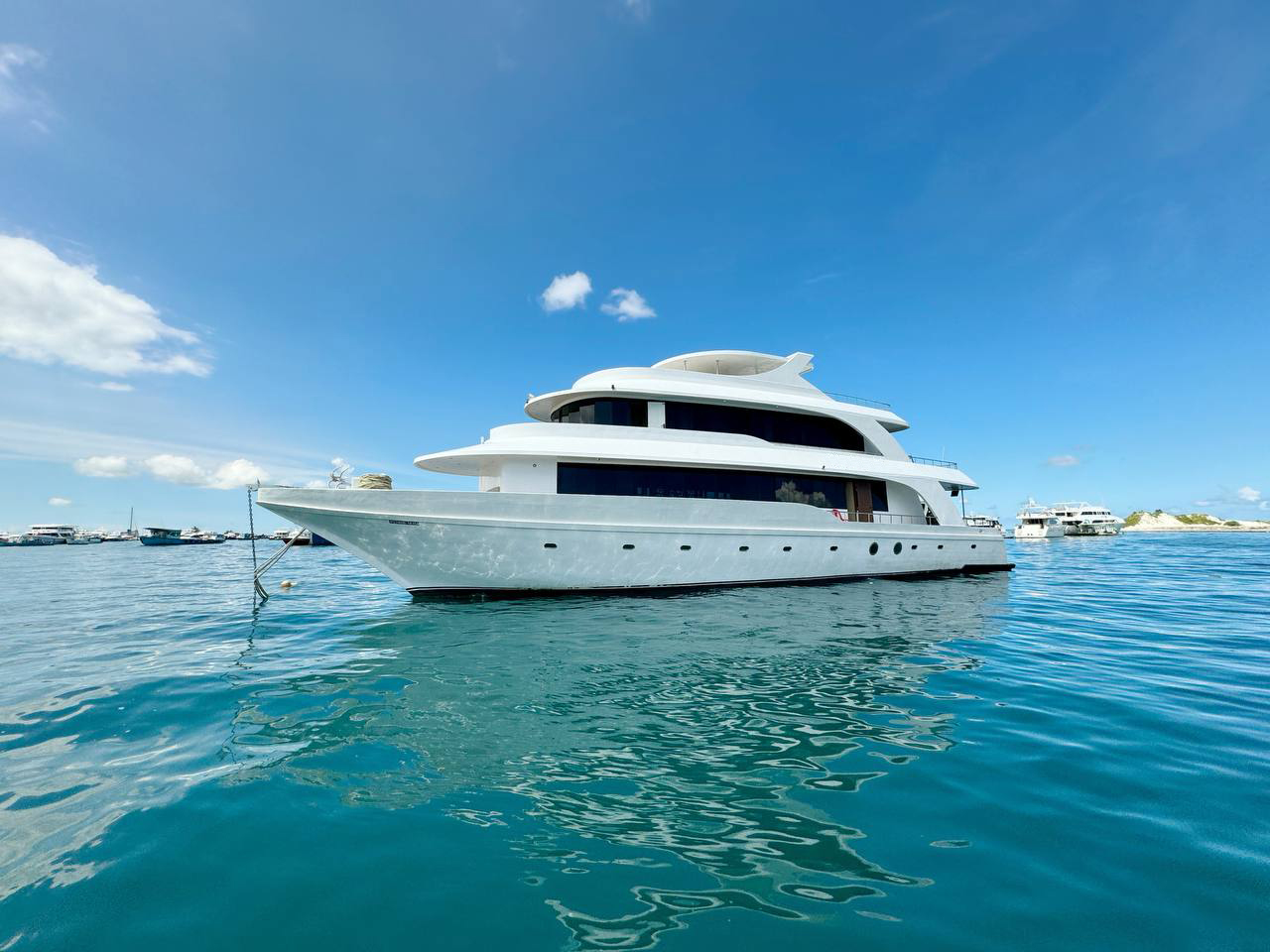 Motor Yacht
North Seven Liveaboard
North Seven · 2021Maldives, Maldives
21 guests10 cabins30 m
€32,500 / week
+ Compare Monohull
Maldives questions
Asked and answered.
How much does a yacht charter in the Maldives cost?
Expect a premium ground. Crewed liveaboard weeks are priced per boat or per cabin, and the total shifts with the boat, the season, and whether diving and a dive dhoni are bundled in. Add national park and atoll fees, the per-guest green tax, dives, fuel, and crew tip on top of the base fee. We quote per enquiry rather than post a figure that ages badly — message us on WhatsApp for a breakdown.
When is the best time to sail the Maldives?
The northeast monsoon, roughly December to April, is the dry season with lighter winds, calmer seas, and the clearest water — the peak charter window. The southwest monsoon, May to November, is wetter and greener but brings the mid-year manta aggregations in Baa Atoll, which draws divers deliberately off-season. Choose your months around whether you prioritise settled water or manta encounters.
Do I need a licence to charter a yacht in the Maldives?
No sailing licence is needed because almost all Maldives charters are crewed. The reef pilotage, permit paperwork, and absence of marinas make a local captain standard rather than optional, so you're booking a boat with a skipper and usually a dive guide aboard. You focus on the diving and the anchorages; the crew handles navigation and the atoll formalities.
Where do most charters start?
Near Malé, within tender or speedboat reach of Velana International Airport, which is where every international flight lands. That keeps your first and last day simple. Itineraries beginning in more distant atolls may add a domestic flight or seaplane transfer, so confirm your start point when you book rather than assuming everything runs from Malé.
Is a Maldives sailing charter good for families?
Yes, for families who like water over nightlife. The reef starts metres from the boat, snorkelling is easy for confident swimmers, and calm dry-season water inside the atolls suits younger children. Crewed boats mean parents aren't also skippering. Bear in mind it's remote — no towns to wander, limited medical facilities nearby — so it suits self-contained families comfortable spending a week afloat.
Can I bareboat charter in the Maldives?
In practice, no. Conventional bareboat charter is rare to non-existent here because of the reef navigation, permit requirements, and lack of marinas. The norm is a fully crewed liveaboard with a captain who knows the channels and currents. If independence matters to you, another ground suits better; if you want expert local piloting to the best dive sites, the crewed model is the point.
How much sailing is there versus motoring?
This isn't a hard-sailing destination. Winds are generally moderate, water inside the atolls is reef-protected, and much of the fleet is motor-liveaboard rather than sail. If you genuinely want to sail rather than motor between atolls, say so early — the sailing catamarans and monohulls are fewer than the motor boats, and we'll match you to a boat that actually raises canvas.
Where can I sail in Maldives?
We charter across Maldives. Each area has its own page with the live fleet for your dates.
What kind of yachts are available in Maldives?
Bareboat if someone on your crew holds a licence, crewed if you would rather a skipper did the work. The grid above is live from our operator system and always shows what is actually free.
How do I get a quote?
Tell us your dates, your group and the area you fancy. Same day, we send three real options with honest trade-offs.
Talk to an expert
Get three options.
Maldives — Yacht Charter
Getting there and practicalities
Everyone arrives through Velana International Airport at Malé, well served by long-haul carriers from Europe, the Gulf, and Asia. Most charters board within tender or speedboat reach of the airport, though itineraries starting in distant atolls may need a short domestic flight or seaplane transfer — check before booking. There are no marinas in the European sense; you live aboard the whole time and anchor or pick up moorings. Bring cash for local extras, reef-safe sunscreen, and your dive certification cards if you're diving. The Maldives is a Muslim country: alcohol is served aboard tourist vessels but not on inhabited local islands, and modest dress ashore in villages is expected. Good for divers, honeymooners, and families who like water more than nightlife; less right for anyone wanting hard passage-sailing or lively harbour towns.
Maldives
01Why sail the Maldives
The Maldives isn't a place you sail between harbours. It's a chain of coral atolls scattered across the Indian Ocean, and the only sensible way to see more than one is by boat. From the deck you swap the single-island resort life for a moving base camp: anchor off an uninhabited sandbank at lunch, dive a channel on the afternoon current, tie up near a fishing village at dusk. The water is the draw — visibility often runs 20-30m, and the reef starts a few metres from where you drop the hook. This suits divers, snorkellers, and anyone who'd rather wake up somewhere new than fly home from the same beach they arrived on.
02The sailing grounds
The cruising happens inside and between the atolls. North and South Malé Atolls sit closest to the airport and hold the best-known dive channels and surf breaks. Push further and you reach Ari Atoll for manta and whale-shark encounters, or Baa Atoll's Hanifaru Bay, a UNESCO biosphere where mantas gather in season. Distances between atolls are open-water passages of several hours, so most itineraries pick one or two atolls and work them properly rather than racing the whole chain. Navigation is line-of-sight reef-piloting more than open-sea sailing — you read water colour, and you move in good light. Local crew knowledge matters here more than in most grounds.
03Season and winds
The Maldives has two monsoons. The northeast monsoon (roughly December to April) is the dry season: lighter winds, calmer seas, and the clearest water. This is peak charter time and the best window for consistent diving and settled anchorages. The southwest monsoon (roughly May to November) brings more wind, rain, and swell, plus greener water — but also the manta aggregations in Baa Atoll around the mid-year plankton bloom, which is why some divers deliberately come off-season. Winds are generally moderate; this is not a hard-sailing destination in the mould of the Aegean meltemi. Expect gentle to fresh breezes and reef-protected water inside the atolls.
04Charter types
Maldives charters are almost entirely crewed liveaboards. Bareboat charter in the conventional sense is rare to non-existent — the reef pilotage, permit requirements, and lack of marinas make a local skipper the norm, not the exception. What you're booking is a fully crewed yacht with captain and often a dive guide and cook aboard, sometimes shadowed by a separate dive dhoni tender for equipment and surface support. Boats range from sailing catamarans and monohulls to motor yachts; the sailing purists' options are fewer here than the motor-liveaboard fleet, so if you want to sail rather than motor, say so early. Cabin charters (booking one cabin on a shared boat) also exist for smaller parties.
05What it costs
Maldives is not a budget ground. Crewed liveaboard weeks are priced per boat or per cabin, and the total depends heavily on boat, season, and whether diving and the dive dhoni are bundled. Peak northeast-monsoon weeks command the highest rates. On top of the charter fee, budget for fuel, national park and atoll fees, the green tax levied per guest per night, dive package or per-dive charges, and crew gratuity. Flights into Malé and any domestic transfer to a distant atoll add up too. We quote per enquiry rather than publish a figure that goes stale — Price on request via WhatsApp, and we'll break down what's included before you commit.
06A sample week
Day 1 — Board near Malé, provision, and shake down with a check dive in North Malé Atoll.
Day 2 — Work the North Malé channels: reef dives on the incoming current, snorkel a coral garden, anchor off a sandbank for the night.
Day 3 — Passage to South Malé Atoll; afternoon dive, quiet anchorage away from resorts.
Day 4 — Cross toward Ari Atoll — the longest hop of the week. Sundowners at anchor, sky with no light pollution.
Day 5 — Ari Atoll: manta cleaning stations and, in season, whale-shark spotting on the atoll's outer edge.
Day 6 — Village stop for a walk ashore, then a drift dive and a beach barbecue on an uninhabited island.
Day 7 — Work back toward Malé, last dives on the way, moor within transfer reach of the airport.
Day 8 — Disembark. Itineraries flex with wind, current, and what the crew knows is running that week — treat the plan as a shape, not a timetable.