 Monohull
Sail Mecklenburg.
Live fleet
Monohull Monohull
 Monohull
 Monohull
 Monohull
 Monohull
 Catamaran
 Monohull
 Monohull
 Monohull
 Monohull
 Monohull
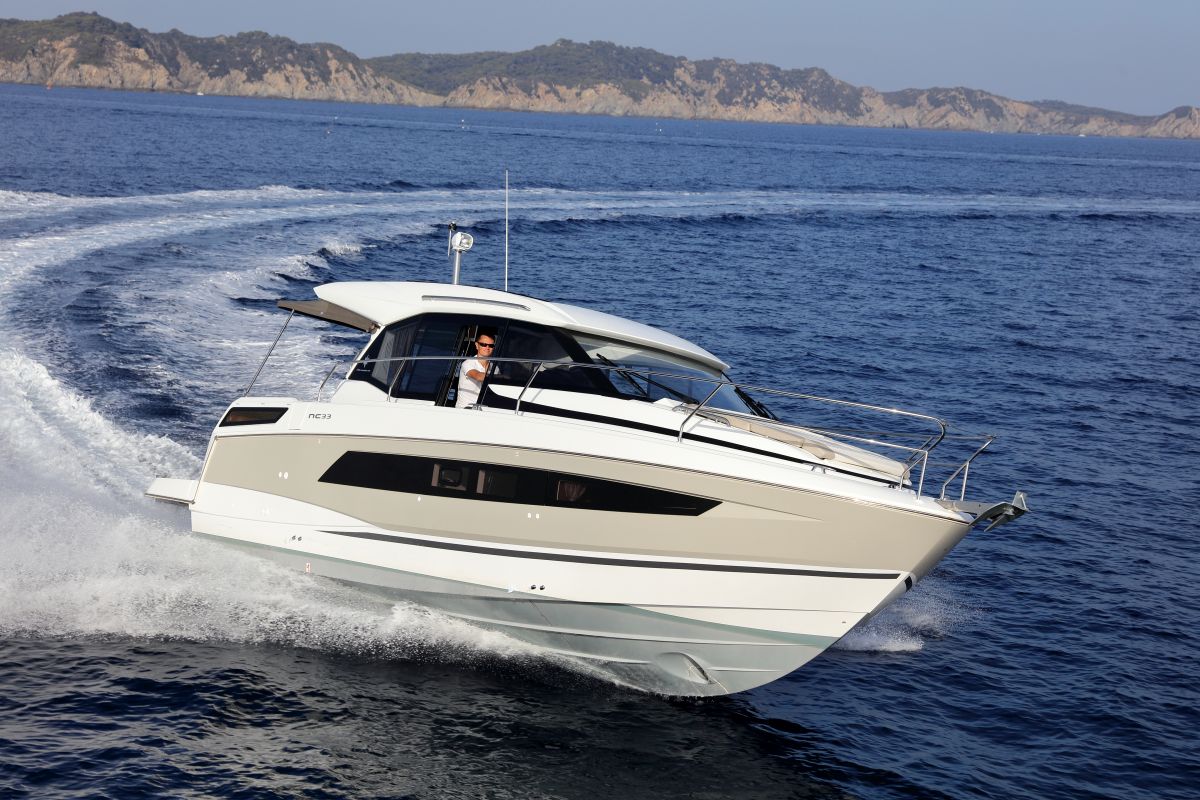 Motor Yacht
 Monohull
 Monohull
 Motor Yacht
 Monohull
Mecklenburg questions
Asked and answered.
What does a yacht charter in Mecklenburg cost?
For a bareboat week in July or August, expect roughly €1,400 to €2,200 for a 32 to 36ft cruiser and €2,200 to €3,600 for a 40 to 45ft boat. May, June and September typically run 25 to 40 per cent lower. Add end cleaning at €120 to €250, linen, diesel on return, and harbour dues of €20 to €40 a night. Skippered and one-way charters are price on request.
Do I need a licence to charter here?
Yes. German coastal waters — including the Bodden, which are classed as maritime waterways — require the Sportbootführerschein See for engines above 15 hp. Visitors can normally use an ICC with coastal endorsement. You also need a radio certificate, SRC for sea VHF. The SKS is not a legal requirement but some owners ask for it on larger boats. The Charterschein scheme you may have read about applies to the inland lakes, not this coast.
When is the best time to sail?
Late August and September, if you care about the sailing. Steadier Force 3 to 4, harbours you can walk into without booking, and water still warm enough to swim. July and August are warmer and lighter, with afternoon thunder squalls and full quays on Hiddensee. May and June are excellent value and often bring settled easterlies, but nights are cold and fog is possible. The season runs late April to mid-October.
Should I start from Rostock or Barth?
Rostock and Marina Hohe Düne suit crews who want open Baltic sailing from day one, full marina services and the easiest travel connections. Barth suits crews who want flat water, wildlife and short legs, and it puts Hiddensee and Stralsund within a comfortable week. If it is your first charter in this area, or you have children aboard, Barth and the Bodden are the softer introduction.
Is this good for families and first-time charterers?
The Bodden side, yes. Legs are 10 to 25 NM, there is no tide to plan around, the water is flat, and there is a harbour within an hour or two of wherever you are. Beaches at Zingst, Hiddensee and Rügen are shallow and sandy. The open Baltic side gets a short steep sea in a fresh westerly, which is worth respecting with young crew aboard.
How shallow is it, and what draught can I take?
Bodden channels are buoyed with charted depths mostly between 2 and 3.5 m, and the approach to Barth is at the shallow end. Boats drawing under 1.8 m go everywhere comfortably. There is no tide, but a sustained easterly can drop water levels 0.3 to 0.5 m, so read the wind before committing to a marginal channel. Deeper-draught boats are better kept on the open coast.
Where do the yachts in Mecklenburg sail from?
Boats sailing Mecklenburg all year — boats operate from Barth and Rostock. The fleet list above is live from our operator system, so it always shows what is actually available for your dates.
Bareboat or crewed in Mecklenburg?
These are bareboat yachts — someone on your crew needs a recognised licence. If nobody has one, we will find you the same boat with a skipper.
How do I get a quote?
Send us your dates, your group and roughly the boat you want. Same day, we reply with real options, real prices and the honest trade-offs.
Talk to an expert
Get three options.
Charter types
Charter types in Mecklenburg.
Bareboat charter
You skipper it yourself — licence required.
Mecklenburg
01Why sail Mecklenburg
No tide worth planning around, short hops between harbours, and two completely different waters within a day of each other. On one side the open Baltic: proper wind, a short steep sea when it blows west, 15 to 30 NM legs. On the other, behind the Darß and Rügen, the Bodden — flat brown-green lagoon water, reed banks, cranes lifting off the shallows, buoyed channels you pilot buoy to buoy. It rewards sailors who enjoy chartwork and coastal navigation more than distance. Less right if you came for deep water and long offshore passages.
02The sailing areas
Three grounds, and most weeks use two of them. West is the Mecklenburg Bight: Warnemünde, Kühlungsborn, Wismar and the island of Poel, open water, easy day legs, decent shelter in a westerly. The middle is the Darß-Zingst Bodden chain reached from Barth, where charted depths run 2 to 3.5 m and the channel markers matter more than the compass. East is the Strelasund, Hiddensee, the Greifswalder Bodden and the Rügen coast, with Stralsund's old harbour in the middle of it and the Ziegelgraben bridge opening to timetable.
03Harbours and bases
Handovers happen at Rostock, Marina Hohe Düne, Barth and Yachtwerft Ramin. Hohe Düne is the full-service option — fuel, lift, chandlery, and open sea 20 minutes after you drop lines. Rostock city berths put you next to a tram into town. Barth is the quiet one and puts the Bodden on your doorstep, with a shallow approach best timed against a hard easterly that pushes water out. Once you are cruising, the useful harbours are Barhöft, Vitte and Kloster on Hiddensee, Schaprode, Stralsund, Lauterbach, Greifswald-Wieck and Kröslin. Most take 12 m without booking outside August.
04Season, wind and water
The sailing season runs late April to mid-October. Prevailing wind is west to south-west at Force 3 to 4, with spells of settled easterly in May. July and August are warm, light and busy — water around 18 to 20°C, afternoon thunder squalls that arrive fast and leave fast. Late August and September give the steadiest breeze and half-empty harbours, at the cost of cold nights. Fog is a spring problem, not a summer one. There is no meaningful tide, but wind shifts water levels 0.3 to 0.5 m either way, more in a gale, and in the Bodden that is the difference between 2.4 m and 1.9 m under the keel. Availability here is listed across the year; almost everyone books between April and October.
05What you can charter
Everything on this page is bareboat. Production cruisers in the 30 to 46ft range are the Baltic norm — most are set up for two or three couples, with a mainsail on a lazybag, roller genoa and a small diesel that will push you at 5 knots into a chop. Winter cover, heating and cockpit tents show up more often here than in the Mediterranean, and they earn their keep in September. Check the grid on this page for what is actually free on your dates rather than trusting a number in a paragraph. If you want a skipper aboard, that is arranged case by case: price on request, message us on WhatsApp with your dates.
06What it costs
Ranges, in EUR, for a week bareboat. A 32 to 36ft cruiser in July or August typically runs €1,400 to €2,200; a 40 to 45ft boat €2,200 to €3,600. Shoulder weeks in May, June and September commonly sit 25 to 40 per cent below peak. Budget on top for end cleaning (€120 to €250), linen and towels, an outboard if you want one, and a security deposit of €1,500 to €3,000 or a damage waiver instead. Harbour dues for an 11 to 12 m boat are usually €20 to €40 a night, higher at Hohe Düne and in Stralsund in August. Diesel is metered on return. One-way charters, winter dates and skippered weeks: price on request.
07A sample week from Barth
Day 1 — Handover late afternoon at Barth, briefing, provisioning in town, night alongside.
Day 2 — Barth to Barhöft, about 20 NM down the buoyed Bodden channel. Flat water, no swell, good practice for the crew before anything open.
Day 3 — Barhöft to Vitte or Kloster on Hiddensee, 8 to 12 NM. No cars on the island. Hire bikes, walk up to the Dornbusch light.
Day 4 — Hiddensee to Stralsund, roughly 20 NM. Time the Ziegelgraben bridge opening; the old harbour puts you a two-minute walk from the Gothic centre.
Day 5 — Stralsund north through the Strelasund to Schaprode, about 22 NM, or press on to Lauterbach if the wind is behind you.
Day 6 — Schaprode out into the open Baltic and back to Barhöft, 25 to 30 NM, the one day that feels like sea sailing.
Day 7 — Barhöft to Barth, about 20 NM. Fuel, wash down, last dinner ashore.
Day 8 — Off the boat by 0900.
08Getting there and checking in
Hamburg and Berlin Brandenburg are the practical airports, both around two and a half to three hours by road. Trains are easier than they look: Berlin to Rostock takes about 2h15, Berlin to Stralsund about 3h, then a regional connection for Barth. Ferries from Gedser and Trelleborg land at Rostock if you are driving down from Scandinavia. Marinas have parking, usually a few euros a day. Handover is normally Saturday from 1600 and return by 0900, though midweek starts are often possible outside peak. Bring your licence, radio certificate, passports for the crew list, and soft bags rather than hard cases. Questions before you book go to us on WhatsApp.