 Catamaran
Sail San Blas.
Live fleet
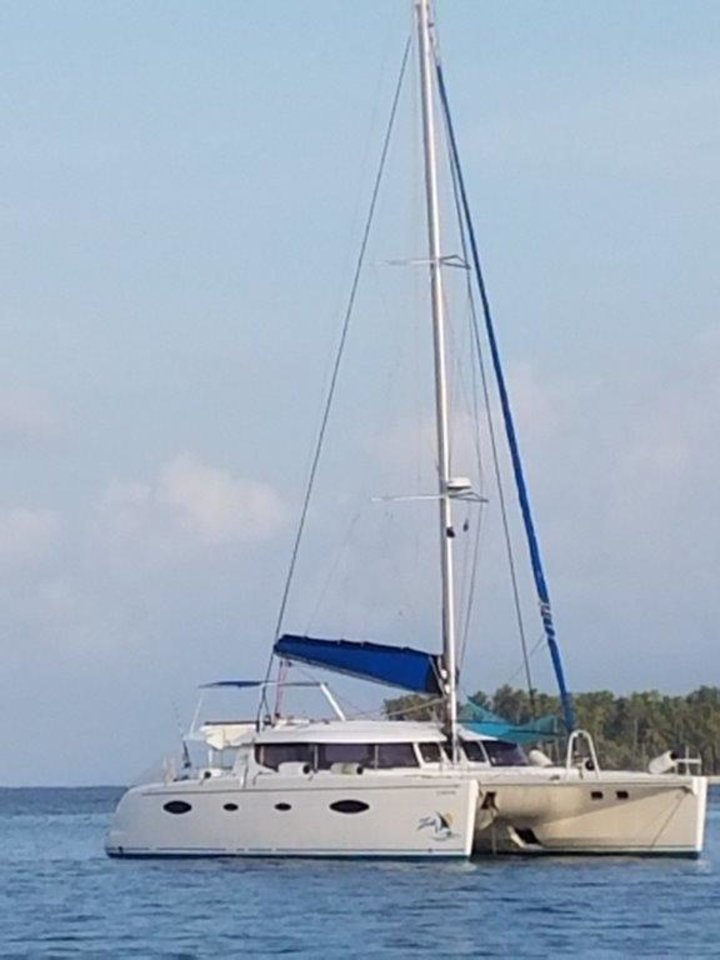


By the cabin
Cabin cruises in San Blas
Scheduled crewed cruises — book by the cabin and share the yacht with a small group.
San Blas
 $2,400per person
San Blas - 6 days
Gitano del Mar · crewed
San Blas, Panama
6 days · Departs 20 Dec 2026 · 2 more datesView cabins
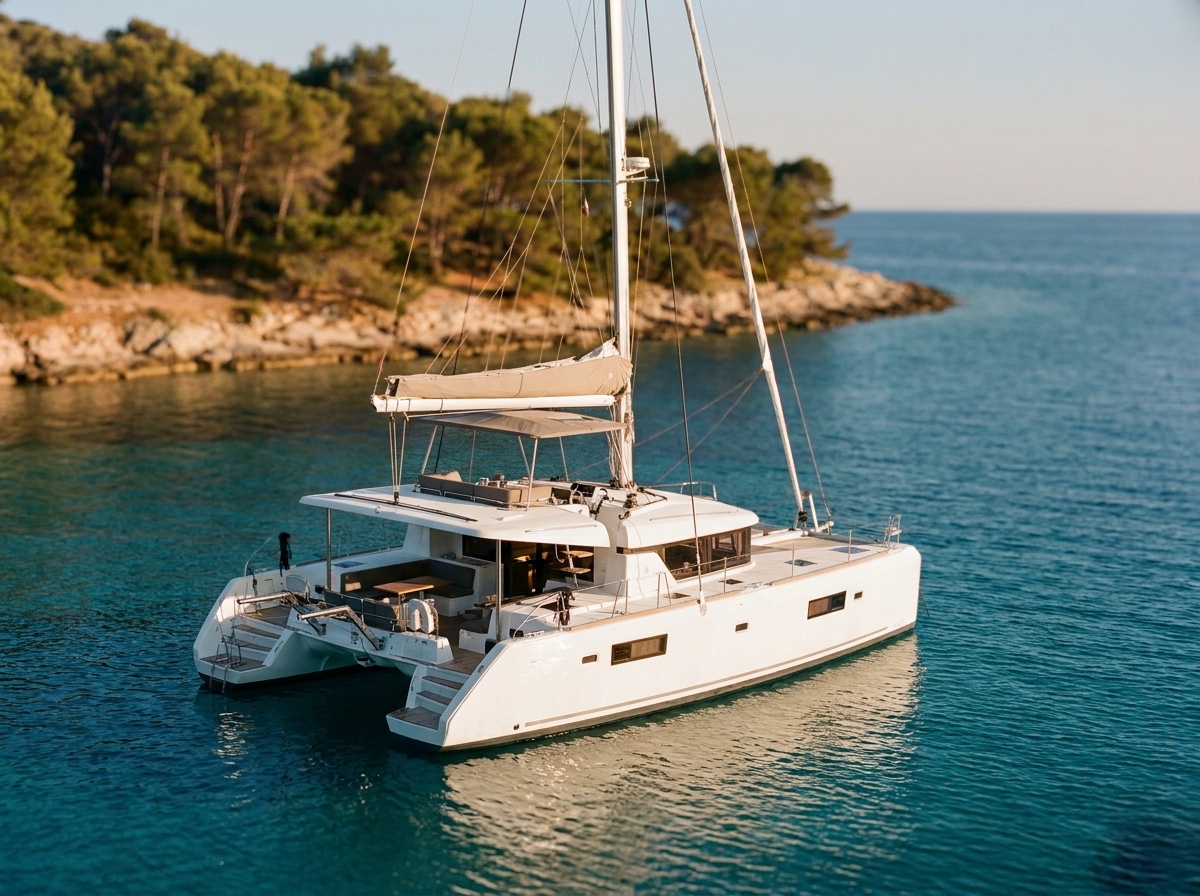 $1,200per person
San Blas 3 days 1
San Blas, Panama
3 days · Departs 4 Jan 2027View cabins
$1,200per personSan Blas 3 days 2
San Blas, Panama
3 days · Departs 4 Jan 2027View cabins
€1,300per personSan Blas - Jamaica
San Blas, Panama
12 daysView cabins
San Blas questions
Asked and answered.
How much does a yacht charter in San Blas cost?
Cabin charters run roughly €1,100–€1,900 per person for the week, two sharing. A whole crewed catamaran is roughly €7,000–€16,000 a week depending on size, cabins and season. On top of that, budget flights to Panama City, the transfer in, drinks ashore, a crew tip, and cash in small US-dollar notes for comarca entry and per-island landing fees. Exact boats and dates are price on request over WhatsApp.
Do I need a sailing licence or experience?
No. Everything we run in Guna Yala is crewed, so no licence, no ICC, no logged miles. There is no bareboat here and we would not offer it: the reefs are unmarked, the charts are offset, and there is no shoreside support if something goes wrong. If you want to helm and trim, say so when you book — most skippers will hand it over once you are in open water.
When is the best time to sail San Blas?
December to March gives the steadiest sailing: north-east trades at 15–25 knots, dry air, and clear light for reef navigation, though the Christmas winds gust 30 and north swell builds on the outer reefs. May to November is wetter and lighter — more motoring, flatter anchorages, warmer water, better snorkelling, and sandflies at dusk. April and November split the difference and are often the best week to take.
Where do charters start and finish?
We join and leave boats at San Blas and at Corazón de Jesús, next to Narganá. Neither is a marina: expect a village dock, a tender and a short panga ride. The western cays suit a road transfer from Panama City; the eastern anchorages work better with a light aircraft from Albrook. We confirm the exact pickup point once your dates are fixed.
Is San Blas good for families?
Yes, with caveats. Hops are 3–10nm and the water behind the reefs is flat and warm, so seasickness is rare and swimming is constant. Against that: no shops, no hospital, thin mobile signal, and a wet panga ride at each end. It suits confident swimmers from about six upward. Tell us the ages when you enquire and we will match the boat, the crew and the route to them.
How do I get to San Blas from Panama City?
Fly into Tocumen and sleep in the city, because transfers leave before dawn. Then either a 4x4 to the Cartí road head — 2.5 to 3 hours on a steep road with a comarca checkpoint — followed by a panga out to the boat, or a light aircraft from Albrook, 30–40 minutes to a coastal airstrip. Leave a night in the city before flying home; weather cancels the small planes.
Can I pay by card, and is there Wi-Fi?
Bring cash in small US dollars. Panama uses the dollar and nothing in the archipelago takes cards — comarca entry, island landing fees and anything you buy from an ulu are all paid in notes. Mobile signal is patchy and strongest around Narganá and Corazón de Jesús. Fresh water is limited to what the boat carries or makes, so showers are short and swimming does most of the work.
Where do the yachts in San Blas sail from?
Boats sailing San Blas all year — boats operate from San Blas. The fleet list above is live from our operator system, so it always shows what is actually available for your dates.
Bareboat or crewed in San Blas?
Both. Bareboat if someone on your crew holds a licence, crewed if you would rather a skipper did the work. Tell us your experience level and we will match you.
How do I get a quote?
Send us your dates, your group and roughly the boat you want. Same day, we reply with real options, real prices and the honest trade-offs.
Talk to an expert
Get three options.
Charter types
Charter types in San Blas.
Crewed charter
Skipper and crew do the work — you live aboard.
Cabin charter
Book a cabin, not the whole boat.
San Blas
01Why sail here
Most charts still say San Blas. The Guna call it Guna Yala, and it is theirs: an autonomous comarca of roughly 350 low sand-and-palm islands strung along 100 miles of Panama's Caribbean coast. There is no marina bar, no beach club, no chandlery. You anchor in 4–8m over white sand, and a dugout ulu comes alongside with crab or a mola to sell.
What that buys you is short sailing and long swimming. Hops between anchorages run 3–10nm, so you are rarely under way more than two hours. What it costs you is convenience: no provisioning, no cash machines, thin mobile signal, fresh water rationed to what the boat carries or makes. Come for the water and the Guna, not for the nightlife.
02The sailing grounds
The western cays are the classic week. Chichime, Cayos Limones, the East Holandés — the reef pool sailors call the Swimming Pool — then Coco Bandero and Green Island. Reef along the north side takes the swell; behind it the water flattens off and stays that way. Sixty miles further east it gets quieter: Isla Tigre, Playón Chico, Mamitupu, and Snug Harbour at Puerto Escocés.
Navigation is eyeball work. Reefs are unmarked, electronic charts are offset by a few hundred metres in places, and the Bauhaus cruising guide with satellite overlays is what people actually steer by. We move between 10:00 and 15:00 with the sun high and behind us, and we do not sail these reefs after dark.
03Harbours and where you actually stop
Nothing here is a marina in the European sense. We use two points on the coast for joining, leaving and topping up: San Blas and Corazón de Jesús. Corazón de Jesús sits beside Narganá, joined by a footbridge — small shops, cold beer, the most reliable signal in the comarca, and a dock a tender can lie against.
Everywhere else the harbour is a patch of sand behind a reef and you go ashore in the dinghy. Two local rules worth knowing before you land: every coconut on every island is owned, so leave them where they lie, and ask before photographing people. Molas are worth buying; haggling hard over them is not a good look.
04Season and winds
Panama sits below the hurricane belt, so no named storms. The trades blow north-east.
December to March is the sailing season proper: 15–25 knots, gusting 30 in the Christmas winds around late December and January, dry air, clear light for reef work, north swell breaking on the outer reefs. Boats reef early and the crossings are quick.
May to November is the rainy season: 5–15 knots, more motoring, flat anchorages, warm water, and afternoon squalls that clear inside an hour. Better half of the year for snorkelling, worse half for sailing, and the sandflies bite at dusk. April and November are the swing months and often the best compromise.
05What we run here
Crewed only, and our boats sail these islands all year rather than migrating for a season. Skipper and host aboard, whole boat or by the cabin. There is no bareboat in Guna Yala and we would not offer it — unmarked reefs, offset charts, no shoreside support, and the nearest travel-lift a long day's sail west. A grounding here is a salvage job, not a phone call.
Crew handle comarca entry, per-island landing fees, provisioning out of Panama City and the daily route. Most boats are catamarans in the 12–15m range; shallow draught counts for more than waterline in this archipelago.
06What it costs
Ranges for a week aboard, in euros:
By the cabin, two sharing: roughly €1,100–€1,900 per person, typically covering berth, meals aboard and fuel. Confirm inclusions boat by boat.
Whole crewed catamaran: roughly €7,000–€16,000, depending on size, cabin count and season.
Exact boats and dates are price on request — send us the week on WhatsApp and we will come back with what is free.
Budget on top: flights to Panama City, the transfer in, drinks ashore, crew tip, and cash in small US-dollar notes for comarca entry and the landing fees the Guna collect per person, per island. Nowhere in the archipelago takes cards.
07A week, day by day
Day 1 — Board late morning in the western cays. 5nm to Chichime: two islands, a reef pass, a wreck on the north side. Swim, briefing, early night.
Day 2 — 6nm to Cayos Limones. Sheltered water, easy snorkelling off the dinghy, ulus alongside with crab in the afternoon.
Day 3 — 10nm east to the East Holandés and the Swimming Pool. The outer reef is the best snorkelling of the week. Stay two nights if the trades are up.
Day 4 — 8nm to Coco Bandero. Four islands, sand, reef behind you, nothing else.
Day 5 — 12nm on toward Green Island and Naguargandup, then east in the afternoon.
Day 6 — Narganá and Corazón de Jesús. Footbridge, shops, signal, a beer someone else poured. Resupply and laundry.
Day 7 — Back west with the trades on the quarter, last swim, anchor within tender range of the transfer point.
Run it in reverse when the wind sits north of east. Beating 25 miles east into 25 knots is a delivery, not a holiday.
08Getting there
Fly into Panama City (Tocumen) and sleep in the city — almost every onward transfer leaves before dawn.
From there, two ways in. A 4x4 to the Cartí road head, 2.5–3 hours on a steep, hairpinned road with a comarca checkpoint on the way, then a panga out to the boat. Or a light aircraft from Albrook, 30–40 minutes to one of the coastal airstrips, which is what we use for the eastern anchorages.
Bring a passport, cash in small notes, reef shoes and a dry bag; the panga ride is wet. Leave a night in Panama City before your international flight home, because weather cancels the small planes. Message us on WhatsApp with your dates and party size.
Right for swimmers, snorkellers and anyone happy to be off-grid for a week. Less right for people who want a marina, a restaurant strip or a reliable data signal.