 Catamaran
Sail Panama.
Live fleet
Catamaran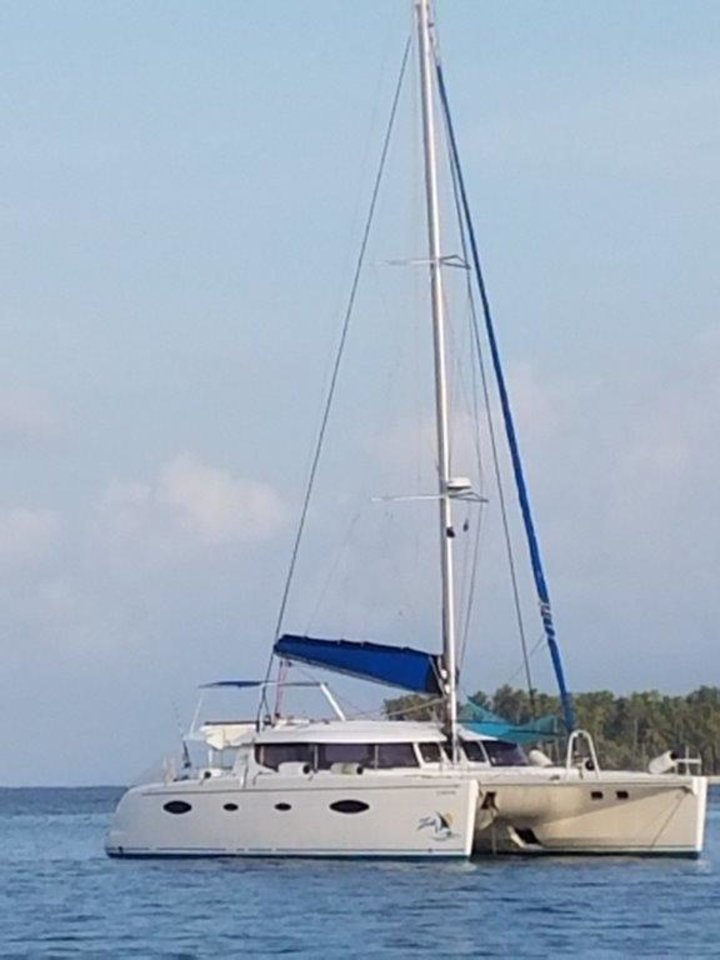 Catamaran
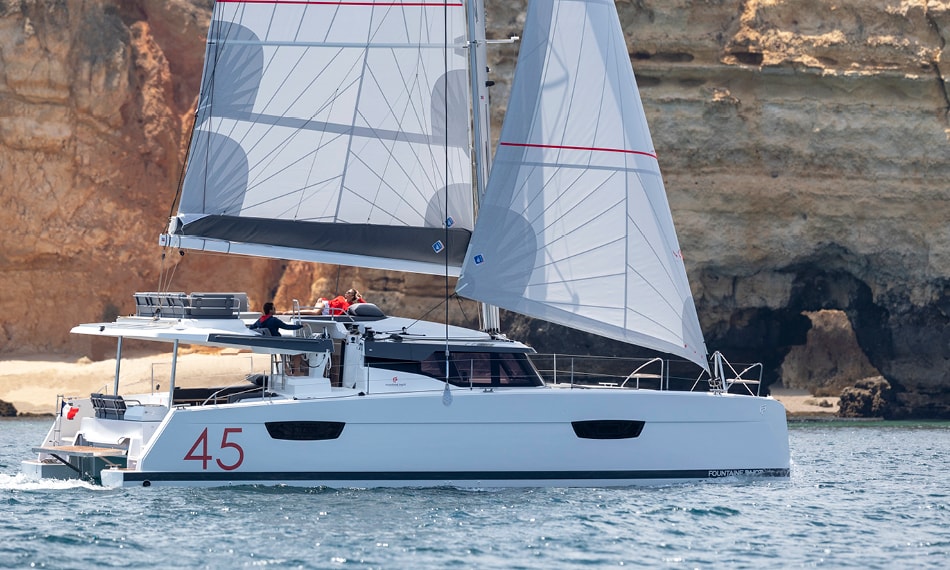 Catamaran
Be Hang Loose
Fountaine Pajot Elba 45 - 4 cab. · 2025Panama, Panama
8 guests3 cabins13 m
€5,900 / week
+ Compare Catamaran
 Catamaran
By the cabin
Cabin cruises in Panama
Scheduled crewed cruises — book by the cabin and share the yacht with a small group.
Panama
 $2,400per person
San Blas - 6 days
Gitano del Mar · crewed
San Blas, Panama
6 days · Departs 20 Dec 2026 · 2 more datesView cabins
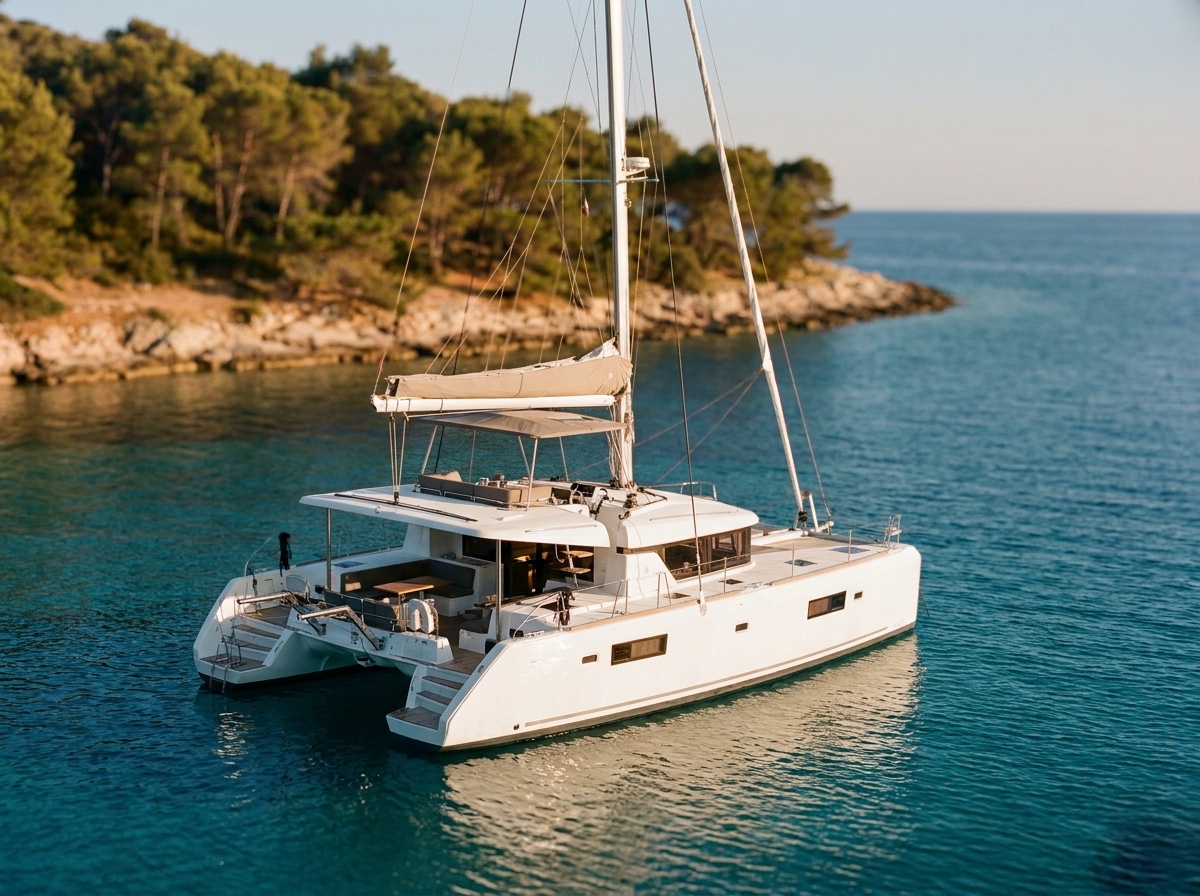 $1,200per person
San Blas 3 days 1
San Blas, Panama
3 days · Departs 4 Jan 2027View cabins
$1,200per personSan Blas 3 days 2
San Blas, Panama
3 days · Departs 4 Jan 2027View cabins
€1,300per personSan Blas - Jamaica
San Blas, Panama
12 daysView cabins
Panama questions
Asked and answered.
How much does a yacht charter in Panama cost?
Rates depend on the boat, the season, and whether you take crew. Peak dry-season bareboat catamarans generally run in the low-to-mid thousands of euros per week, with crewed boats higher and shoulder seasons easier. Add fuel, provisioning, any skipper or cook, and — for San Blas — Guna community fees paid per person and per island. Message us on WhatsApp with dates and party size for exact figures.
Do I need a licence to charter in Panama?
For a bareboat you will normally need a recognised certificate such as an ICC or equivalent, plus sailing experience — reef navigation in San Blas is demanding and mostly done by eye. If you lack the paper or the reef miles, take a crewed boat or a local skipper. Bocas del Toro is more forgiving for bareboaters thanks to simpler navigation and shore support.
When is the best time to sail Panama?
December to April is the dry, breezy season, with steady north-east trades of 15–25 knots, reliable sun, and the flattest reef navigation — the most popular window. May to November is wetter and lighter, with more squalls but fewer boats and warm water. San Blas sits south of the main hurricane belt, so it stays sailable when much of the Caribbean shuts down.
Where do charters start in San Blas?
Most San Blas charters begin near the Cartí sector, reached by a two-to-three-hour 4×4 transfer over the mountains from Panama City, followed by a short launch to your boat. Leave early so the winding road is done in daylight. Bocas del Toro charters start from Bocas Town on Isla Colón, reached by a short domestic flight or an overland-and-ferry route.
Is Panama good for a family sailing holiday?
Yes — short hops between anchorages, warm calm water inside the reefs, and constant swimming and snorkelling suit families well, especially in San Blas. There is little to no phone signal, so it is a genuine unplug. Take a local skipper if you are not confident reading reef water, stock the boat heavily before you leave, and bring US-dollar cash for Guna fees and traders.
San Blas or Bocas del Toro — which should I choose?
San Blas is the classic Panama sail: hundreds of tiny reef-ringed cays, Guna villages, no development, and eyeball navigation. Bocas del Toro is greener and wetter — mangrove lagoons, surf, dive shops, and a town with provisioning and fuel — with simpler, more sheltered sailing. The two areas are far apart and chartered separately, so pick one per trip based on whether you want wilderness or shore life.
Can I use cards and phones in San Blas?
Plan for neither. Most San Blas cays have no phone signal and no way to pay by card, so bring US-dollar cash for Guna community fees, textiles, and fish or lobster from traders. Do your provisioning and any banking in Panama City before the transfer. Bocas del Toro is different — Bocas Town has signal, shops, and card acceptance close to the water.
Where can I sail in Panama?
We charter across San Blas and Bocas del Toro. Each area has its own page with the live fleet for your dates.
What kind of yachts are available in Panama?
Bareboat if someone on your crew holds a licence, crewed if you would rather a skipper did the work. The grid above is live from our operator system and always shows what is actually free.
How do I get a quote?
Tell us your dates, your group and the area you fancy. Same day, we send three real options with honest trade-offs.
Talk to an expert
Get three options.
Panama
01Why sail Panama
Panama is two coasts and a canal, but for sailing you want the Caribbean side. The San Blas — Guna Yala to the people who live there — is a scatter of low coral islands off the north-east coast, most of them a few palms wide and ringed by reef. You anchor in clear water, snorkel off the boat, and buy fish and lobster from Guna families who paddle out in dugout ulus. There is no development to speak of, no marinas in the islands, and no phone signal on most cays. That is the appeal.
Farther west, near the Costa Rican border, Bocas del Toro is greener and wetter — mangrove channels, surf breaks, and a small town with bars and dive shops. It sails and feels different from San Blas: less reef navigation, more shelter, more on shore. Between them you get two distinct Caribbean-Panama trips under one country.
02The sailing areas
San Blas (Guna Yala). Roughly 350 islands across an archipelago about 100 nautical miles long, though charters concentrate on the western groups: the Lemon Cays (Cayos Limones), the Holandes Cays, and Chichime. Distances between anchorages are short — often under two hours — so days are relaxed. The catch is the reef. Charts are approximate, aids to navigation are sparse, and you eyeball your way in by reading water colour with the sun behind you. Local skippers do this daily; if you are bareboating, take it slowly and anchor well before dusk.
Bocas del Toro. A cluster of islands and lagoons in the far north-west. The water is flatter, the passages are wider, and Bocas Town on Isla Colón gives you provisioning, fuel, and a runway. Good for a first sailing area if reef-picking in San Blas sounds daunting.
The two areas are far apart by boat and usually chartered separately. Pick one per trip.
03Season and winds
Panama's Caribbean coast has a long dry, breezy season from roughly December to April, driven by the north-east trades. This is the reliable window: 15–25 knots most days, steady sun, and the flattest reef navigation. It is also the busiest and priciest stretch.
May to November is the wetter, lighter season — more squalls, more calm, warmer water, fewer boats. San Blas sits south of the main hurricane belt, so the Caribbean season that shuts down much of the region is less of a factor here, though heavy rain and thundery squalls come through. Water sits around 27–29°C year-round; you sail in shorts.
Be honest with yourself about the trades. December through March they can blow hard and build a short Caribbean chop on the open stretches between cays. Lighter shoulders (April, November) suit those who want calmer anchorages.
04Charter types
You can charter here crewed or bareboat, monohull or catamaran. Catamarans dominate San Blas for good reason: shallow draft gets you into thin reef anchorages, and the deck space suits the swim-snorkel-repeat rhythm of the islands. A local skipper is worth serious consideration in San Blas — reef reading and Guna etiquette are learned, not charted.
Bocas suits bareboat more readily thanks to its simpler navigation and shore support. If you hold an ICC or equivalent and have caught reef water before, a bareboat cat here is straightforward.
Provisioning differs by area. Stock heavily before San Blas — you can buy fish, lobster, and some produce from Guna traders, but not a full shop. Bocas Town covers most needs.
05What it costs
Charter rates depend on boat, season, and whether you take crew. As a guide, a bareboat catamaran in the peak dry season typically runs in the low-to-mid thousands of euros per week; a crewed boat with skipper and cook sits higher. Shoulder-season rates ease. On top of the base fare, budget for fuel, a provisioning kitchen kitty, any local skipper or cook, and — for San Blas — the Guna community fees charged per person and per island visited, which go to the Guna congress.
For exact figures on the boats we run and the season you want, price on request — message us on WhatsApp with your dates and party size and we will send real numbers rather than a range you have to second-guess.
06A week in San Blas
Day 1 — Board near the Cartí sector after the road-and-launch transfer from Panama City. Short hop to the Lemon Cays; anchor, swim, settle in.
Day 2 — East to Chichime, a two-island anchorage with a reef pass and a wreck to snorkel. Lobster from the ulu if the traders come by.
Day 3 — On to the Holandes Cays and the anchorage many call the Swimming Pool — clear sand-bottom water inside the reef. This is the postcard.
Day 4 — Stay put or drift a few miles between Holandes anchorages. A no-passage day. Kite, freedive, read.
Day 5 — Visit a Guna village — Nusagandi or one of the inhabited cays — pay your respects and community fee, buy a mola textile.
Day 6 — Work back west via Coco Bandero or the Lemon Cays, timing the light for the reef.
Day 7 — Final anchorage near Cartí, pack, launch transfer back to the city.
Distances are short throughout — this is an anchoring trip, not a passage-making one.
07Getting there
Fly into Panama City (Tocumen International, PTY), the main hub for both coasts and well connected from Europe and the Americas. For San Blas, the standard route is a 4×4 transfer over the mountains to the Cartí sector — a rough two-to-three-hour drive on a winding road — then a launch to your boat. Leave early; the road is best in daylight.
For Bocas del Toro, fly on from Panama City to Bocas Town (Isla Colón) on a short domestic flight, or take the longer overland-and-ferry route via Almirante. Bocas Town has provisioning, fuel, and shore support close to the water.
Bring cash in US dollars — Panama uses them alongside the balboa — for Guna fees, traders, and small shore spends, as card acceptance is patchy once you leave the city. Expect little to no phone signal in San Blas; tell people at home before you go dark.