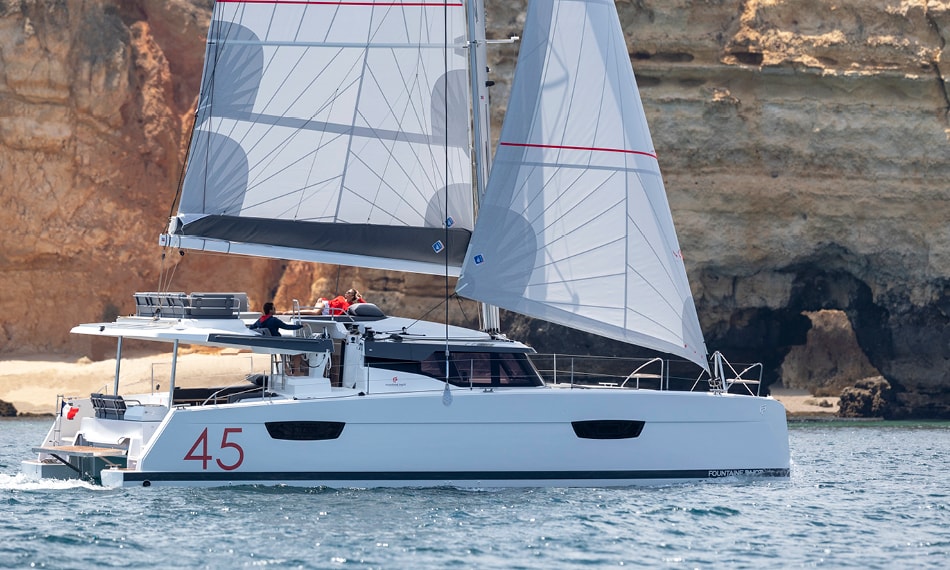
 Catamaran
Be Hang Loose
Fountaine Pajot Elba 45 - 4 cab. · 2025Panama, Panama
8 guests3 cabins13 m
€5,900 / week
+ CompareLive fleet
CatamaranBocas del Toro questions
Price on request — the weekly rate depends on the boat, the crew aboard and how busy the dates are, and we would rather send you a real number than a placeholder. On top of the boat, budget for national park entry paid in cash, fuel, any marina nights, and meals ashore at roughly €8 to €25 a head. Flights from Europe to Panama City typically run €600 to €1,100 return.
No. Charters from Bocas are crewed, so there is no licence requirement and no need to have sailed before. A skipper handles the navigation, which matters here more than in most places: the archipelago is shallow, the surveys are old, and a lot of the pilotage is reading coral by eye. If you do sail, most crews are happy to hand over the helm on the open legs.
Yachts sail from here May to December. Within that, September and October are usually the driest and calmest stretch, and the best bet for clear water over the outer reefs. Expect short heavy afternoon rain at any point in the season rather than washed-out days. From December the first northers bring swell onto the exposed north-facing coasts, which closes some anchorages and opens the surf breaks.
Charters start and finish in Bocas Town on Isla Colón. Fly into Tocumen (PTY) in Panama City, then take a domestic flight from Albrook (PAC) to Isla Colón (BOC), about an hour. The transfer between the two Panama City airports takes longer than people expect, so an overnight in the city is the sensible plan. Overland, it is a bus to Almirante and a 30-minute water taxi.
It suits families well. Passages are short, the water inside Bahía Almirante is flat, and you are rarely more than an hour from an anchorage with something to swim to. Snorkelling at Hospital Point and the Zapatilla Cays works for confident swimmers, and the mangrove channels are made for dinghy exploring. Bring proper sun cover and insect repellent — both matter more here than the brochures admit.
Not from Bocas. Charters here are crewed, and the reason is the ground itself: shallow water, incomplete charting and reef passes that need to be read visually with good light. Bareboat sailors looking for the same region usually charter elsewhere in the Caribbean and treat Bocas as a crewed trip. Message us on WhatsApp with your dates and we will tell you honestly what is available.
Boats sailing Bocas del Toro May–December — boats operate from Panama. The fleet list above is live from our operator system, so it always shows what is actually available for your dates.
Both. Bareboat if someone on your crew holds a licence, crewed if you would rather a skipper did the work. Tell us your experience level and we will match you.
Send us your dates, your group and roughly the boat you want. Same day, we reply with real options, real prices and the honest trade-offs.
Talk to an expert
Charter types
Skipper and crew do the work — you live aboard.
Bocas is a shallow, green, half-enclosed archipelago on Panama's Caribbean side, tucked up against the Costa Rican border. Two large protected bodies of water — Bahía Almirante and the Laguna de Chiriquí — sit behind a screen of islands, so you get flat water, short passages and anchorages you can reach before lunch. The water runs tannin-brown near the river mouths and clear over the outer reef cays. Nobody comes here for big miles. You come for mangrove channels you can take a dinghy up, coral you can swim to off the transom, and Ngäbe villages where most of the traffic is still dugout canoes with outboards on the back. The sailing is easy; the interest is ashore and underwater.
Bocas Town on Isla Colón is the hub: a grid of clapboard buildings on stilts, a port of entry, water taxis running all day, and the marinas where charters start and finish. Across a 10-minute channel is Isla Carenero, and just south of it Hospital Point on Isla Solarte — a wall of coral in clear water with a mooring field off it. Isla Bastimentos runs east from there: Old Bank at the western end, Red Frog Beach on the south coast with IGY Red Frog Beach Island Marina behind it, and Wizard Beach on the exposed north side when the swell allows. The Zapatilla Cays, two low sand-and-palm islands inside Bastimentos National Marine Park, sit 12 miles east and are the one leg that feels like open water. South and west of all that, the inner bays — Dolphin Bay, Tierra Oscura, Isla Popa, Cayo Agua — are lagoon sailing: brown water, mangrove edges, almost no other boats.
Yachts sail from here May to December. Bocas sits below the usual Atlantic hurricane track, which is why boats stay in the water through the season when the northern Caribbean empties out. Be clear-eyed about the wind: this is not a trade-wind cruising ground. Inside the bays expect 5 to 12 knots, often a sea breeze that fills mid-morning and dies at dusk, and some motorsailing between anchorages. It is also one of the wettest coasts in Panama — well over 3,000mm a year. Rain comes in short heavy afternoon bursts rather than all-day drizzle, and the drier windows are usually September to October and again in late winter. Water sits around 28°C. From December the first northers push swell onto the outer north coasts, which is when surfers arrive and the exposed anchorages stop working.
Charters from Bocas are crewed. Bareboat is not offered here, and that is the right call rather than a gap in supply: the archipelago is shallow, the charting is patchy, and a good deal of the navigation is eyeball work between coral heads with the sun behind you. A skipper who knows which pass carries water at which state of tide is worth more here than in most places. Weekly charters are the standard unit, Saturday to Saturday; shorter and longer trips can usually be arranged around the calendar. Ask on WhatsApp for current availability in the May to December window.
Price on request for the boat itself — it moves with size, crew number, cabin count and how close you are to the busiest weeks, and we would rather quote you a real figure than publish a headline one. Budget separately for: national park entry at the Zapatillas and Cayo Coral, paid in cash per person; fuel and marina nights if you use them; and meals ashore in Bocas Town, roughly €8 to €25 a head depending on whether you are eating fish at a dockside table or a full dinner. Flights from Europe to Panama City run about €600 to €1,100 return depending on season. The country runs on US dollars, ATMs thin out fast once you leave Isla Colón, so carry cash.
Day 1 — Board in Bocas Town. Provisioning, a short hop across to Isla Carenero, and dinner within dinghy reach.
Day 2 — Hospital Point for the first snorkel, then Old Bank on Bastimentos for the afternoon. Steep-to coral, good visibility on a calm morning.
Day 3 — Round to Red Frog on the south side of Bastimentos. Anchor or take a night at IGY Red Frog Beach Island Marina; the walk over to the beach takes 15 minutes.
Day 4 — East to the Zapatilla Cays. Two low islands, clear water, turtles, and the longest leg of the week. Park fee payable on landing.
Day 5 — Back west via Cayo Crawl and the shallow channel behind Popa. Lunch over the reef, afternoon in flat brown water with nothing else moving.
Day 6 — Dolphin Bay and Tierra Oscura. Mangroves, dinghy exploring, a chance of dolphins in the morning.
Day 7 — North-west to Bocas del Drago and Swan's Cay, a rock stack with tropicbirds nesting on it. Starfish Beach nearby if conditions are settled.
Day 8 — Short run back to Bocas Town for disembarkation.
Fly into Tocumen (PTY) in Panama City, then connect on a domestic flight from Albrook (PAC) to Isla Colón (BOC) — about an hour in the air. Allow real time for the cross-city transfer between the two airports; 45 minutes is optimistic in traffic, and an overnight in Panama City is the low-stress option. The overland alternative is a long bus or drive to Almirante and a 30-minute water taxi across the bay. From Costa Rica, most people cross at Sixaola and pick up the same water taxi. Spanish is the working language; English and Guari-Guari creole are widely spoken on the islands. Most European passports get 90 days visa-free, but check your own before you book.
Right for families, snorkellers, first-time charterers and anyone who wants short hops, sheltered water and a lot of time swimming. Less right for sailors after long reaching legs, reliable breeze and dry-season certainty — for that, the eastern Caribbean does it better.