 Catamaran
Sail Calabria.
Calabria questions
Asked and answered.
How much does a yacht charter in Calabria cost?
Weekly bareboat rates vary by boat size, model and season, with a clear jump for the July–August peak. On top of the base rate, budget for fuel, berthing where you don't anchor, an end-of-charter clean and a refundable security deposit. Rather than publish a figure that dates, we quote live against your dates — message us on WhatsApp with your week and crew size.
Do I need a licence to charter a bareboat here?
Yes. Italian waters require a competent skipper aboard, and for a bareboat that means someone with a recognised sailing qualification — an ICC, RYA Day Skipper or equivalent is the usual standard — plus VHF certification. You can skipper yourself or bring a qualified friend. Send us your certificates when you enquire and we will confirm they meet the requirement before you commit.
When is the best time to sail Calabria?
June and September are the sweet spot: warm water, settled weather and fewer crowds than high summer. July and August are hot and busy, with Italian holiday traffic and higher prices, though the sailing is reliable. May and October are quieter and cooler shoulder months — good value, but pack for cooler evenings and watch the forecast more closely for the Aeolian crossing.
Where do charters start?
We base boats at Tropea, Porto di Tropea and Vibo Valentia on the Tyrrhenian coast. Both are protected, easy to enter, and close to Lamezia Terme airport. Tropea puts you in the old town with the beach below the cliff; Vibo is quieter and a short drive south. You board in the afternoon on day one and return the morning of the last day — exact times confirmed at booking.
Is Calabria good for families and first-time charterers?
On the mainland coast, yes — short hops, sandy anchorages and calm mornings suit families and less experienced crews well. The Aeolian crossing is open water and needs settled weather, so treat it as an optional leg rather than a must-do. If in doubt, stay on the Costa degli Dei and run north to Pizzo and Cetraro; the coastal sailing alone makes a full, easy week.
How do I reach the Aeolian Islands from Tropea?
It is roughly 20 to 25 nautical miles from the Tropea coast across to Vulcano and Lipari — an open-water leg, not a coastal potter. Go on a settled morning with an early start while the sea is flat, and check the forecast the night before. If the day looks marginal, sail the mainland coast instead; the islands will keep. Never force the crossing to hold a plan.
How do I get to Tropea?
Lamezia Terme (SUF) is the nearest airport, about 40 minutes by road, with seasonal European flights. Reggio Calabria is a further option to the south. The Tyrrhenian rail line stops at Tropea and Vibo-Pizzo, so the train works well if you are already in Italy. For the final transfer, taxis are easy to arrange — ask us on WhatsApp and we will point you at the sensible option for your arrival time.
Where do the yachts in Calabria sail from?
Boats sailing Calabria all year — boats operate from Tropea and Vibo Valentia. The fleet list above is live from our operator system, so it always shows what is actually available for your dates.
Bareboat or crewed in Calabria?
These are bareboat yachts — someone on your crew needs a recognised licence. If nobody has one, we will find you the same boat with a skipper.
How do I get a quote?
Send us your dates, your group and roughly the boat you want. Same day, we reply with real options, real prices and the honest trade-offs.
Talk to an expert
Get three options.
Charter types
Charter types in Calabria.
Bareboat charter
You skipper it yourself — licence required.
Calabria
01Why sail Calabria
Most people sailing Italy point at the Amalfi Coast or Sardinia and stop there. Calabria sits south of both, off the usual charter map, and that is the point. From Tropea you look west at Stromboli smoking on the horizon and north at a coastline of red cliffs and sand the guidebooks skip. The water is the colour you were promised elsewhere and rarely got — deep blue offshore, pale green over the sandbanks below Tropea town. Fewer boats, cheaper berths, and a run out to the Aeolian Islands that ranks with anything in the Med.
This is a coast for people who want the sailing without the queue at the fuel dock. It suits confident bareboat crews and families who like a mix of anchorages and small harbours. It suits less well anyone who needs a marina with a chandlery on every corner — services are thinner here than in Croatia or the Balearics, and you plan around that.
02The sailing grounds
The home water is the Gulf of Sant'Eufemia and the Costa degli Dei, the stretch between Tropea and Capo Vaticano. Short hops, sand-bottom anchorages, and swimming stops under the cliffs. From Tropea it is roughly 20 to 25 nautical miles across to the Aeolian Islands — a proper open-water leg, not a coastal potter, so you want settled weather and an early start.
The Aeolians are the reward: seven islands, each different. Vulcano for the mud baths and the walk up the crater rim. Lipari as the hub with the biggest town and best provisioning. Salina, green and quiet, with good anchorages on the south side. Panarea, small and fashionable, busy in August. And Stromboli, an active volcano you can watch erupt from the deck after dark from the anchorage off Ginostra or on a night approach to the Sciara del Fuoco.
03Harbours and anchorages
Porto di Tropea and the marina at Vibo Valentia are the two main bases — both are protected and straightforward to enter. Tropea puts you in the old town with the beach below the cliff; Vibo is quieter and a little cheaper. From there, useful stops are Pizzo to the north (small harbour, the town famous for tartufo ice cream), Cetraro further up the coast, and the anchorages under Capo Vaticano for lunch.
In the Aeolians, Lipari's marina and Vulcano's Porto di Levante are the reliable stops. Many of the best spots are anchorages rather than berths — plan to swing on the hook and go ashore by tender. Holding is generally good in sand, less certain on weed, so set the anchor properly and dive it if you are unsure.
04Season and winds
The charter season runs roughly May to October. June and September are the sweet spot: warm water, lighter crowds, and steadier weather than the shoulders either side. July and August bring the heat, the Italian holiday traffic, and higher prices — Panarea and Tropea fill up, and you book berths ahead.
Winds are typically light in the morning and build with a sea breeze in the afternoon, often from the west or north-west. The Tyrrhenian can turn quickly, though: a mistral spilling down from the north-west, or a scirocco from the south bringing haze and swell. The crossing to the Aeolians is exposed, so watch the forecast and treat a marginal day as a coastal day instead. There is no dominant seasonal wind here like the meltemi — you sail what the day gives you, which is part of the appeal for people who dislike a fixed afternoon blow.
05Charter types and costs
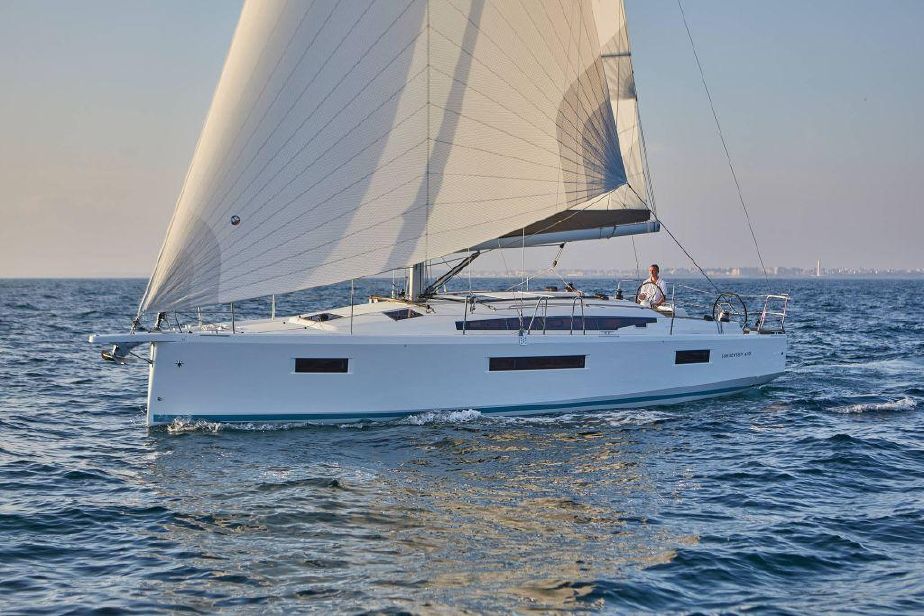
We run bareboat here, out of Tropea, Porto di Tropea and Vibo Valentia. That means you skipper the boat yourself, or bring a licensed friend who does. Monohulls in the 40 to 50ft range are the mainstay of this coast — stable, easy to handle, and enough space for a family or two couples.
Weekly bareboat rates depend heavily on boat, size and month; expect a clear step up into the July–August peak. Rather than quote a figure that goes stale, we give you a live price against real dates — message us on WhatsApp with your week and crew and we will come back with numbers. Budget separately for fuel (short legs keep this modest, the Aeolian crossing aside), berthing fees where you don't anchor, a final clean, and a security deposit held against the boat. Skippered or crewed options can be arranged on request but are not our standard offer here.
06A sample week
Day 1 — Tropea. Board in the afternoon, provision in town, swim off the boat, dinner under the cliff.
Day 2 — Capo Vaticano to Vulcano. Early start for the crossing while the sea is flat. Anchor at Porto di Levante, walk up the crater rim in the cool of late afternoon.
Day 3 — Lipari. Short hop north. Provision, wander the old town and the castle, eat ashore.
Day 4 — Salina. Quiet anchorages on the south coast, capers and Malvasia wine ashore, an easy day.
Day 5 — Panarea and Stromboli. Lunch stop at Panarea, then the run to Stromboli to arrive at dusk. Watch the volcano from the deck.
Day 6 — back across. Long leg home to the mainland; anchor under Capo Vaticano for a final swim.
Day 7 — Tropea. Return the boat. Times and turnaround confirmed at booking.
Adjust freely — if the crossing looks marginal, stay on the mainland coast and run north to Pizzo and Cetraro instead. The boat is yours to route.
07Getting there
Lamezia Terme (SUF) is the nearest airport, about 40 minutes by road from Tropea and Vibo Valentia, with seasonal flights from across Europe. Reggio Calabria is the alternative further south. Trains run down the Tyrrhenian line and stop at Tropea and Vibo-Pizzo, so the rail option is real if you are already in Italy. Taxis and transfers are simple to arrange for the last leg — ask us and we will point you at the sensible option for your arrival time. Bring the paperwork your skipper needs before you fly; it is the one thing that can hold up a handover.