 Catamaran
Sail Florida.

By the cabin
Cabin cruises in Florida
Scheduled crewed cruises — book by the cabin and share the yacht with a small group.
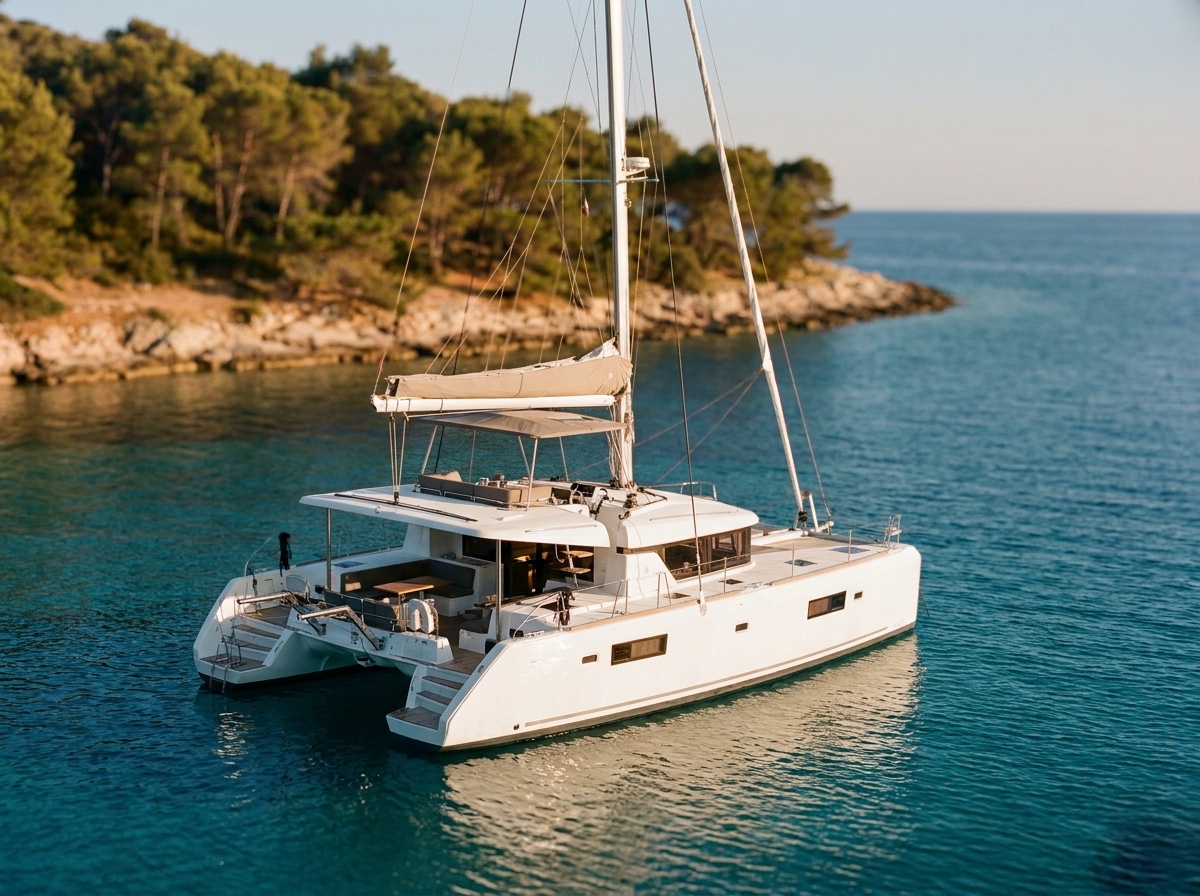
More cabin cruises
Other departures you can join, wherever you fancy sailing.
 €3,500per person
Croatia and Montenegro Cruise
Naya · crewed
Dubrovnik region, Croatia
7 days · Departs 26 Sept 2026View cabins
 €1,090per person
Modul B - Dufour 460 GL - Athi
Athi · crewed
Šibenik region, Croatia
7 days · Departs 26 Sept 2026 · 21 more datesView cabins
 €1,090per person
Modul B - Dufour 460 GL - Vellamo
Vellamo · crewed
Šibenik region, Croatia
7 days · Departs 26 Sept 2026 · 21 more datesView cabins
 €1,200per person
Sail the Aeolian Islands
Maria Louise II · crewed
Sicily, Italy
7 days · Departs 26 Sept 2026View cabins
 €5,000per person
More Package Greece
Zephyre · crewed
Ionian Islands, Greece
7 days · Departs 28 Sept 2026View cabins
 €3,000per person
Pearl of the Adriatic Cruise
Kaptan Sevket · crewed
Montenegro, Montenegro
7 days · Departs 28 Sept 2026View cabins
Florida questions
Asked and answered.
How much does a yacht charter in Florida cost?
A bareboat week sits in the mid-range for a modern monohull or catamaran, with the security deposit, damage waiver, fuel, end clean and any marina nights on top. Fuel is a small line because legs are short and you motor little. Rates shift with season and boat, so we quote per request rather than post a figure — message us on WhatsApp with your dates and base for a firm number.
Do I need a licence to charter a bareboat in Florida?
The US doesn't run a national recreational sailing licence, but our base will want evidence you can handle the boat — a recognised sailing certification (ASA, RYA or equivalent) plus a logbook showing coastal miles. If your paperwork is light or you're new to the grounds, take a skipper for the week or the first day or two. Tell us on WhatsApp and we'll sort it.
When is the best time to sail Florida?
November to May is the settled window. Winter brings the easterly trades and swimmable water, broken by cold fronts every week or so that clock the wind north-west for a day. Summer is hot, storm-prone in the afternoons, and hurricane season — most weeks book either side of it. December through April gives you the steadiest breeze and driest decks.
Where should I start — Key West or Charlotte Harbour?
First charterers should start at Charlotte Harbour, out of Burnt Store Marina or Punta Gorda: wide protected water, forgiving depths, and sheltered anchorages behind the barrier islands. Key West suits sailors comfortable reading thin backcountry water and the reef line to the south. Both grounds sail short legs, so neither is a long-passage week — pick by depth and confidence, not distance.
Is Florida good for a family sailing holiday?
Yes, especially Charlotte Harbour. Short legs mean nobody's stuck on a long beat, the anchorages are calm, and there are Gulf beaches, state parks and a lunch stop most days. Warm water means swimming and snorkelling straight off the boat. Keep everyone in sun cover and hats — the heat and glare are the real hazards here, not the sailing.
How shallow is the water and does it matter?
It matters a lot. The Keys backcountry runs a metre or two over grass and sand, and Charlotte Harbour has its own thin patches. You navigate by the chart and by reading the colour of the water — dark is deep, pale green and brown are trouble. Take a shallow-draft boat, keep polarised sunglasses on, and you'll gunkhole happily. It's part of what makes the sailing here relaxed.
How do I get to the charter bases?
For Charlotte Harbour, fly into Fort Myers (RSW) — under an hour to Punta Gorda and Burnt Store; Punta Gorda's own airport works too. For Key West, fly direct into EYW where you can, or into Miami and drive the Overseas Highway down, roughly three to four hours. Non-US visitors should check ESTA or visa rules and carry passports before travelling.
Where do the yachts in Florida sail from?
Boats sailing Florida May–November — boats operate from Key West and Burnt Store Marina. The fleet list above is live from our operator system, so it always shows what is actually available for your dates.
Bareboat or crewed in Florida?
These are bareboat yachts — someone on your crew needs a recognised licence. If nobody has one, we will find you the same boat with a skipper.
How do I get a quote?
Send us your dates, your group and roughly the boat you want. Same day, we reply with real options, real prices and the honest trade-offs.
Talk to an expert
Get three options.
Charter types
Charter types in Florida.
Bareboat charter
You skipper it yourself — licence required.
Florida · USA — Yacht Charter
Getting there and practical notes
For Charlotte Harbour, fly into Fort Myers (RSW); it's under an hour by road to Punta Gorda and Burnt Store. Punta Gorda has its own small airport too. For the Keys, fly into Key West (EYW) direct where you can, or into Miami and drive the Overseas Highway down — it's a long but scenic three to four hours.
Non-US charterers should carry passports and check visa/ESTA requirements before travelling. Bring your sailing certification and logbook; the base will want to see them at check-in. Cruising in state parks may need a permit or mooring reservation in the Keys backcountry and Everglades edges — we'll flag anything you need for your route. Hydration, sun cover and polarised sunglasses matter more here than foulies: you read the water by its colour, and glare hides the shallows.
Florida
01Why sail Florida
Florida is flat-water cruising in warm water, and that suits people who want an easy first bareboat week or a family charter without big passages. From Key West you drop south into the reef line and out to the Marquesas; from Punta Gorda you have the sheltered sweep of Charlotte Harbour and the barrier islands off Fort Myers. Distances are short, the holding is mostly good sand, and you can plan a week around lunch stops rather than tide gates. It isn't a place for serious distance sailors chasing weather — it's a place for shallow-draft gunkholing, snorkelling off the boat, and pulling into a marina bar by late afternoon. We sail it because the season runs long and the water stays swimmable when the Med has gone cold.
02The sailing areas
Two grounds, and they sail differently. The Keys run south-west from the mainland in a thin chain: Key West at the end, the backcountry flats to the north, the reef and Hawk Channel to the south. Water is thin — a metre or two over grass in the backcountry — so you watch the chart and read the colour of the water constantly. Key West itself is a working harbour with anchorage off Wisteria Island and marina berths in town.
Charlotte Harbour, reached from Burnt Store Marina and Punta Gorda, is the gentler ground: a wide protected bay opening to Pine Island Sound, Cayo Costa, Cabbage Key, and Boca Grande Pass. This is where first charterers should start. Depths are more forgiving, the anchorages sit behind barrier islands, and the run out to the Gulf beaches is an hour, not a day.
03Season and winds
The good window is roughly November to May. Through winter you get the north-easterly and easterly trades, 10–20 knots on a settled day, with cold fronts sweeping through every week or so — those bring a wind clock round to the north-west, a day of stronger breeze, then it settles. Watch the front timing and you'll sail fair reaches most of the week.
Summer (June to October) is hot, humid, thunderstorm-prone in the afternoons, and it's hurricane season — that's the honest reason most charter weeks are booked either side of it. Water temperature stays comfortable for swimming almost year-round. If you want steady breeze and dry decks, aim for December through April.
04Charter types
Florida is bareboat country. If you hold the right ticket and have coastal miles, you take the boat yourself — the grounds are well-marked, the distances short, and shore support is easy to reach. Our boats work out of Key West and out of Charlotte Harbour at Burnt Store Marina and Punta Gorda, so you can pick the ground that fits your plans.
We don't run crewed charters here. If you'd rather have a skipper for the week or for the first couple of days to settle in, tell us on WhatsApp and we'll arrange a local one on request. Provisioning is straightforward — full supermarkets near both bases — and the marinas take fuel, water and pump-out without fuss.
05What it costs
A bareboat week in Florida sits in the usual mid-range for a modern monohull or cat, before extras. Expect ranges rather than a single number, and budget separately for fuel, the end-of-charter clean, marina nights ashore, and any cruising permits. Fuel burn is light because you sail short legs and motor little. For a firm quote on your dates, boat and base, message us on WhatsApp — Price on request is honest here because rates move with season and boat.
Rough guide to plan around: the security deposit and a damage waiver are standard, marina berths ashore run a nightly fee, and mooring balls in the state parks (Boca Grande, Cayo Costa) carry a small charge. None of it is Med-marina expensive.
06A sample week from Charlotte Harbour
Day 1 — Board at Burnt Store or Punta Gorda, provision, short shakedown sail across the harbour, anchor for the first night behind Pelican Bay.
Day 2 — Down Pine Island Sound to Cabbage Key. Lunch at the inn, then anchor off Useppa or Cayo Costa. Walk the Gulf beach at Cayo Costa State Park.
Day 3 — Boca Grande Pass and the town quay at Boca Grande. Watch the tide through the pass; it runs hard. Anchorage or a marina night.
Day 4 — North into the flats around Bokeelia and the north end of Pine Island. Quiet water, good for a lay day and snorkelling.
Day 5 — Cross to Cabbage Key or Cayo Costa again, or push south toward Sanibel and the causeway anchorages. Sunset from the cockpit.
Day 6 — Slow morning, then back up the sound with a lunch stop, anchoring near the mouth of the harbour for the last night out.
Day 7 — Short leg back to base, fuel and pump-out, off the boat. It's a week you can sail without a single long day.