 Catamaran
Sail Greece.
Live fleet
Catamaran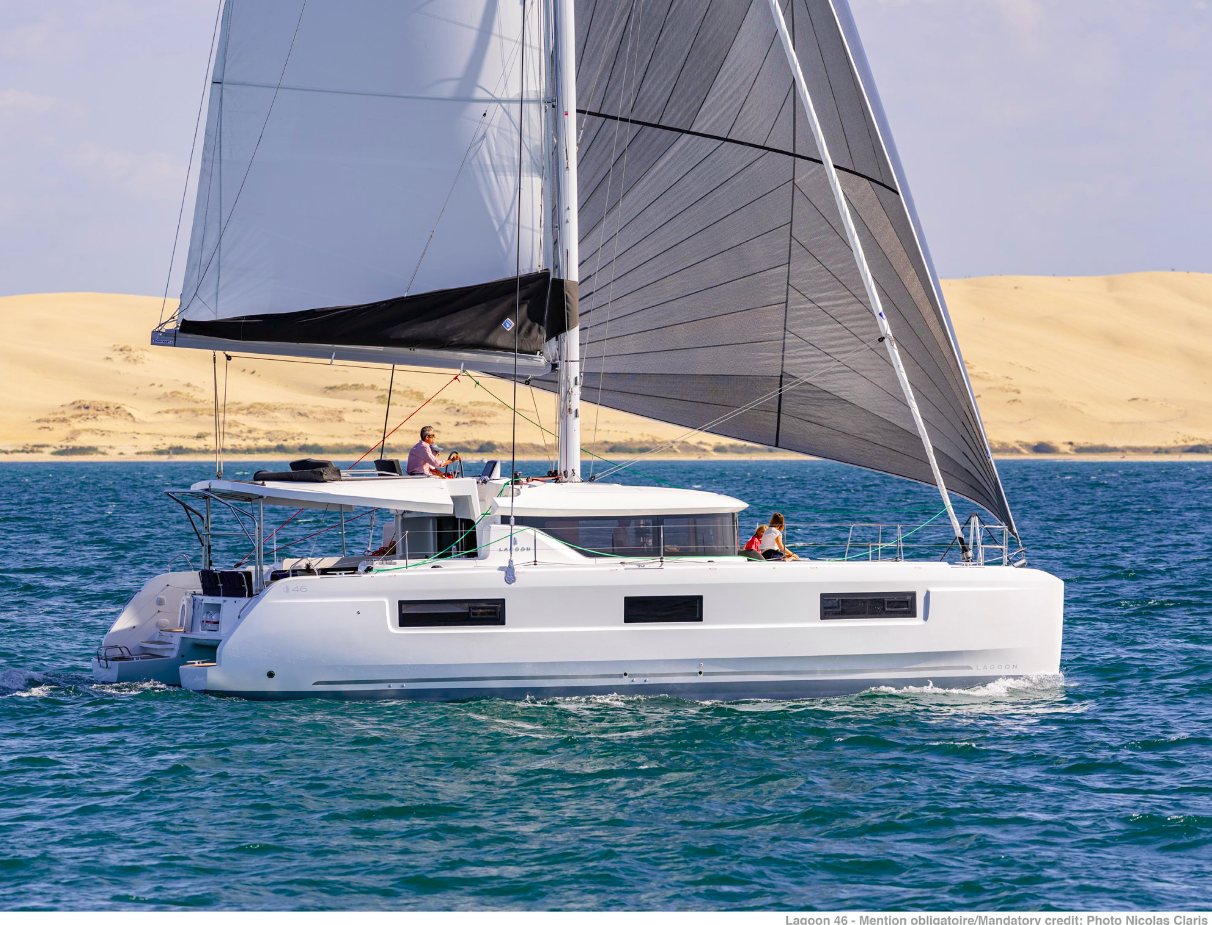 Catamaran
 Catamaran
Dos Hermanos
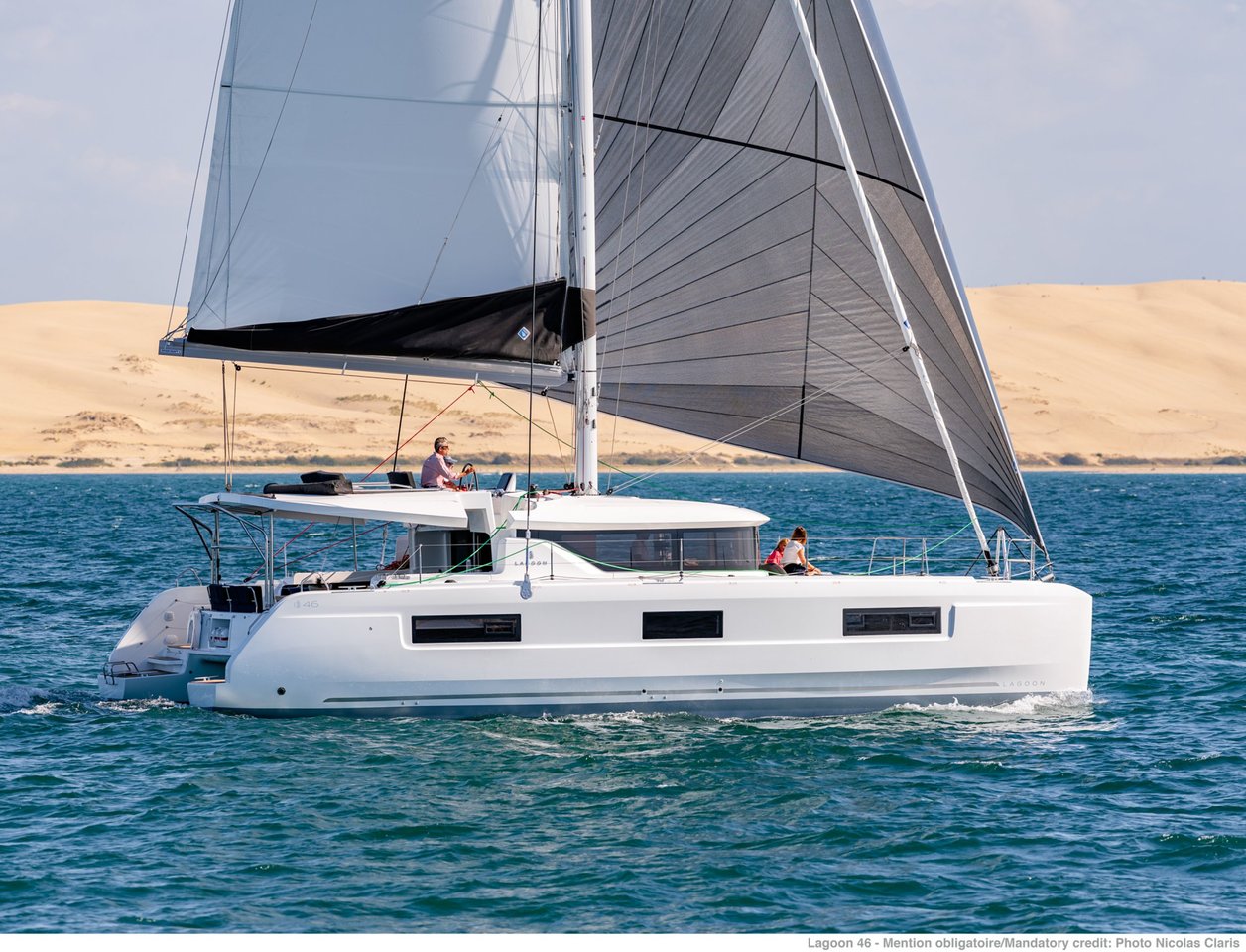
Lagoon 46 - 4 + 2 cab. · 2024Lefkas main port, Greece
12 guests4 cabins14 m
€6,700 / week
+ Compare Catamaran
 Catamaran
 CatamaranCatamaranCatamaran
 CatamaranCatamaran
 CatamaranCatamaranCatamaranCatamaranCatamaranCatamaran
Miber Andromeda
Lagoon 46 - 4 + 1 cab. · 2024Fethiye, Turkey
9 guests4 cabins14 m
€3,793 / week
+ Compare CatamaranCatamaran
One Thought
Lagoon 46 - 4 + 2 cab. · 2024Lefkas main port, Greece
10 guests4 cabins14 m
€5,600 / week
+ CompareCatamaran Catamaran
 Catamaran
 Catamaran
 Monohull
 MonohullCatamaranCatamaranCatamaran
 Catamaran
 Catamaran
 Catamaran
 Monohull
 Monohull
 MonohullCatamaranCatamaran
My Naughty Spirit
Lagoon 46 - 4 + 1 cab. · 2023Lefkas, Greece
12 guests4 cabins14 m
€5,100 / week
+ CompareCatamaran Catamaran
 Monohull
Santa Cruz
Bavaria C45 Style - 3 cab. · 2023Fethiye, Turkey
6 guests3 cabins14 m
€3,390 / week
+ Compare Catamaran
 Catamaran
 Catamaran
 MonohullMonohull
 Catamaran
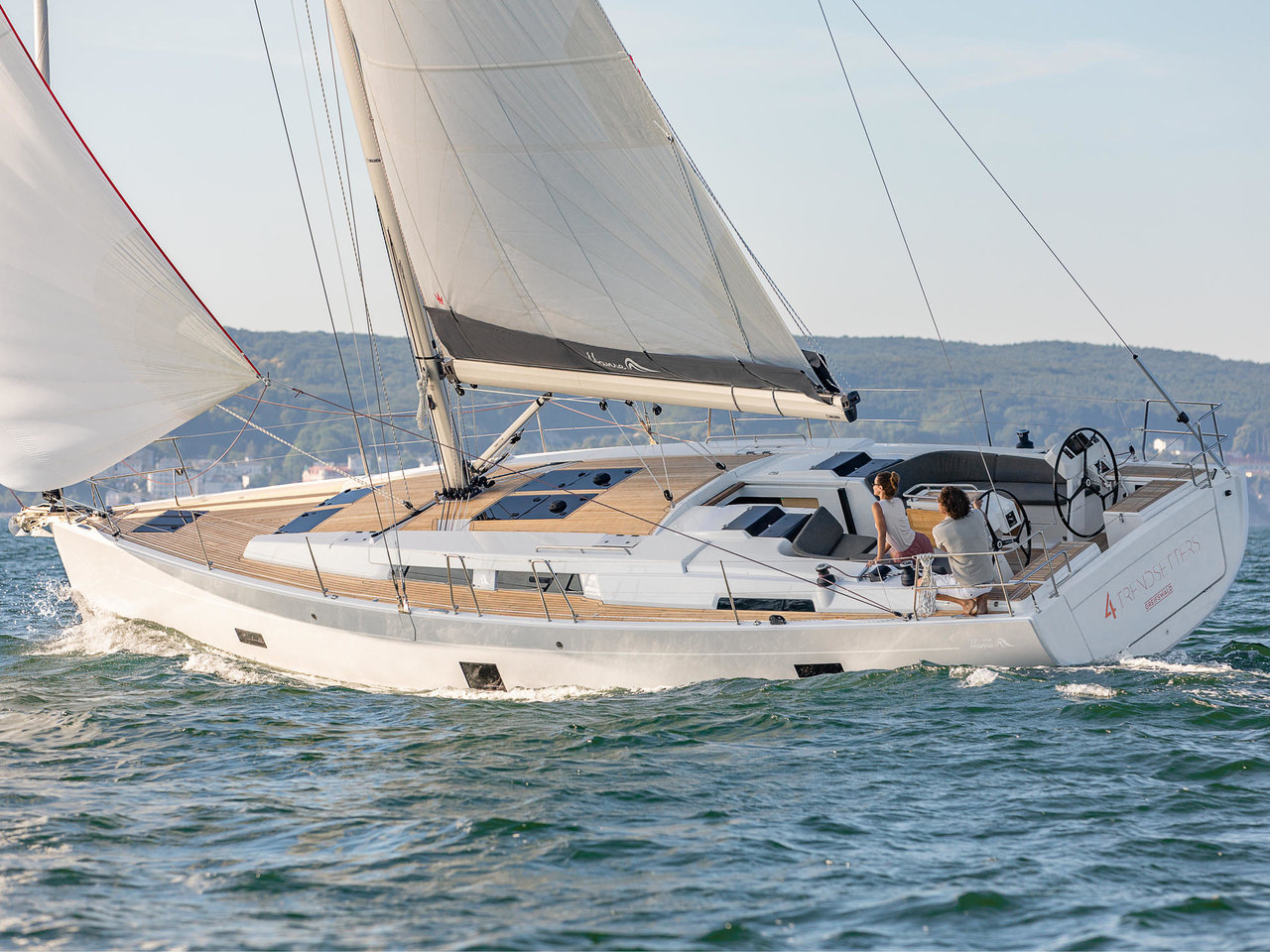 Monohull
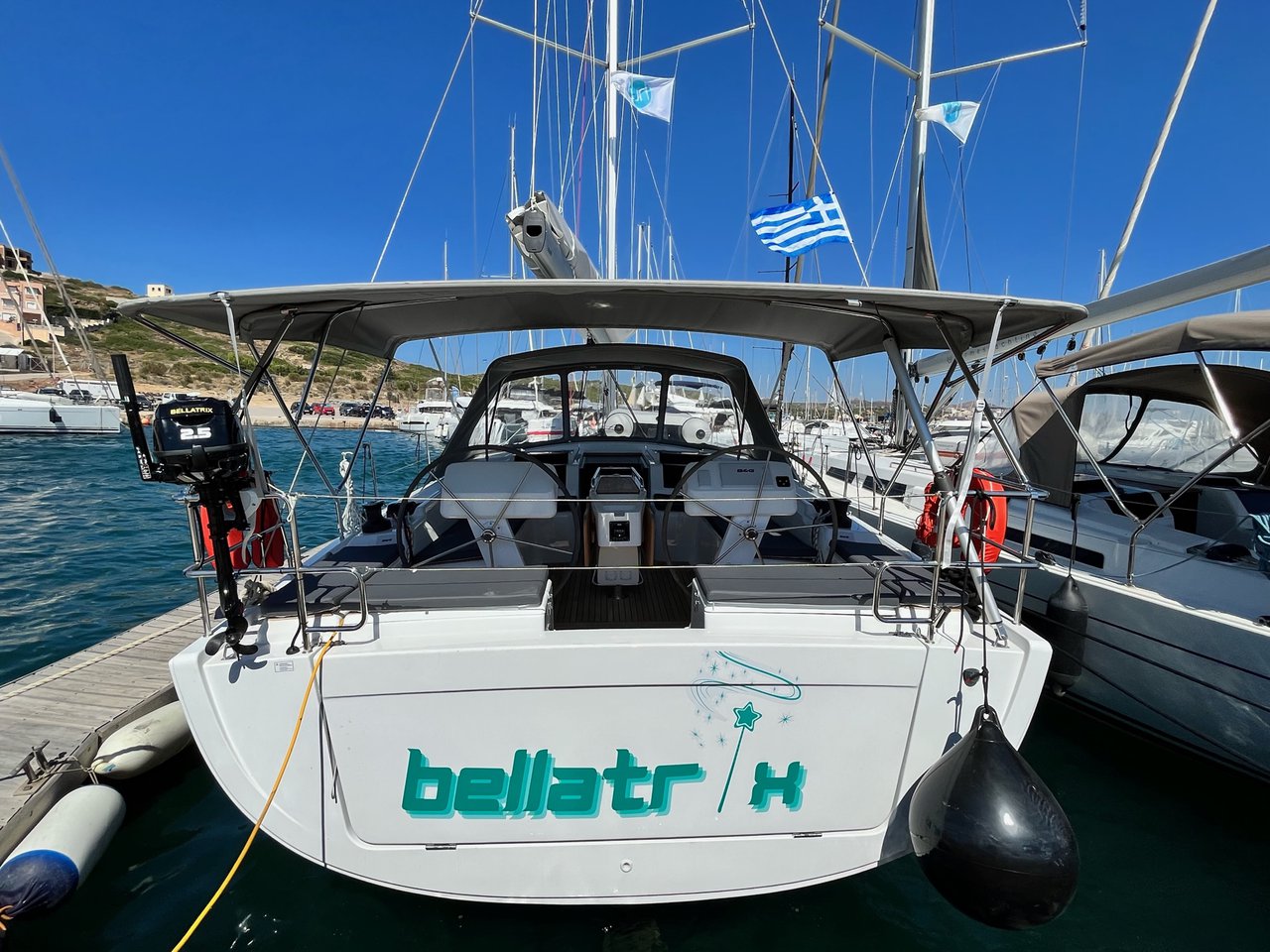 Monohull
By the cabin
Cabin cruises in Greece
Scheduled crewed cruises — book by the cabin and share the yacht with a small group.
Greece

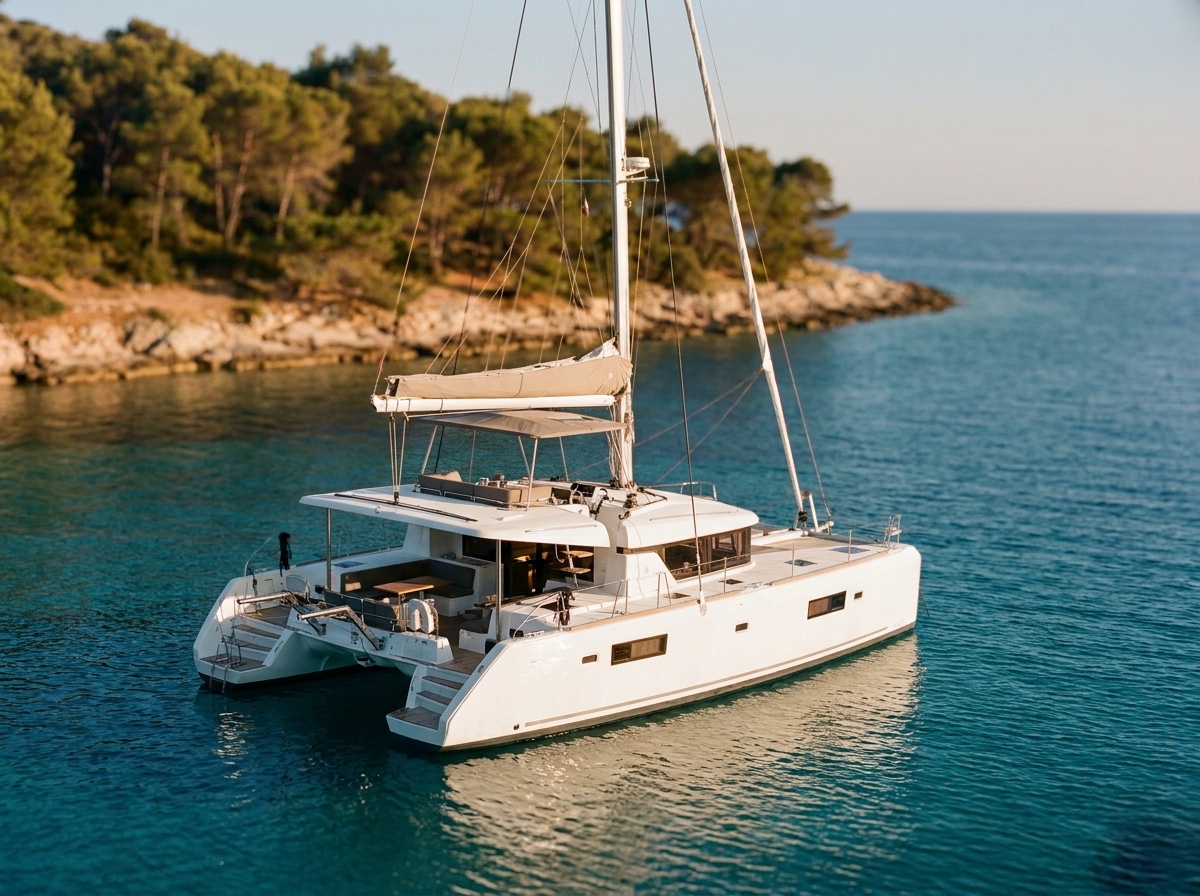
More cabin cruises
Other departures you can join, wherever you fancy sailing.
 €3,500per person
Croatia and Montenegro Cruise
Naya · crewed
Dubrovnik region, Croatia
7 days · Departs 26 Sept 2026View cabins
 €1,090per person
Modul B - Dufour 460 GL - Athi
Athi · crewed
Šibenik region, Croatia
7 days · Departs 26 Sept 2026 · 21 more datesView cabins
 €1,090per person
Modul B - Dufour 460 GL - Vellamo
Vellamo · crewed
Šibenik region, Croatia
7 days · Departs 26 Sept 2026 · 21 more datesView cabins
 €1,200per person
Sail the Aeolian Islands
Maria Louise II · crewed
Sicily, Italy
7 days · Departs 26 Sept 2026View cabins
 €3,000per person
Pearl of the Adriatic Cruise
Kaptan Sevket · crewed
Montenegro, Montenegro
7 days · Departs 28 Sept 2026View cabins
 €1,090per person
Modul A - Aventura 37 - Ankolina
Ankolina · crewed
Šibenik region, Croatia
7 days · Departs 3 Oct 2026 · 2 more datesView cabins
Talk to an expert
Get three options.
Greece
01Why sail Greece
Greece is two sailing countries wearing one flag. To the west, the Ionian: green islands, short hops, water that goes flat by breakfast, tavernas a stern-line away. To the east, the Aegean: bare Cycladic rock, a wind that gets up every afternoon in high summer, and the kind of passage-making that rewards a crew that knows what it's doing. You can spend a week never sailing more than 12 miles between anchorages, or you can point a bow into the meltemi and earn your dinner. Both are Greece. Pick the side that matches your crew, not the postcard.
02The sailing areas
The Ionian — around Corfu, Lefkas, Kefalonia and Zakynthos — is the beginners' and families' ground. Distances are short, the swell rarely builds, and you can plan a week by lunch stops. The Athens area, Saronic and Peloponese ground is the most-chartered in the country: quick to reach from the airport, sheltered water, Aegina and Hydra within a day's sail, and Poros as a reliable turnaround.
East and south, the Cyclades — Paros, Naxos, Mykonos, Santorini — are open, dramatic and exposed. This is where the meltemi lives. The Dodecanese — Rhodes, Kos, Symi, Leros — sit close to the Turkish coast and mix Byzantine harbours with sheltered bays; a strong option in shoulder season. North, the Sporades around Skiathos and Volos are green, quiet and underrated. Northern Greece and the Aegean and East Macedonia and Thrace round it out for crews who want emptier water.
03Season and winds
The charter season runs roughly May to October. June and September are the sweet spots: warm water, settled weather, fewer boats. July and August are hot, busy and — crucially in the Cyclades — windy. The meltemi is a dry northerly that funnels down the Aegean in high summer; it can hold Force 5–7 for days and shuts down the exposed Cycladic passages for less experienced crews. Plan Aegean summers with bail-out anchorages in mind.
The Ionian is far kinder. The prevailing summer breeze there is the maïstro, a gentle north-westerly that fills in around midday and dies at dusk — sail in the afternoon, anchor for a swim, dine ashore. Spring and autumn bring more variable weather and the odd blow, but also empty quays and cheaper rates. Water is swimmable from late May into October.
04Charter types
Most of the fleet is bareboat — you and your crew, no professional aboard — spread across monohulls and catamarans from small cruisers up to larger 50-footers. If you'd rather not skipper, skippered charters put a local aboard who knows the anchorages and the forecast; the best reason to take one in the Cyclades is meltemi local knowledge. Cabin charters — booking a berth rather than the whole boat — suit solo travellers and couples. Flotillas, where a lead boat shepherds a group, remain the gentlest way into Greek sailing for first-timers, especially in the Ionian.
Catamarans book out first for families and groups wanting space and shallow draught. If you want one for July or August, reserve early.
05Costs
A bareboat monohull in the shoulder season starts lower and climbs steeply into August; catamarans sit well above monohulls of the same length. Rather than quote figures that go stale, we give you a real range on the boats actually free for your dates. Price on request via WhatsApp — send us crew size, dates and preferred area and we'll come back with options.
Budget beyond the charter fee for: fuel (you pay for what you burn), the end-of-charter clean, an optional skipper if you take one, and mooring. Many Ionian anchorages are free; town quays and marinas charge, and Cycladic marinas in season are not cheap. Provisioning a week aboard is comfortably cheaper than eating ashore every night — the tavernas are the treat, not the obligation.
06A sample Ionian week
Day 1 — Lefkas. Board in the afternoon, provision, short hop to Nidri or Tranquil Bay to settle in. Day 2 — Meganisi. Round into Vathi or one of the fingered bays; swim, walk to a hillside taverna. Day 3 — Kastos or Kalamos. Quiet islands, stern-to on the quay, one taverna, no traffic. Day 4 — Fiskardo, Kefalonia. The prettiest harbour on the route and the busiest — arrive early or anchor off. Day 5 — Sivota, Lefkas. A landlocked bay ringed with tavernas; easy night. Day 6 — Vathi, Ithaca. Homer's island; grab a lunch swim off Gidaki. Day 7 — back toward Lefkas for the canal timing and an early handover. Short days, warm nights, no passage over about 20 miles.
07Getting there
For the Saronic and Athens ground, fly into Athens (ATH) and transfer to the marinas at Alimos or Lavrio. For the Ionian, Preveza (PVK) serves Lefkas, Corfu (CFU) the north, and Kefalonia (EFL) the south. The Cyclades run through Athens or seasonal flights to Mykonos and Santorini; the Dodecanese through Rhodes (RHO) or Kos (KGS). Most bases sit within 30–90 minutes of their airport.
Bring the paperwork: EU-style photo ID or passport, and the skipper's sailing qualification plus (for many charters) a VHF certificate. Handover is usually Saturday, boarding mid-afternoon, off by morning at the end. Right for first charterers and families on the Ionian and Saronic; the Cyclades in summer suit crews comfortable in a fresh breeze.
Practical information
01Entry & getting thereVisa & entry requirements
Greece is in the EU and the Schengen Area. EU/EEA citizens enter with a valid ID card or passport. Citizens of many other countries — including the UK, US, Canada and Australia — get up to 90 visa-free days in any 180-day period under the Schengen rules; other nationalities need a Schengen visa in advance. Non-EU passports must be issued within the last ten years and valid for at least three months beyond your planned departure.
Since April 2026 the EU's Entry/Exit System (EES) registers non-EU visitors at the border — a photo and fingerprints on first entry — and the ETIAS travel authorisation is expected to follow in late 2026 with a transition period; neither changes the 90/180 allowance. Days are counted across all Schengen countries on the same trip, so budget them together and check your own government's travel advice before you fly.
02Entry & getting thereGetting there
Athens (ATH) is the year-round gateway, with the Alimos and Lavrion charter bases within about an hour of the airport. Each island group then has its own field: Preveza/Aktion (PVK) for Lefkada and the Ionian, Corfu (CFU) in the north Ionian, Kos (KGS) and Rhodes (RHO) for the Dodecanese, Mykonos (JMK) and Santorini (JTR) for the Cyclades, Skiathos (JSI) for the Sporades and Kalamata (KLX) for the Peloponnese — most bases sit within 15–60 minutes of their airport.
In season, direct and charter flights reach these regional airports from much of Europe. Preveza and the smaller island fields are seasonal, thinning out or pausing from roughly November to April, when Athens or Thessaloniki (SKG) plus a domestic hop or ferry is the reliable route.
03Entry & getting thereTime zone & daylight saving
Greece runs on Eastern European Time (EET, UTC+2) and switches to Eastern European Summer Time (EEST, UTC+3) with the rest of the EU — clocks go forward on the last Sunday of March and back on the last Sunday of October. The IANA zone is Europe/Athens.
Practically: Greece sits one hour ahead of Italy, Croatia and most of central Europe, two hours ahead of the UK and Ireland, and seven ahead of US Eastern. Your charter week will normally sit inside one time regime — only late-October charters catch the clock change.
04MoneyCurrency & exchange
Greece uses the euro, and has since the first wave: the drachma gave way to the euro in 2001 and euro cash arrived on 1 January 2002. Every price you see is in euros.
Getting cash is cheap and easy. Since August 2025 Greek law makes withdrawals at Greek banks' ATMs free of charge and caps fees at standalone third-party machines at €1.50 — so favour a bank's ATM (Alpha, Piraeus, Eurobank, National Bank) over the brightly lit tourist machines. Exchange offices and banks change foreign notes, but a low-fee card is the better tool; and when an ATM or terminal offers to charge you in your home currency, decline it and take euros — that "dynamic currency conversion" rate is never in your favour.
05MoneyPayment methods
Everything is priced and paid in euros, and card acceptance is near-universal: Greek law requires every business — taxis, kiosks and market stalls included — to take electronic payments, so Visa and Mastercard contactless work in supermarkets, fuel stations, marinas and most tavernas in the charter towns.
Carry some cash all the same: a small-island taverna's terminal can be offline, a few family-run places quietly prefer notes, and tips are best given in cash. Withdraw from bank-attached ATMs — Greek banks' machines have been fee-free by law since August 2025 — and when a terminal offers to charge your home currency, decline it and pay in euros; the conversion offer is never in your favour.
06MoneyTipping culture
Tipping in Greece is appreciated, never demanded — staff are salaried and a service charge is sometimes already on the bill. In tavernas, rounding up or leaving 5–10% for good service is the norm; smarter restaurants in Athens or on Mykonos and Santorini see 10–15%. In cafés and bars, round up or leave the coins; taxi drivers get the fare rounded up to the next euro or two.
Tip in cash and in euros even when you pay the bill by card — hand it over or say how much to keep. On skippered and crewed charters, a discretionary tip for the crew at the end of a good week is an established courtesy; give it directly to the skipper or host.
07MoneyCost of living
Greece remains fair value by Mediterranean standards, with a premium on the marquee islands. As a guide: a gyros or souvlaki wrap costs €3–5, a meal in an inexpensive taverna about €15 a head, a three-course dinner for two at a mid-range restaurant around €50, a half-litre of draft beer €4–5 and a cappuccino a little over €3.
Mykonos, Santorini and waterfront tables anywhere carry higher prices in July and August — the same dinner costs less one island over or a month either side of peak. Supermarkets, bakeries and local markets are good value for provisioning the boat; expect island shelves to run a touch above mainland prices, since everything arrives by ferry.
08Rules & permitsSailing regulations & permits
Greece asks for two competent people on every bareboat. The skipper needs a recognised certificate — an ICC or an equivalent national coastal/offshore licence; daylight-only tickets such as the RYA Day Skipper have not been accepted since March 2019. The second person (18+) can usually sign a declaration of competence instead of holding a licence, and someone aboard should hold an SRC-level VHF certificate. Certificate copies go to the base in advance, originals come with you, and a crew list is filed with the port authority before departure — we prepare that paperwork with you at check-in.
Charter yachts operating in Greece are state-licensed and insured, and the Greek cruising fee (TEPAI) that applies to boats over 7 metres is handled by the operator, not by you. Port police do spot-check papers, so keep them aboard. Licence specifics for skippering yourself live on our bareboat pages.
09Rules & permitsSubstances & laws
The legal age to buy and be served alcohol is 18, and bars and clubs may not admit or serve anyone younger — expect ID checks. Recreational drugs, cannabis included, are illegal and carry severe penalties; don't bring anything aboard. One trap worth knowing: codeine is a controlled substance in Greece, so painkillers bought over the counter at home can cause real trouble at customs without paperwork.
Carry prescription medication in its original packaging with a doctor's letter, the name matching your passport. Arriving from another EU country, generous personal-use amounts of alcohol and tobacco are fine (indicative levels: 800 cigarettes, 10L of spirits). From outside the EU the allowance drops to 200 cigarettes and 1L of spirits, 4L of wine and 16L of beer, age 17+.
10Rules & permitsFishing regulations
Good news for anyone who likes to troll a line on passage: Greece has done away with individual recreational fishing licences, so rod-and-line sea fishing from the shore or from the boat currently needs no personal permit. Sensible limits apply — up to 5 kg of fish and cephalopods per person per 24 hours, a single grouper, octopus only over 500 g — and the catch is for your own table, never for sale.
Nets and shore-set longlines are off-limits to recreational fishers, and a bluefin tuna caught alive must be released. Spearfishing has its own rules (16+, with seasonal and area restrictions). Inside the marine parks of Zakynthos and Alonissos fishing is banned in protected zones, and Greece has flagged that a registration system may return — check current notices before a serious fishing day.
11Rules & permitsWildlife protection laws
Two of the Mediterranean's rarest animals breed in Greek waters, and the law protects both fiercely. The loggerhead turtle Caretta caretta nests in Laganas Bay on Zakynthos, Greece's National Marine Park since 1999: Zone A is closed to boats entirely, elsewhere the limit is 6 knots, anchoring is allowed only in Zone C, motorised watersports are banned year-round, and you keep at least 15 metres from any turtle. The Alonissos–Northern Sporades marine park shelters Europe's largest population of Mediterranean monk seals — the core zone around Piperi is off-limits to within 3 nautical miles, and approaching seal caves is forbidden.
Dolphins, turtles and seals are protected everywhere in Greece, not just in the parks: it is illegal to harm, chase or disturb them, so admire from a respectful distance under way. Fines are real, and each park posts its own zone rules — check them before you enter.
12Rules & permitsInsurance requirements
The yacht comes insured — hull cover plus third-party liability are part of every charter. Your exposure for damage is capped at the security deposit, typically €800–€3,000 blocked on a card at check-in and released after undamaged return; larger, newer yachts sit higher. Most bases offer a non-refundable damage waiver (roughly €200–€350 per week) that shrinks that risk to a small excess — read the exclusions, as negligence, torn sails and dinghy loss commonly sit outside it.
Two strong recommendations, and we mean them: carry travel insurance with proper medical and evacuation cover — a GHIC/EHIC helps EU/UK visitors in Greek state care but is not an alternative to insurance, and facilities on smaller islands are limited — and take holiday-cancellation insurance when you book. We do not insure charters or holidays; cancellation cover is the only thing that protects your payment if life intervenes.
13Health & safetyEmergency contacts
All emergencies (EU-wide): 112 — operators speak Greek, English and French
Police: 100
Ambulance (EKAB): 166
Fire: 199
Coast guard: 108
Tourist police: 171
At sea, call the coast guard on 108 or put out a distress call on VHF channel 16. All numbers are free from any Greek landline or mobile.
14Health & safetyHealthcare & hospitals
Healthcare in Greece is good where the people are: the public ESY system runs large hospitals in Athens, Thessaloniki and the regional capitals, backed by a strong private sector, and some Greek hospitals hold international (JCI) accreditation. On the islands the picture thins out — smaller islands rely on health centres and rural clinics, ambulances are in short supply on some, and serious cases are transferred to a mainland or regional-capital hospital. Pharmacies (farmakeio, the green cross) are everywhere in the sailing towns and pharmacists are a genuinely useful first stop.
EU and UK visitors can use an EHIC/GHIC for medically necessary state care, but it covers neither private clinics nor repatriation — carry travel insurance with proper medical and evacuation cover. In an emergency dial 166 for an ambulance, or 112.
15Health & safetyVaccinations
No vaccinations are required to enter Greece. Health authorities recommend being current on the routine set — MMR, tetanus-diphtheria-polio, flu and COVID-19 — with hepatitis A worth considering for most travellers and hepatitis B for some. Nothing about a sailing week changes that picture.
Tick-borne encephalitis has been reported in parts of the northern mainland, so follow tick-bite precautions if you add inland hiking; vaccination is not usually recommended for visitors, and skip unpasteurised milk products. Check current advice about eight weeks before you travel (CDC, or TravelHealthPro for UK travellers).
16Health & safetyWater drinkability
On the mainland and in the big cities — Athens and Thessaloniki included — tap water is safe to drink and meets EU standards. The islands are the caveat: many of the drier Cyclades and Dodecanese (Santorini and Mykonos among them) run on desalinated or brackish supply, and locals themselves drink bottled water there. Larger islands such as Crete, Rhodes and Corfu are generally fine, though mineral taste varies.
The practical rule afloat: ask locally before filling water bottles from island taps, use the tap freely for showers, dishes and brushing teeth, and keep the yacht's tank water for washing and cooking. Bottled water is cheap in every supermarket — stock the bilge on changeover day.
17Health & safetyEnvironmental hazards
The Aegean's one hazard that demands respect is the meltemi: a dry northerly blowing June to September and peaking in July and August, commonly Force 5–7 in the open Cyclades, with seas over three metres building in the channels between islands. It also throws violent katabatic gusts off the lee sides of mountainous islands — Kea, Andros, Tinos, Serifos, Amorgos and Folegandros among them — so a calm-looking lee can gust hard without warning. It is well forecast: check every morning, keep the itinerary flexible, and sit out the strong days. The Ionian and Saronic are far gentler.
In the water the hazards are small-scale: sea urchins on rocks (water shoes solve them), occasional jellyfish drifts in some summers, and the weever fish — buried in sandy shallows, its sting is intensely painful, treated by soaking in hot water. Shuffle your feet on sandy bottoms, watch your footing on rocks, and injuries stay rare and minor.
18Weather & seaWeather & best seasons
The charter season runs from April to October. July and August bring the hottest weather, peak crowds and prices — and the strongest meltemi, the dry northerly that sweeps the Aegean. May, June, September and early October are the sweet spots: warm seas, gentler winds and thinner crowds, with June and September the best all-round bet and the shoulder months noticeably cheaper.
Where you sail changes the week as much as when. The Ionian (Corfu, Lefkada, Kefalonia) stays gentle all season, with light afternoon breezes that rarely top 15 knots, while the open Cyclades give experienced crews proper wind in high summer; the Saronic sits comfortably between the two. Past patterns are a guide, not a promise — always sail to the current forecast.
19Weather & seaSunrise & sunset by season
Greece gets long sailing days in season: daylight stretches to nearly 15 hours at midsummer, against roughly nine and a half in midwinter. In June and July the sun rises just after 6 am and sets close to 9 pm, leaving long, warm evenings for a swim stop after the day's leg. By October the days shorten quickly, so plan passages earlier in the day.
For exact sunrise and sunset times at your harbour and week, check a per-city table such as gaisma.com or sunrise-sunset.org (they cover Athens, Lefkada, Rhodes and the islands).
20Weather & seaConservation tips
Roughly 70% of Greece's coastal seabed carries Posidonia seagrass, and Greece's nature agency calls anchoring one of the biggest threats to it. The fix costs you nothing: anchor on pale sand, never in the dark meadow patches, and pick up an eco-mooring where one exists — around 40 have been installed so far, mainly in the Ionian and around Alonissos, with more coming as Greece expands its marine protected areas and no-anchor zones. Expect posidonia charting and local anchoring notices to tighten year on year.
The rest is the familiar drill that keeps the Aegean clear: rubbish ashore to marina bins, use pump-outs rather than discharging near anchorages, reef-safe sunscreen, and leave shells, urchins and anything living where you found them. Inside the marine parks, the zone rules are the conservation plan — follow them to the letter.
21Culture & practicalitiesLanguage & cultural tips
Greek is the official language, written in its own alphabet — but harbour signs and menus in tourist areas are routinely transliterated, and English is spoken by around half the population, rising far higher among under-40s and anyone working in tourism. In marinas, tavernas and shops on the sailing islands you will rarely need anything else; English only thins out in remote villages and among older Greeks.
A few words earn instant warmth: kalimera (good morning), efharisto (thank you), parakalo (please). Life runs unhurried — lunch is long, dinner starts late, and a greeting when you step into a small shop or kafeneio is basic good manners.
22Culture & practicalitiesHistory & culture
Greeks have sailed these waters for over four thousand years — Bronze Age Cycladic and Minoan traders, the triremes that beat Persia at Salamis, then the island shipping families of Hydra, Spetses, Andros and Chios whose fleets carried the fight in the War of Independence. The thread never broke: Greek owners still run the world's largest merchant fleet, close to a fifth of global tonnage.
That heritage sits within walking distance of a berth: the Hellenic Maritime Museum at Zea in Piraeus, the trireme replica Olympias and the battleship Averof at Palaio Faliro, the Aegean Maritime Museum in Mykonos town, and small maritime museums on Andros, Santorini (Oia) and half the islands you will visit.
23Culture & practicalitiesNational holidays & closures
Greece keeps roughly a dozen national holidays, and the church calendar sets the rhythm: Easter follows the Orthodox date — usually a different week from Western Easter — and pulls Clean Monday, Good Friday, Easter Monday and Whit Monday around with it. The fixed dates are New Year, Epiphany (6 January), Independence Day (25 March), 1 May, the Dormition (15 August), Ohi Day (28 October) and Christmas (25–26 December).
The two that touch charters most are Whit Monday (May/June) and 15 August, the biggest summer feast — ferries, flights and harbours run full as half of Greece heads for the islands, so book berths and provision the day before. On holidays banks and most shops close while tavernas in tourist areas carry on; around Orthodox Easter, shops shorten hours on Good Friday and nearly everything closes on Easter Sunday.
24Culture & practicalitiesDress code & what to pack
Board-shorts casual is the rule afloat and ashore — swimwear stays on the boat and the beach, and smart casual covers dinner anywhere. Monasteries and churches are the exception: knees and shoulders covered, enforced firmly at working monasteries; many lend wraps at the door, but carrying your own sarong is the reliable play.
Pack light, in a soft duffel (lockers, not wardrobes) — you will live in swimwear and one nice outfit. Non-marking deck shoes or bare feet on board, comfortable shoes for cobbled harbour towns, and no heels on teak. Even in July, Cycladic evenings cool fast once the breeze is up, so bring a windproof layer, and add a fleece for early- and late-season weeks. Hat, polarised sunglasses, high-SPF sunscreen and a waterproof phone pouch finish the list.
25Culture & practicalitiesMobile & internet coverage
Greece's three networks — Cosmote, Vodafone and Nova — cover the sailing coasts well. Cosmote is the strongest overall and the safest bet on the smaller Cyclades and Dodecanese; Vodafone is solid on the big tourist islands (Crete, Rhodes, Corfu, Zakynthos, Kos); Nova leans urban. 4G is extensive and 5G now reaches the cities and the major islands. Expect signal in harbours and anchorages near villages, with dropouts on open-water crossings and around small uninhabited islands.
EU/EEA SIMs roam like at home under EU rules, so European visitors just switch on. Everyone else can pick up a tourist SIM on arrival or load a Greek eSIM before flying. Download charts, forecasts and entertainment before a long crossing.
26Culture & practicalitiesElectricity & plug types
Greece is standard continental Europe: 230V at 50Hz through type C and type F (Schuko) sockets. EU visitors plug straight in; travellers from the UK, Ireland, the US and most of Asia and the Americas need a simple adapter — and US 110V-only appliances also need a voltage converter.
Aboard, yachts charge phones from 12V USB outlets under way and run 230V sockets only on shore power in harbour. Outlets are few, so leave hairdryers and bulky electronics at home, top up laptops and camera batteries on marina nights, and bring a power bank for nights at anchor.
27Greece questionsHow much does a yacht charter in Greece cost?
It depends on boat, size, season and area. A monohull is cheapest in May, June, September and October, and steepest in July and August; catamarans cost well above monohulls of the same length. On top of the base fee, budget for fuel, the end-of-charter clean, mooring in town and an optional skipper. Send us your dates and crew size on WhatsApp for a real range on boats free for those dates — price on request.
28Greece questionsDo I need a licence to charter a bareboat in Greece?
Yes. Greek authorities require the skipper to hold a recognised sailing qualification, and for many boats a VHF radio certificate as well. A second competent crew member is often expected to be named. If you don't hold a licence, or you'd rather not skipper, take a skippered charter — a local aboard who knows the anchorages and the forecast, which is especially worth it in the Cyclades.
29Greece questionsWhen is the best time to sail Greece?
June and September are the sweet spots: warm water, settled weather and fewer boats. July and August are hot and busy, and in the Cyclades the meltemi can hold Force 5–7 for days — fine for experienced crews, hard work for beginners. The Ionian stays gentle all summer. Spring and autumn bring emptier quays and lower rates, with more variable weather and the odd blow.
30Greece questionsWhere should first-timers or families start?
The Ionian around Lefkas and Corfu, or the Saronic out of Athens. Both offer short hops, sheltered water, little swell and a taverna at almost every stop — you can plan the week around lunch swims. The meltemi rarely bothers the Ionian, so the sailing stays relaxed. Flotillas run in these grounds too, which is the gentlest way in if it's your first Greek charter.
31Greece questionsWhat is the meltemi and does it affect my charter?
The meltemi is a dry northerly that funnels down the Aegean in high summer, mainly July and August. It can blow Force 5–7 for days and makes the exposed Cycladic passages demanding — you plan around it with bail-out anchorages in mind. It barely reaches the Ionian, where the summer breeze is a gentle midday north-westerly. If you want calm sailing in peak season, sail the west, not the east.
32Greece questionsHow do I get to the charter base?
For Athens, the Saronic and Peloponese, fly into Athens and transfer to Alimos or Lavrio. For the Ionian, Preveza serves Lefkas, Corfu the north, Kefalonia the south. The Cyclades run through Athens or seasonal flights to Mykonos and Santorini; the Dodecanese through Rhodes or Kos. Most bases are 30–90 minutes from their airport. Handover is usually Saturday, boarding mid-afternoon.
33Greece questionsCan I sail Greece on a catamaran?
Yes, and they're the first boats to book out. Catamarans suit families and groups wanting space, shallow draught for tucking into bays, and a steadier platform at anchor. They cost well above a monohull of the same length, and demand for July and August is high — reserve early. Message us on WhatsApp with your dates and crew size and we'll show you what's free.
34Greece questionsWhere can I sail in Greece?
We charter across Athens area/Saronic/Peloponese, Ionian Islands, Dodecanese, Skiathos/Sporades, Cyclades, Northern Greece/Aegean and East Macedonia and Thrace. Each area has its own page with the live fleet for your dates.
35Greece questionsWhat kind of yachts are available in Greece?
Bareboat if someone on your crew holds a licence, crewed if you would rather a skipper did the work. The grid above is live from our operator system and always shows what is actually free.
36Greece questionsHow do I get a quote?
Tell us your dates, your group and the area you fancy. Same day, we send three real options with honest trade-offs.