 Monohull
Sail France.
Live fleet
Monohull Monohull
 Monohull
 Monohull
Flavours of the sea
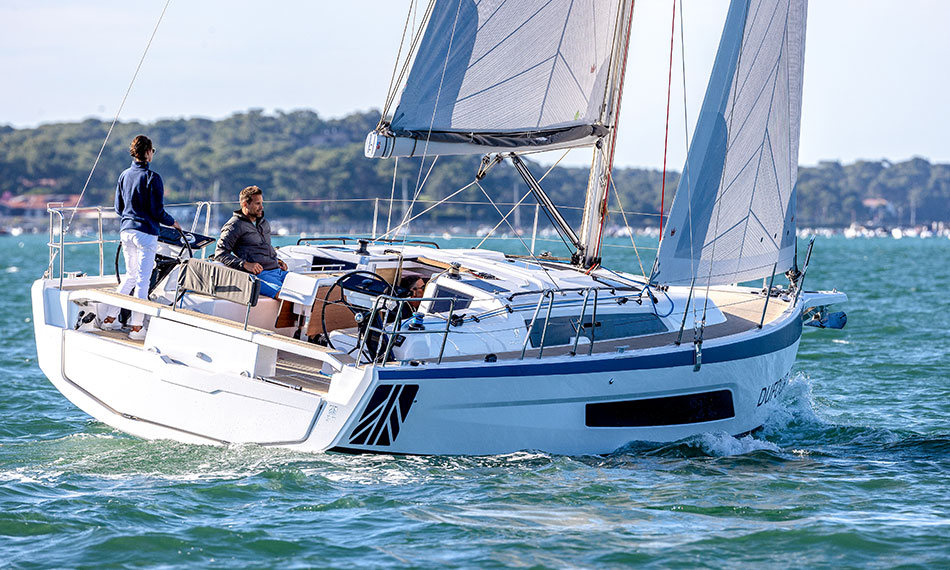
Dufour 37 - 3 cab. · 2025Golf Juan, France
6 guests3 cabins11 m
€2,100 / week
+ CompareMonohull Monohull
 Monohull
 Monohull
 Monohull
 MonohullMonohull
 Monohull
 Monohull
 Monohull
 Monohull
 Monohull
 Monohull
 Monohull
 Monohull
 Monohull
 Monohull
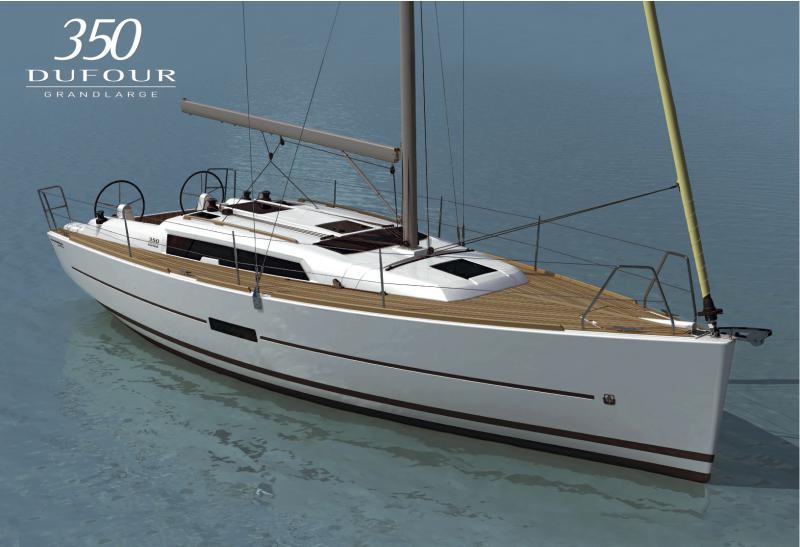
Plume d'Ange
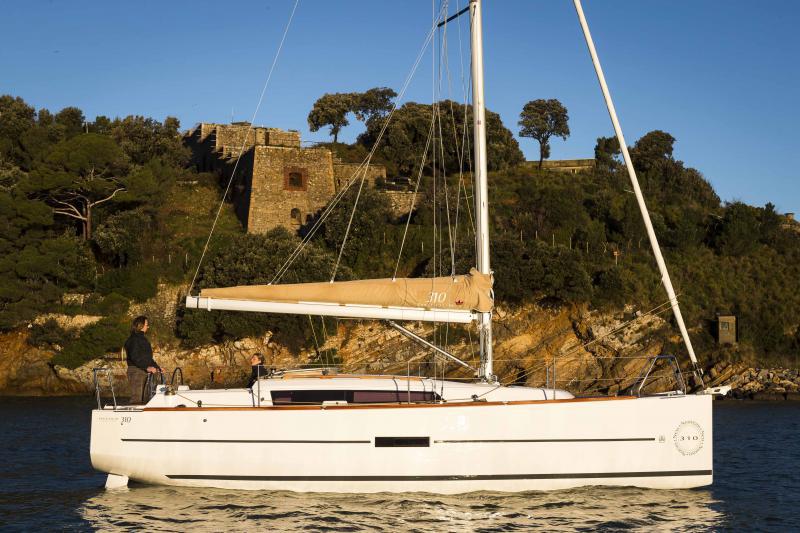
Oceanis 35.1 · 2019Hyeres Port Saint Pierre, France
6 guests3 cabins10 m
€1,850 / week
+ Compare Monohull
 Monohull
 Monohull
 Monohull
 Monohull
 Monohull
 Monohull
 Monohull
 Monohull
 Monohull
 Monohull
By the cabin
Cabin cruises in France
Scheduled crewed cruises — book by the cabin and share the yacht with a small group.
France
 €3,240per person
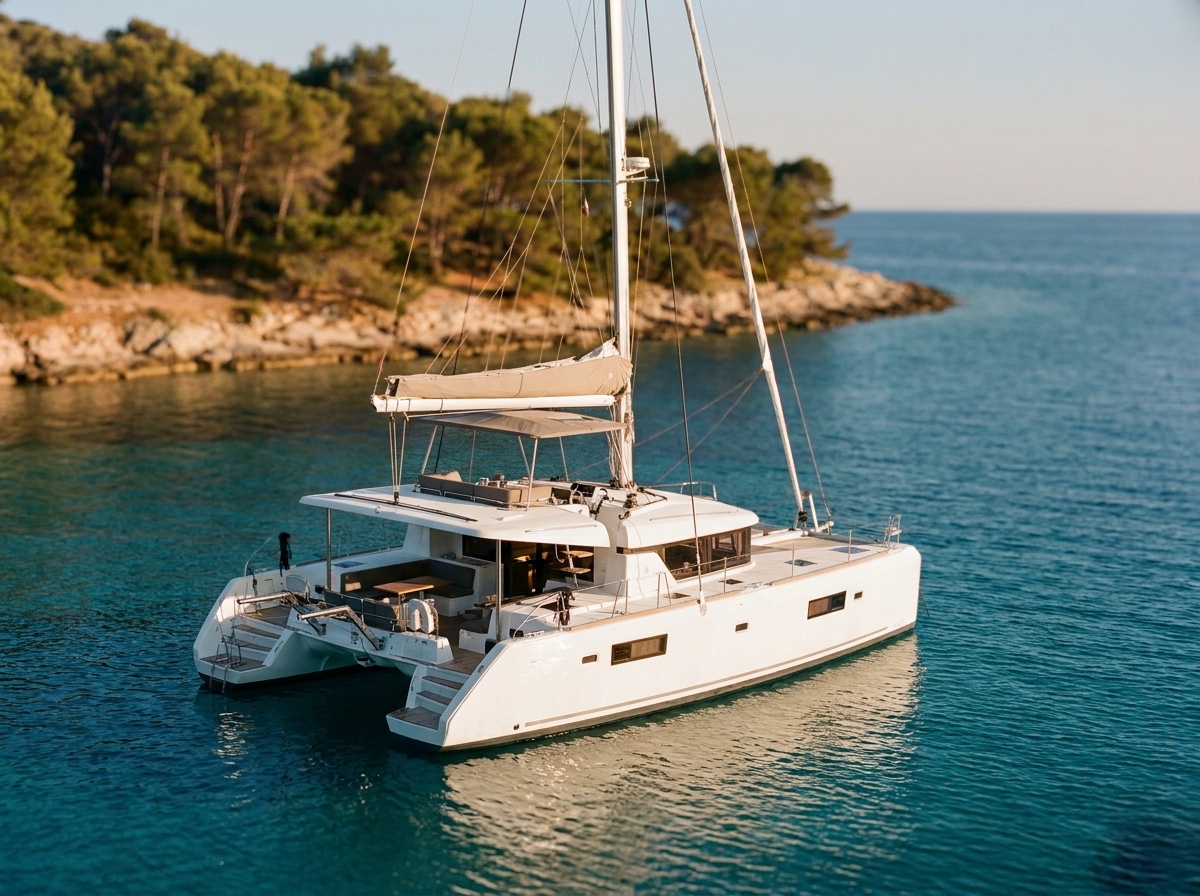
8-Day Corsica Catamaran Cruise
Corsica, France
7 days · Departs 24 Apr 2027 · 5 more datesView cabins
 €3,240per person
8-Day La Ciotat Catamaran Cruise
Sabine · crewed
Provence-Alpes-Côte d'Azur, France
7 days · Departs 24 Apr 2027 · 5 more datesView cabins
€4,500per person8-Day Corsica Catamaran Cruise - Bastia Start
Corsica, France
7 daysView cabins
€4,500per person8-day Corsica & La Maddalena Archipelago
Corsica, France
7 daysView cabins
Talk to an expert
Get three options.
France
01Why sail here
France gives you three sailing worlds under one flag. The Mediterranean south — Provence-Alpes-Côte d'Azur and Corsica — is where most people picture a French charter: clear water, calanques cut into white limestone, and marinas that smell of diesel, coffee and warm pine by mid-morning. West, on the Atlantic, Poitou-Charentes trades turquoise for tide: flatter islands, oyster beds, and the slower rhythm of a coast that works for a living. You can sail all three in a summer if you have the time, or pick one and learn it properly. We'd argue for the second.
What makes France easy is distance. Harbours sit close together, so a day's sail rarely means a long slog. That suits families, first charterers and anyone who'd rather be at anchor by lunch than pushing on into the afternoon.
02The sailing areas
Provence-Alpes-Côte d'Azur is the busy heart of it. From the calanques near Cassis and Marseille through the Îles d'Hyères — Porquerolles, Port-Cros, Le Levant — down to the Golfe de Saint-Tropez. Porquerolles is the anchor everyone wants: pine-backed bays, clear water, and a car-free village. Port-Cros is a national park, so anchoring is regulated and mooring buoys are the norm. Book early in July and August; these are popular waters.
Corsica is the one to sail if you want fewer boats and more character. The west coast — Calvi, the Golfe de Girolata, the Scandola reserve, Ajaccio — is dramatic and less crowded than the mainland. The south, around Bonifacio and the Lavezzi islands, gives you the strait crossing towards Sardinia. It's more committing than the Côte d'Azur: longer passages, stronger wind acceleration around headlands, fewer bolt-holes. Rewarding for sailors who've done a season or two.
Poitou-Charentes, on the Atlantic, is a different discipline. La Rochelle is the natural base, with Île de Ré and Île d'Oléron close by. Tides matter here — you plan around them rather than ignoring them — and the light is flatter and softer than the south. It suits sailors who like reading a tidal atlas and don't mind cooler water.
03Season and winds
The Mediterranean season runs roughly May to October, with July and August the warmest and busiest. The wind to know is the mistral — a cold, dry northerly that funnels down the Rhône valley and out over the Golfe du Lion. It can blow hard for days and kick up a short, steep sea, then vanish and leave you glassy calm. Watch the forecast, and don't be shy about sitting out a strong mistral in harbour; locals do.
Corsica adds terrain effects — wind accelerates around the big headlands and the Bonifacio strait can be lively. In Poitou-Charentes the Atlantic weather is more changeable and the sea state more exposed, but summer still gives plenty of settled sailing days. Spring and autumn are quieter and cheaper everywhere, with warmer water lingering into September on the Med.
04Charter types
You'll find the usual range: bareboat if you hold the right licence and have the miles, skippered if you'd rather someone else read the mistral, and crewed for a fuller service with a hostess or cook aboard. Monohulls dominate, but catamarans are widely available and popular with families for the space and the shallow draft around the islands. Cabin charters — a berth rather than a whole boat — turn up less often but exist on some routes.
Most charters run Saturday to Saturday in high season. Shorter breaks, long weekends and one-way routes are easier to arrange in the shoulder months. Tell us what you're after on WhatsApp and we'll match the boat and area to your experience.
05What it costs
Prices swing with boat size, age, season and whether you take crew. As a rough guide, a mid-size bareboat monohull in the Med runs into the low thousands of euros per week in peak season, with catamarans and newer boats higher. Crewed charters cost more again, before you add the crew and a running fund for fuel, food and drinks.
Budget separately for berthing fees — French Riviera marinas are not cheap in summer — plus fuel, the end-of-charter clean, and any extras like a paddleboard or outboard. Corsica and the Atlantic tend to be gentler on marina costs than the Saint-Tropez stretch. For a firm figure on a specific boat and week, price on request — send us the dates and area on WhatsApp and we'll come back with real numbers rather than a guess.
06A sample week from the Côte d'Azur
Day 1 — Collect the boat, provision, and hop a short leg to your first anchorage to settle in. Early evening swim, dinner aboard.
Day 2 — Sail to the calanques between Marseille and Cassis. Anchor under the white cliffs, swim, then a berth in Cassis for the evening.
Day 3 — Longer leg east towards the Îles d'Hyères. Aim for Porquerolles; pick up a mooring or anchor off a sand-bottomed bay.
Day 4 — Explore Porquerolles on foot or by bike, then move to Port-Cros. Mooring buoys inside the park; snorkel the marked trail.
Day 5 — Sail across to the mainland coast near Hyères or the Giens peninsula. Quiet anchorage, fish supper ashore.
Day 6 — Work back west, timing your day around the wind. A last anchor stop for a swim before the run home.
Day 7 — Short final leg back to base, refuel, and hand the boat over.
Swap and shuffle as the mistral dictates — the point is you're never far from shelter.
07Getting there
For the Côte d'Azur, fly into Nice or Marseille; both put you within reach of the main charter marinas by road. Toulon and Hyères serve the Îles d'Hyères end. For Corsica, Ajaccio, Bastia, Calvi and Figari airports cover the coast, with ferries from Nice, Marseille and Toulon if you'd rather not fly. For Poitou-Charentes, La Rochelle has its own airport and a fast train from Paris.
Bring your sailing qualifications and, for bareboat, the ICC or equivalent plus a crew CV — French bases will want to see them. Passports or ID cards for the crew, and a card for the deposit hold. Message us on WhatsApp before you travel and we'll confirm exactly what your boat and base need.
Practical information
01Entry & getting thereVisa & entry requirements
France is in the EU and the Schengen Area. EU/EEA citizens enter with a national ID card or passport. UK, US, Canadian, Australian and many other passport holders get up to 90 visa-free days in any 180-day period — counted across the whole Schengen Area, not per country; other nationalities need a Schengen visa in advance. Non-EU passports must have been issued within the last ten years and remain valid for at least three months after you leave.
Since 10 April 2026 the EU Entry/Exit System (EES) has been fully operational: instead of a passport stamp, your first crossing registers fingerprints and a photo, kept on file for three years — allow extra time at the border. ETIAS, the EU's planned pre-travel authorisation, is not yet in force and currently has no confirmed start date. Check your own government's advice before you fly — rules change.
02Entry & getting thereGetting there
Three mainland airports cover the coast. Nice Cote d'Azur (NCE), France's third-busiest and the principal arrival point for the Riviera, sits 6km from the city and runs year-round schedules across Europe — the natural gateway for bases from Antibes round to Saint-Tropez. Marseille Provence (MRS), the fifth-busiest, serves Marseille and the Calanques side, with year-round links to the major hubs and a wide seasonal fan in summer. Toulon-Hyeres (TLN) lands 3km from Hyeres — closest to the Porquerolles and Port-Cros cruising area — with year-round Paris flights and mostly seasonal everything else.
Corsica has four airports: Ajaccio (AJA), Bastia (BIA), Figari (FSC) in the far south and Calvi (CLY). Air Corsica and Air France fly year-round; the low-cost carriers mostly operate June to September, and ferries from Marseille, Toulon and Nice take six to eight hours. Outside the season coastal schedules thin, so check routings for early- and late-season charters.
03Entry & getting thereTime zone & daylight saving
France runs on Central European Time (CET, UTC+1) and switches to Central European Summer Time (CEST, UTC+2) with the rest of the EU — clocks go forward on the last Sunday of March and back on the last Sunday of October; in 2026 that means 29 March and 25 October. The IANA zone is Europe/Paris, and Corsica keeps mainland time.
Practically: the whole French Mediterranean shares one clock with Italy, Spain and Germany, sits one hour ahead of the UK and Ireland, and six hours ahead of US Eastern in summer. A charter week almost never crosses a clock change — only late-October departures catch the switch.
04MoneyCurrency & exchange
France uses the euro, one of 21 EU countries that share it — the same notes and coins work from Marseille to Corsica. Cards do most of the daily work; when you need cash, withdraw from ATMs attached to real banks (BNP Paribas, Crédit Agricole, Crédit Mutuel, Société Générale). French banks do not add their own machine fee for foreign cards, while the standalone private ATMs parked in tourist spots charge expensive fees and are best walked past.
Two habits protect your exchange rate. If an ATM or card terminal offers to charge you in pounds or dollars, decline it and pay in euros — that 'dynamic currency conversion' rate is set by the machine and reliably worse than your bank's. And if your home account is in euros elsewhere in the EU, the rules require your bank to price withdrawals here the same as at home.
05MoneyPayment methods
Plastic rules ashore. Visa and Mastercard work in supermarkets, fuel docks, marinas, restaurants and cafés, contactless included, and EU rules ban surcharging consumer cards — the menu price is the price you pay. American Express sits outside that protection, so carry a Visa or Mastercard as the working card. France is an increasingly cashless country, but keep some euros aboard for market stalls, small harbour kiosks and the beach paillote whose terminal is offline — and for tips, which travel best as coins.
At any machine that offers to bill you in your home currency, choose euros instead; the conversion offer is never in your favour. Prefer bank-attached ATMs over the private ones, and check your own card's foreign-transaction fee before you fly — that, not French merchants, is where the cost hides.
06MoneyTipping culture
France is a service compris country: by law the menu price already includes service — a 15% charge has been built into every restaurant and café bill since 1985 — so nothing extra is owed, and many French leave nothing at all. Reward good service instead of following a formula: round up at a café, leave €2–5 on a relaxed dinner, and 5–10% somewhere special is genuinely generous. Taxis: round up the fare, a little more if the driver handles bags.
Tip in cash even when you pay the bill by card — French terminals rarely offer a tip line, and coins left on the table reach the person who served you. On skippered and crewed charters the convention is warmer: a discretionary tip for the skipper and host at the end of a good week is well established — hand it over directly on the last evening.
07MoneyCost of living
Budget for a premium: Provence-Alpes-Côte d'Azur is one of France's most expensive regions, with Nice living costs about 9% above the national average and Marseille just over it. As a guide from current city data: an inexpensive restaurant meal runs €17–18, a mid-range three-course dinner for two €70–80, a half-litre of draught beer €6–7, and a cappuccino a little over €3.
The premium climbs where the yachts get bigger — expect the headline harbours and July–August to price well above those city figures, while Marseille and the smaller Var towns eat noticeably cheaper than the Riviera front row. Supermarket provisioning stays reasonable everywhere — groceries cost far less than restaurant plates in France, so stock the boat and save the budget for the dinners that deserve it.
08Rules & permitsSailing regulations & permits
France licenses skippers by engine, not by rig: the French permis plaisance is required for any motor vessel over 6hp, while a boat that moves under sail needs no licence under French law. Charter practice is stricter — operators ask visiting skippers for an ICC or an equivalent national certificate, which France recognises under UNECE Resolution 40, and Affaires Maritimes patrols do stop yachts in busy anchorages and ask for papers. We check your certificate at booking and prepare the rest of the charter paperwork with you at check-in.
For the radio, France's certificate is the CRR, but visitors rarely need to sit it: in French waters a handheld VHF (6W, no DSC) needs no radio certificate at all, a fixed or DSC set rides on the skipper's boat licence or CRR, and beyond French territorial waters an SRC-level certificate is required — bring yours if you hold one. A listening watch on channel 16 is expected under way.
09Rules & permitsSubstances & laws
The legal age to buy or be served alcohol is 18, for everything from beer to spirits, and venues are required to check — the 7,500-euro fine for serving a minor falls on the bar. Recreational drugs are illegal: simple use draws a 200-euro on-the-spot fine, courts can impose up to a year and 3,750 euros, and trafficking is treated far more severely. French ports and airports screen baggage well; keep the boat clean.
Arriving from another EU country you can carry generous personal-use amounts — indicative levels run to 800 cigarettes and 10L of spirits. From outside the EU the allowance is 200 cigarettes plus 1L of spirits over 22% (or 2L under), 4L of wine and 16L of beer, for travellers 17 and over. Prescription medication travels best with its prescription — and check France's rules for your specific medicine before you fly.
10Rules & permitsFishing regulations
Sea fishing from the boat is free in France — no fee and no paper licence — but no longer form-free: recreational sea anglers now register before they fish, via the free RecFishing app, and in the Mediterranean that registration applies to fishing from a boat generally. Gear is capped (lines with a maximum of 12 hooks in total, limited longlines and traps), and everything you keep must be marked immediately by clipping the lower lobe of the tail fin. Selling any of it is illegal — the catch is for the table aboard.
Minimum sizes and daily limits apply species by species, and bluefin tuna needs its own authorisation and catch declaration — no authorisation, no tuna. Spearfishing is for over-16s on breath-hold only: no tanks, no night diving, 150m clear of other vessels, marker float towed. Both national parks add permanent no-take zones, so check the park maps before you drop a line.
11Rules & permitsWildlife protection laws
French Mediterranean waters protect marine life in earnest. The Pelagos Sanctuary — a French-Italian-Monegasque agreement — shelters eight resident cetacean species, from striped dolphins to fin whales, and in all French Mediterranean waters approaching a cetacean within 100 metres is an offence; disturbing marine mammals has been one since 2011. If dolphins choose your bow wave, hold course and speed and let them leave first.
The other icon is posidonia seagrass. A 2019 framework decree and local orders regulate anchoring along the whole coast — strictest for yachts over 24m — and courts enforce them: fines run to 150,000 euros, and one superyacht captain was fined 90,000 euros and banned from French waters for anchoring on seagrass off Corsica. Inside the Port-Cros and Calanques national parks it is also forbidden to disturb, feed or collect marine life. Look, don't touch, and give everything alive its distance.
12Rules & permitsInsurance requirements
The yacht comes insured: hull cover plus third-party liability on the charter fleet. Your exposure for damage is capped at the security deposit — typically €2,500–€5,000 blocked, not taken, on a credit card at check-in for boats up to about 50ft, more for larger yachts and premium catamarans, and released after undamaged return. Most operators sell an optional damage waiver (roughly €215–€560 per charter week on a mid-40s yacht) that shrinks the blocked deposit to a small excess; read the exclusions — dinghies, outboards, spinnakers and negligence often sit outside it. Skipper's liability insurance is a sensible extra for bareboat skippers.
Two strong recommendations, and we mean them: carry travel insurance with proper medical cover — a GHIC/EHIC gets EU and UK visitors state-tariff care in France, but state care is charged, so the card is help, not cover — and take holiday-cancellation insurance when you book. We do not insure charters or holidays; cancellation cover is the only thing that protects your payment if life intervenes.
13Health & safetyEmergency contacts
All emergencies (EU-wide): 112
Medical emergency (SAMU): 15
Police: 17
Fire and rescue: 18
Sea rescue (CROSS): 196
Deaf and hard-of-hearing (SMS/app): 114
At sea, call 196 or hail on VHF channel 16. CROSS La Garde near Toulon coordinates search and rescue along the whole French Mediterranean coast, with a secondary centre at Aspretto covering Corsican waters. All these numbers are free from any French landline or mobile.
14Health & safetyHealthcare & hospitals
You are never far from serious medicine on this coast. Marseille's AP-HM university hospital group runs the Hôpital de la Timone and Hôpital Nord; Nice's CHU operates Pasteur 2 and l'Archet; Toulon's Hôpital Sainte-Musse (opened 2012) is the pivot hospital for the Var coast; and on Corsica, Ajaccio's Centre Hospitalier Notre-Dame de la Miséricorde covers the island's south from its Stilettu site. Pharmacies — the green cross — sit in every harbour town and handle minor ailments well.
EU and UK visitors can use an EHIC/GHIC for state care, but France bills patients on the same basis as the French — treatment is not automatically free — so travel insurance with medical and evacuation cover is essential rather than optional. The UK FCDO keeps a directory of facilities with English-speaking staff covering the Marseille region. In an emergency, call 112 and ask for an ambulance.
15Health & safetyVaccinations
France requires no vaccinations for entry. The sensible baseline is to be current on routine vaccines — MMR, diphtheria-tetanus-polio, flu, COVID-19 — with hepatitis A and B suggested for some travellers. Tick-borne encephalitis matters only if you will hike or camp in affected inland forests; it is not a coastal concern. One regional note: southern France, including Provence-Alpes-Côte d'Azur, has recorded locally acquired dengue and chikungunya in summer, so pack mosquito repellent and use it through the day ashore — the tiger mosquito bites in daylight.
Check current advice four to eight weeks before you fly — the CDC traveler pages, or TravelHealthPro for UK travellers — and keep prescription medication in its original packaging; French rules for some foreign prescriptions differ.
16Health & safetyWater drinkability
Tap water in France is safe to drink nationwide. It meets EU drinking-water standards, the Ministry of Health monitors it through the regional health agencies (ARS), and microbiological compliance runs at about 99% of samples — Marseille, Nice and the other Mediterranean cities all score well. A chlorine taste in some towns is disinfection, not contamination; locals clear it with an open jug in the fridge for an hour.
Ashore, drink from the tap with confidence and skip only fountains or taps marked 'eau non potable' — the standard sign for non-drinking water. Aboard, the yacht's tank water is fine for washing, cooking and coffee; most crews drink bottled or filtered water for taste, so refill bottles when you take on water and provisions in a marina.
17Health & safetyEnvironmental hazards
The wind list comes first. The mistral is the Mediterranean's most famous wind: cold, dry and northwesterly, it funnels down the Rhône valley and fans out over the Gulf of Lion and the Provençal coast — typically around 50 km/h with gusts toward 100, lasting anywhere from a day to more than a week, under brilliantly clear skies. Its cousin the tramontane runs the same trick further west, accelerating between the Pyrenees and the Massif Central, and a hard mistral sends wind and sea as far as Corsica, where sudden storms can build offshore. Both are well forecast: Météo-France issues colour-coded vigilance warnings per département for violent wind and dangerous coastal waves — check them every morning, and when the gulf is white, sit the day out in a good harbour or sail the sheltered lees; we plan itineraries around exactly this.
In the water the hazards are small-scale. The mauve stinger jellyfish (Pelagia noctiluca) drifts through in unpredictable swarms some summers — painful, not dangerous, with no known fatalities — and sea urchins carpet the rocky shallows, so pack water shoes. Respect the mistral and this is forgiving sailing.
18Weather & seaWeather & best seasons
The charter season runs from about May to early October. July and August are the hottest and busiest months, with the sea above 22°C and berths at a premium from Marseille to Saint-Tropez; May, June and September bring the most settled sailing weather, warm water and thinner crowds, which is why repeat charterers favour them. April and mid-October can be lovely, with less reliability.
One wind rules this coast: the mistral, a cold, dry northwesterly that funnels down the Rhone valley and can exceed 40 knots in the Gulf of Lion, typically blowing for one to three days and occasionally six. Its cousin the tramontane does the same job further west, off Languedoc-Roussillon. Both bring brilliant clear skies and serious sea state, and can arrive with little warning even in summer — check the forecast every morning and reef early. Past patterns are a guide, not a promise; always sail to the current forecast.
19Weather & seaSunrise & sunset by season
Summer gives long sailing days here: around the June solstice Marseille gets about 15 and a half hours of daylight — sunrise just before 06:00, sunset around 21:20 — against roughly 9 hours in late December. June and July evenings stay light well past 21:00, which leaves room for a late swim stop or a relaxed final leg into the anchorage; by October the days shorten quickly, so plan to be moored earlier.
Treat sunset as a planning deadline rather than a decoration: if a leg risks running past dusk, shorten it or leave earlier. For exact sunrise and sunset times for your harbour and week, check a per-city table such as sunrise-sunset.org or gaisma.com — both cover the coast city by city.
20Weather & seaConservation tips
The habit that matters most on this coast: never anchor on posidonia. The dark patches are living seagrass meadows that take decades to recover — drop on pale sand, or pick up a buoy where one is provided. The free Donia app maps the seabed for exactly this decision, and as a rule of thumb the meadows fade out below about 30m of depth on the Riviera and 40m around Corsica. At Port-Cros the park replaces anchoring with eco-mooring buoys; in the Calanques the white buoys are the ecological moorings and the yellow ones mark boundaries you must not tie to.
The rest is routine discipline: rubbish goes ashore to marina bins, holding tanks get pumped out in marinas rather than emptied near anchorages, sunscreen is reef-safe, and nothing living leaves the water with you. The parks wrote these rules for the best water on the coast — sail the whole coast to the same standard.
21Culture & practicalitiesLanguage & cultural tips
French is the official language — the only one, under the constitution — and the French are proud of it. On this coast you will manage in English: hotels, marinas and tourist restaurants keep English-speaking staff, and younger people generally speak some, though spoken English is the country's weakest skill and thins out away from the tourist towns. A little French changes every interaction.
The one rule that matters: say bonjour (bonsoir in the evening) when you enter a shop, cafe or the capitainerie — launching straight into a request without it reads as rude. Add merci and s'il vous plait, keep to vous rather than tu with strangers, and even clumsy, sincere French is genuinely appreciated.
22Culture & practicalitiesHistory & culture
Marseille is the oldest city in France, founded as Massalia around 600 BC by Greek settlers from Phocaea, and it has worked as a port ever since — today it is still the country's biggest. The Vieux-Port remains the city's heart: fishermen still auction the morning catch on the quay, Fort Saint-Jean and Fort Saint-Nicolas flank the entrance, and the Chateau d'If of Monte Cristo fame sits on its island a short boat ride out.
From a berth you can walk to most of it — MuCEM, the museum of European and Mediterranean civilisations, stands right at the harbour mouth, linked to Fort Saint-Jean by footbridges. Much of the coast keeps the same habit: the harbour is usually the oldest quarter in town, so 2,600 years of seafaring generally sit within a stroll of the gangway.
23Culture & practicalitiesNational holidays & closures
France keeps 11 public holidays, and the charter season collects most of them: Labour Day (1 May), VE Day (8 May), Ascension (a Thursday in May), Whit Monday (late May), Bastille Day (14 July) and the Assumption (15 August). Only 1 May is a compulsory day off nationwide — plan for nearly everything to be shut that day. On the others most offices and many shops close, while bakeries and some supermarkets open in the morning and restaurants in the tourist harbours usually serve — book ahead.
Watch the pont: when a holiday lands on a Thursday, many businesses bridge the Friday into a four-day weekend, Ascension being the classic case. If a holiday falls inside your charter week, provision the day before.
24Culture & practicalitiesDress code & what to pack
Days aboard are swimwear-and-T-shirt casual; evenings ashore step up to Riviera smart-casual — a sundress, a linen shirt, light trousers. Pack a windproof layer: a mistral evening turns cool even in summer. Two dress notes deserve respect: beachwear stays at the beach — cover up before you walk into town for lunch — and the smartest venues mean it: the Casino de Monte-Carlo requires a coat and tie for men and turns away casual shoes.
Pack it all in a soft bag — yacht lockers swallow duffels, not hard shells. Footwear: rubber-soled, non-marking shoes for the deck and sandals for town; on Nice's famous stony beaches, sandals or water shoes save your feet. Round out with the small essentials — high-SPF sunscreen, polarised sunglasses, a wide-brimmed hat, a loose cover-up for the sun and a power bank for nights at anchor.
25Culture & practicalitiesMobile & internet coverage
Four networks cover France — Orange, SFR, Bouygues Telecom and Free Mobile — with strong 4G and widening 5G; visitor eSIM plans openly market Bouygues and Orange for coverage. Signal follows the shore: expect solid data in the Côte d'Azur bays and Corsica's harbour towns, thinning bars in the mountain-backed calanques, and hours out of range on the open crossing to Corsica — download charts, forecasts and entertainment before you cast off.
EU and EEA SIMs roam like at home in France under EU rules, with no roaming charge inside fair-use caps. The scheme no longer includes the UK, so British visitors should check what their plan charges before flying. Everyone else buys data cheaply: marketplace eSIMs for France start under a dollar per gigabyte, and Orange sells its own travel eSIM you can install before you land and activate on arrival.
26Culture & practicalitiesElectricity & plug types
France runs on 230V at 50Hz with type E sockets — the round two-pin socket with an earth pin — and the flat type C europlug fits them too. EU visitors plug straight in. UK and Irish travellers need a simple plug adapter; North American visitors need the adapter plus a voltage converter for anything that cannot take 230V — phone and laptop chargers are dual-voltage, hair tools usually are not.
Aboard, the yacht charges phones from 12V USB outlets under way and runs its 230V sockets when plugged into shore power in a marina. Plan the big charges — laptops, drones, camera batteries — for marina nights, and bring a power bank to cover evenings at anchor.
27France questionsHow much does a yacht charter in France cost?
It depends on boat size, age, season and whether you take crew. A mid-size bareboat monohull in the Med runs into the low thousands of euros per week in peak summer; catamarans and crewed boats cost more. Add marina fees, fuel, provisioning and the end clean on top. For a firm figure on a specific boat and week, send us your dates on WhatsApp and we'll quote real numbers.
28France questionsDo I need a licence to charter a yacht in France?
For bareboat, yes — you'll usually need an ICC or equivalent sailing qualification and a crew CV showing recent experience, and French bases will ask to see them. If you don't hold the right paperwork or the miles, take a skipper; you keep the same boat and let someone experienced handle the mistral and the marina. Message us and we'll confirm what your chosen base requires.
29France questionsWhen is the best time to sail in France?
The Mediterranean season runs May to October. July and August are warmest and busiest; June and September give you warm water, quieter anchorages and lower prices. Watch for the mistral, a strong northerly that can blow for days. On the Atlantic coast of Poitou-Charentes the settled summer window is similar, though the weather is more changeable and you plan around the tides.
30France questionsWhere should I start a charter in France?
On the Côte d'Azur, the marinas around Hyères, Toulon and the Golfe de Saint-Tropez put you close to the Îles d'Hyères and the calanques. For Corsica, Ajaccio or Calvi open up the wild west coast. For the Atlantic, La Rochelle is the natural base for Île de Ré and Oléron. Tell us your experience and dates and we'll suggest the right start point.
31France questionsIs France good for a family sailing holiday?
Yes, especially the Côte d'Azur. Harbours sit close together, so days on the water are short and you're often at anchor by lunch. Catamarans give families more space and shallow draft for the island bays around Porquerolles. Pick the Mediterranean over Corsica or the Atlantic for a first family trip — the passages are gentler and shelter is always nearby.
32France questionsShould I choose the Côte d'Azur or Corsica?
The Côte d'Azur is easier and busier: short hops, plenty of harbours, and the calanques and Îles d'Hyères within easy reach. Corsica is quieter and more dramatic — Scandola, Girolata, Bonifacio — but the passages are longer and the wind accelerates around headlands, so it suits sailors with a season or two behind them. First charter, choose the mainland; ready for more, go to Corsica.
33France questionsWhat is the mistral and should I worry about it?
The mistral is a cold, dry northerly that funnels down the Rhône valley over the Golfe du Lion. It can blow hard for days and build a short, steep sea, then drop to nothing. It's not a reason to avoid France, but it is a reason to read the forecast and be willing to sit in harbour when it's up. Locals do exactly that.
34France questionsWhere can I sail in France?
We charter across Provence-Alpes-Côte d'Azur, Corsica and Poitou-Charentes. Each area has its own page with the live fleet for your dates.
35France questionsWhat kind of yachts are available in France?
Bareboat if someone on your crew holds a licence, crewed if you would rather a skipper did the work. The grid above is live from our operator system and always shows what is actually free.
36France questionsHow do I get a quote?
Tell us your dates, your group and the area you fancy. Same day, we send three real options with honest trade-offs.