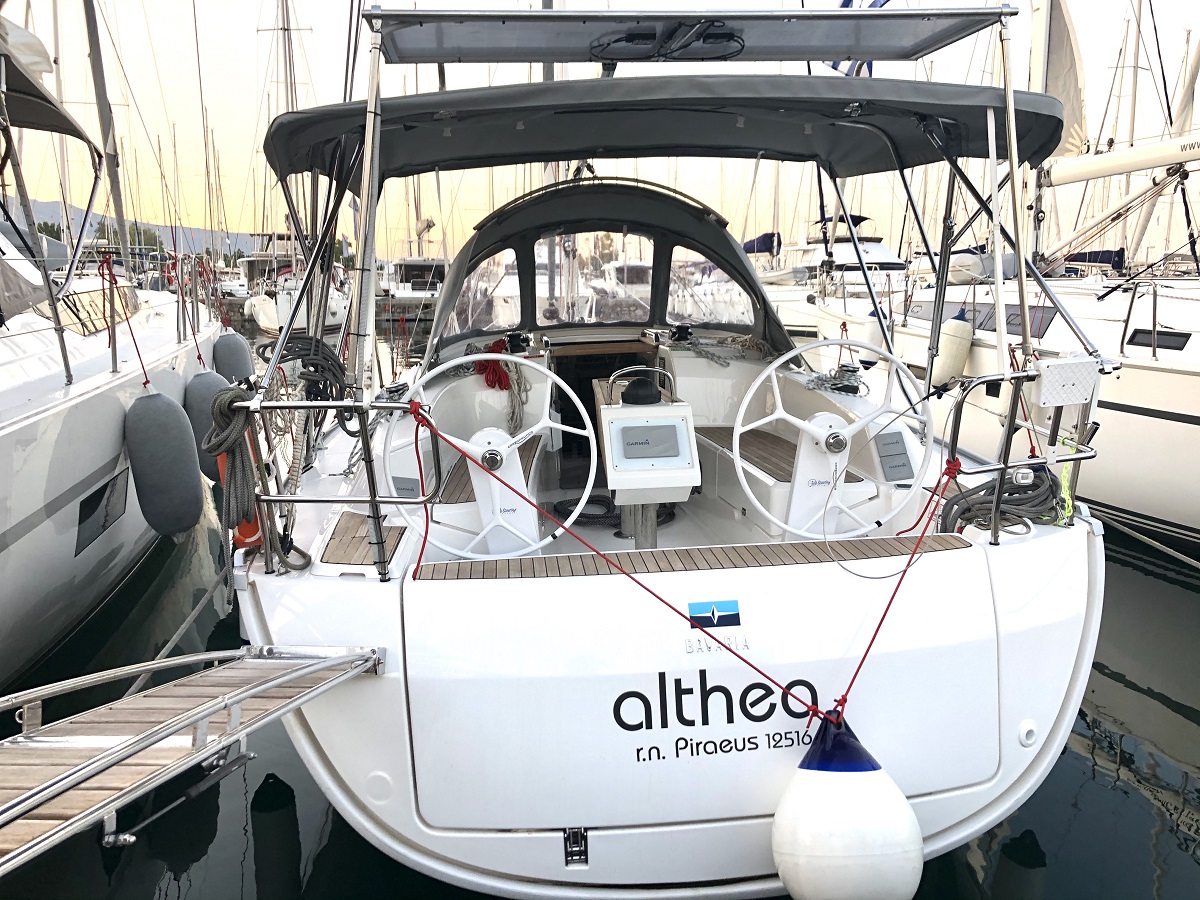
 Monohull
Sail Dodecanese.
Live fleet
MonohullDodecanese questions
Asked and answered.
How much does a yacht charter in the Dodecanese cost?
It depends on boat size, age and season. Shoulder months (May–June, September) are cheaper than the July–August peak, and catamarans cost well above monohulls of similar size. On top of the base fee you'll pay for fuel, end cleaning and a cruising tax, plus a skipper's daily rate and food if you take one. We quote live prices rather than figures that go stale — message us on WhatsApp with your dates and party size.
Do I need a licence to charter a bareboat here?
Yes. For a bareboat you'll need an ICC or an equivalent recognised sailing qualification, plus a short sailing CV showing relevant experience. Greek charter bases check both at handover and can refuse the boat if the paperwork doesn't stand up. A second crew member with some experience is often required too. If you don't hold a licence, take a skippered yacht — a crewed skipper handles everything and knows the local winds.
When is the best time to sail the Dodecanese?
May, June, September and early October are the sweet spots: steady breeze, warm water and thinner crowds. July and August bring the meltemi, a strong dry northerly that can blow Force 5–7 for days — great for confident sailors chasing wind, less relaxing for families or first-timers. The season runs May to October; the fleet lays up over winter.
Where should I start — Kos or Rhodes?
Both work. Kos sits further north with easy access to Kalymnos, Leros and Nisyros, and is a natural start for a southbound route toward Rhodes. Rhodes gives you the old town and a longer first hop north. Many sailors do a one-way charter between the two bases to avoid backtracking, though that carries a repositioning fee. Choose the base with the more convenient flight.
Is the Dodecanese good for families and first-time charterers?
Yes, if you sail outside the meltemi peak. In May, June, September and early October the wind is gentler and the short island hops mean nobody's stuck at sea for hours. Town quays let you tie up for dinner ashore rather than living at anchor. Avoid August with young kids unless you're confident, since the meltemi can pin you in port. A skippered yacht takes the pressure off entirely.
How far apart are the islands?
Close, which is one of the area's strengths. Most legs on the Kos–Rhodes corridor run two to three hours, so you're rarely on a long open-water passage. Kos to Kalymnos is a short hop; Symi to Rhodes is around three hours. This keeps days flexible and leaves time ashore, though in strong meltemi even short legs can get lively, so plan to sail early.
Can I do a one-way charter between Kos and Rhodes?
Yes. A one-way charter lets you sail the full Kos–Rhodes corridor without doubling back, which makes for a more varied week. A repositioning fee usually applies since the base has to return the boat. Availability depends on the fleet and your dates, so it's worth asking early. Message us on WhatsApp with your preferred direction and we'll confirm what's possible and what it adds to the cost.
Where do the yachts in Dodecanese sail from?
Boats sailing Dodecanese all year — boats operate from Kos, Rhodes New Marina, Rhodes and Port of Kos. The fleet list above is live from our operator system, so it always shows what is actually available for your dates.
Bareboat or crewed in Dodecanese?
Both. Bareboat if someone on your crew holds a licence, crewed if you would rather a skipper did the work. Tell us your experience level and we will match you.
How do I get a quote?
Send us your dates, your group and roughly the boat you want. Same day, we reply with real options, real prices and the honest trade-offs.
Talk to an expert
Get three options.
Charter types
Charter types in Dodecanese.
Bareboat charter
You skipper it yourself — licence required.
Crewed charter
Skipper and crew do the work — you live aboard.
Dodecanese · Greece — Yacht Charter
Getting there and practical notes
Both Kos and Rhodes have airports with direct summer flights from much of Europe, so arrival is straightforward. Aim to land the day before boarding rather than cutting it fine. Check-in is usually mid-afternoon on the start day; provisioning is easiest done that evening or first thing next morning at supermarkets near both marinas. Bring your ICC and sailing CV for bareboat — charter bases check them, and can decline a boat if the paperwork doesn't hold up. Water and fuel are available at the main harbours; smaller islands can be limited, so top up when you can. For bookings, dates and pricing, WhatsApp is the fastest way to reach us.
Dodecanese
01Why sail the Dodecanese
The Dodecanese hug the Turkish coast in Greece's south-east corner, and they sail differently from the Cyclades or Ionian. Distances between islands are short, the water is clear down to the anchor chain, and the mix runs from busy harbour towns to islets where the only sound at night is your own halyard tapping the mast. Rhodes and Kos are the anchors, with Symi, Tilos, Nisyros, Kalymnos and Leros filling the gaps. It suits sailors who want variety without long open-water legs, and who like tying up on a town quay for dinner rather than living at anchor all week.
02The sailing areas and harbours
Most charters run between Kos and Rhodes, a sensible one-way or return corridor with plenty to stop for. From Kos you can reach Kalymnos (the sponge-diving town of Pothia, plus quiet Vathy fjord) and Leros in a day. Heading south, Nisyros gives you a live volcano crater to walk into, and Symi is the postcard stop — a horseshoe harbour ringed by neo-classical houses, though the quay fills fast in season, so arrive early. Rhodes offers Mandraki Port under the old town walls and the newer marina to the east. Anchorages worth the detour include Palon on Nisyros and the bays on the west side of Tilos.
03Season and winds
The sailing window runs May to October. The dominant summer wind is the meltemi, a dry northerly that builds through July and August and can blow Force 5–7 for days. It's manageable but demands respect: plan legs early, watch the forecast, and don't count on a fixed schedule in peak summer. May, June, September and early October are the kinder months — steadier breeze, warm water, thinner crowds. Winter charters aren't offered here; the fleet lays up. If you want reliable wind for sail training, August delivers it, but families and first-timers are usually happier either side of the meltemi's peak.
04Charter types available
We base yachts out of Kos (Kos Marina, Port of Kos) and Rhodes (Rhodes New Marina, Mandraki Port). The bulk of the fleet is bareboat — monohulls and catamarans you skipper yourself, with an ICC or equivalent plus a sailing CV. A smaller number of crewed yachts come with a skipper who knows the meltemi patterns and the quiet anchorages, which is the easier choice if you're new to the area or want to switch off. One-way charters between Kos and Rhodes are possible and save backtracking, though a repositioning fee usually applies. Skippered day and half-day sails can be arranged from either base.
05What it costs
Costs move with boat size, age and season, so treat these as ranges. A mid-size bareboat monohull in the shoulder months typically runs lower than the July–August peak, when prices climb with demand for the meltemi weeks. Catamarans sit well above comparable monohulls. On top of the base fee, budget for fuel, the end cleaning charge, and a cruising tax; a skipper, if you take one, is charged per day plus their food. One-way drops carry a repositioning fee. Rather than quote figures that go stale, we give live pricing on request — message us on WhatsApp with your dates, party size and preferred base and we'll come back with real numbers.
06A sample week: Kos to Rhodes
Day 1 — Board at Kos Marina, provision, short shakedown sail, night on the quay.
Day 2 — Kos to Kalymnos (Pothia or Vathy). Two to three hours; time to explore ashore.
Day 3 — Kalymnos to Leros. Anchor in Lakki or tie up in the old harbour.
Day 4 — South toward Nisyros. Longer leg; walk into the volcanic caldera at Mandraki.
Day 5 — Nisyros to Tilos. Quiet island, good bays, few boats.
Day 6 — Tilos to Symi. Aim for an early arrival to get a quay spot; dinner in Gialos.
Day 7 — Symi to Rhodes, roughly three hours. Berth at Mandraki or the New Marina, walk the old town.
Reverse it if your one-way runs Rhodes to Kos. In peak meltemi, keep a spare day in hand — the wind occasionally pins you in port, and a rigid schedule is how people get caught out.