 Sailing catamaran
Sail Guadeloupe.
The Charter Desk arranges bareboat, skippered and crewed yacht charters across the Mediterranean and the Caribbean, with live availability and a real person on the other end of every enquiry.
Guadeloupe · Bareboat
Sailing catamaran Sailing catamaran
 Sailing catamaran
 Sailing catamaran
 Sailing catamaran
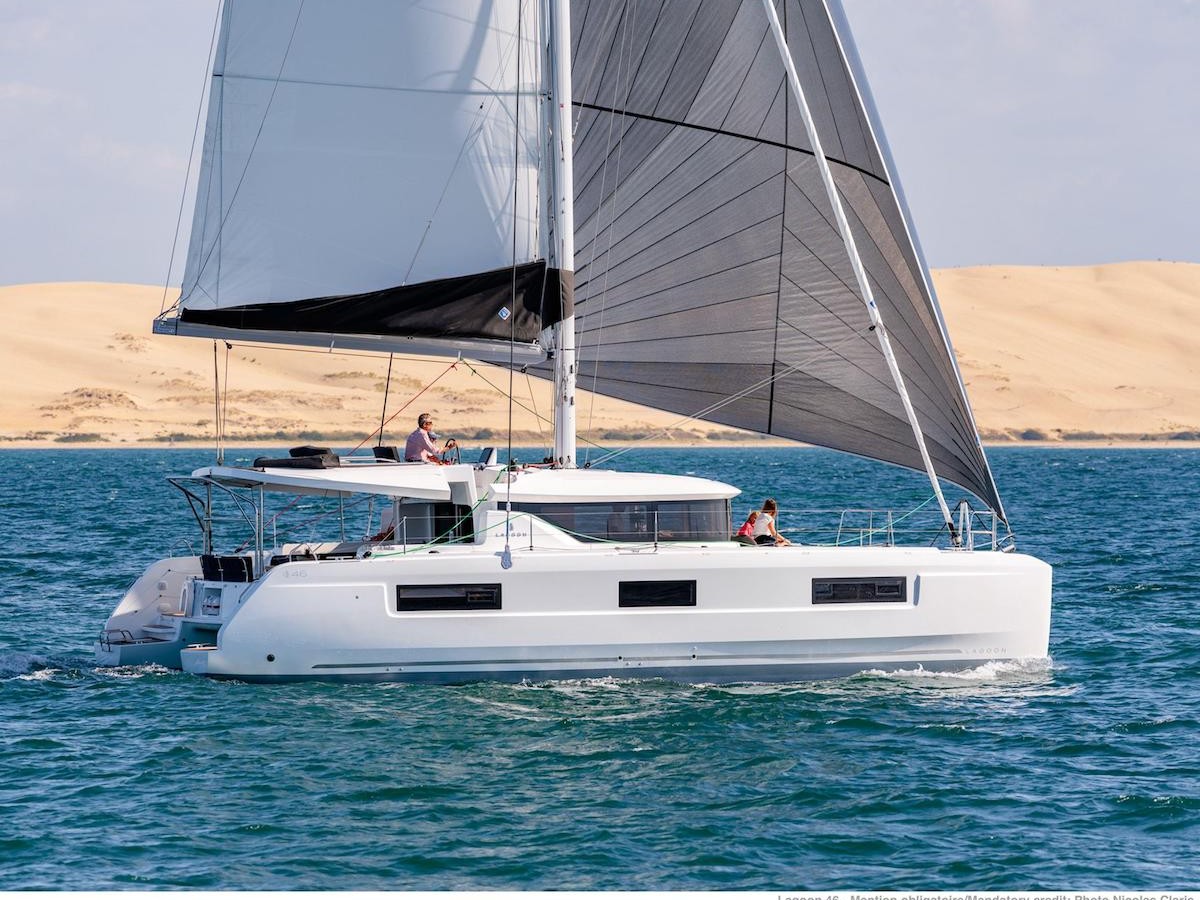 Sailing catamaran
Can I bareboat without a licence?
No. ICC, RYA Day Skipper or equivalent + VHF is required. If you don't have one, book skippered — same yacht, our captain drives.
What if something breaks?
Call the base. Minor stuff (a winch, a marker buoy) you fix yourself; major stuff (engine, rig, sail damage) the base handles. Damage deposit covers your-fault; insurance covers everything else.
Do I get a briefing?
Yes — 90-minute walkthrough on Saturday morning. Boat systems, chart pack, local rules. Bring all licensed skippers.
How much should I budget on top of the week-rate?
Plan for +25-40%. Damage deposit (refundable, ~€2,500), fuel (~€250), marina fees if you berth (€80-180/night), tourist tax (€2/person/night), food + drink. Frugal week +20%, luxe week +60%.
Can I one-way?
Sometimes — there's a one-way fee (€200-€600). Croatia and Greece have good one-way options; Caribbean rarely.
Guadeloupe · Bareboat.
Guadeloupe is two islands joined at the middle, and they sail nothing alike. Basse-Terre is volcanic: rainforest to the ridge line, grey-sand bays, and a lee that goes glassy for an hour then throws 30kt down off the slopes. Grande-Terre is flat limestone, dry, reef-fringed and steadily windier. Between them the Rivière Salée splits the butterfly. Hang Les Saintes, Marie-Galante, La Désirade and Petite Terre off the south-east corner and you have a week of 20nm hops without ever leaving one archipelago. It is also France — euros, EU roaming, a chandlery that stocks what it says it stocks, and bread at 06:00.
Sailing it yourself — licences, navigation and anchorages
Bareboat means you skipper. You'll need a recognised licence (ICC + VHF, RYA Day Skipper or ASA 104+) and a confident hand aboard — if no one on the crew is qualified, take the same yacht skippered and our captain drives.
We brief you on the local navigation: the channels and headlands that funnel the wind, where to anchor versus take a mooring, provisioning ports, and the best first-timer route versus the longer run for experienced crews.